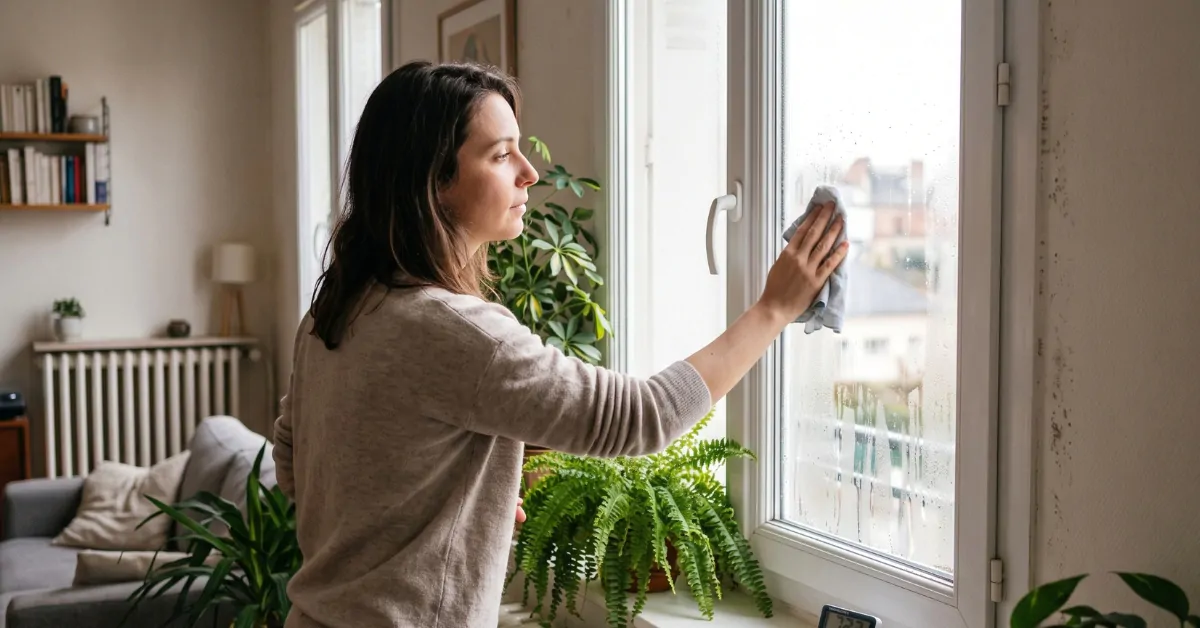
Humidity in a home is a common problem. And air that is too humid can trigger various health issues, especially respiratory problems for people living in damp spaces: asthma, bronchitis, rhinitis, eye irritation, etc.
How can I tell if my home is too humid?
Several signs can suggest humidity higher than normal in a house or apartment. As soon as they appear, act quickly:
- A persistent musty odor.
- Mold spots.
- Wallpaper that buckles or peels.
- Paints or coatings that crack or peel.
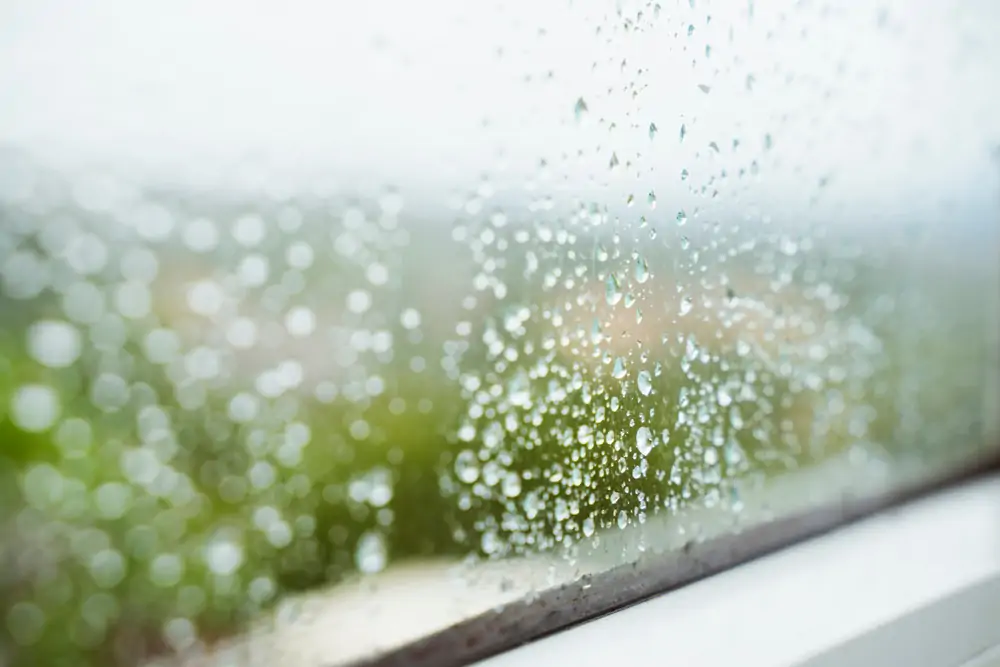
- Persistent fogging on windows.
- The proliferation of cockroaches can also be a sign of excessive humidity in a home.
Several causes can lead to excessive humidity. It’s best to identify them to treat the issue effectively:
- Humidity in a home is usually caused by condensation and water vapor. As more people live in a home, condensation increases due to breathing, sweating, and various activities (cooking, showering, etc.). Contrary to what one might think, a home that is very well insulated can also be too humid if air exchange is insufficient. That’s part of why it’s essential, even in winter, to air out your home for at least 15 minutes a day by opening the windows wide.
- Humidity can also originate indoors, due to aging drainage pipes, porous seals, a burst pipe, etc.
- It can also come from outside, via rainwater running off a cracked facade, or by seeping in through the roof if a tile is broken, for example.
- Another scenario leading to too much humidity in a house: hydrostatic pressure on the building’s foundations from a potential groundwater table or standing rainwater.
- Finally, humidity can also penetrate a home excessively through capillary rise. The dampness is drawn into the dwelling by porous construction materials in contact with the earth.
What is the ideal humidity level for a home?
While a home inevitably has some humidity due to everyday life, excessive humidity can cause health problems for occupants as well as potential structural issues for the building. Conversely, air that is too dry can dry out the throat, eyes, and skin. Only optimal humidity allows for a healthy atmosphere. What is the ideal humidity range? Typically between 40% and 70%.
Below 40%, the air is too dry; above 70%, it is too humid. How do you measure a home’s humidity level? With a hygrometer, a device that can be mechanical or electronic, sometimes built into programmable thermostats or room thermometers.
If your home is too humid, certain plants can also help reduce the humidity level by absorbing more moisture than others. This is certainly not a standalone solution, but a helpful supplement to consider.
Which plant absorbs the most humidity?
Indoor plants capable of absorbing more humidity than others are mostly tropical plants from warm, humid climates. Here’s a non-exhaustive list:
- The Boston fern
- The spathiphyllum
- The tillandsia
- The dwarf palm
- The nepenthes
- The climbing ivy
- The ficus
- The orchids
- The epiphyllum
- The sparmannia africana

Which plants to put in a damp, windowless bathroom?
These plants can be potted, ideally in the room’s most humid spots. Which of these are most likely to thrive in a bathroom, a space where humidity is usually high, especially if there isn’t a window to open? Here are several that can still do well in a room with less-than-ideal light:
- The ZZ plant (Zamioculcas zamiifolia)
- The Haworthia
- The aloe vera
- The Dracaena trifasciata
- The tillandsia
- The chamaedoreas
What can you do to remove moisture from a room?
Besides plants, several natural solutions can help you get rid of humidity in a home, starting with adopting the right habits:
- Airing out your home at least once a day, about ten minutes minimum as recommended by ADEME.
- Limit the formation of damp air by reducing the temperature and duration of showers, cooking with windows open, and if possible, drying damp laundry outdoors.
A mechanical ventilation system (VMC) is also essential for a healthy home. Its airflow should be regularly checked, as should the ventilation grilles, which should not be obstructed. Remember to dust them regularly.
To avoid too much humidity, it is also advisable to keep the temperature at 19°C. By heating to this ideal temperature, you also avoid excessively high energy bills and prevent cold air, which condenses moisture faster than warm air, from causing excess humidity.
Finally, if possible, maintain your home by repairing and renovating it. Installing double glazing can also help reduce a home’s humidity.
Read also