
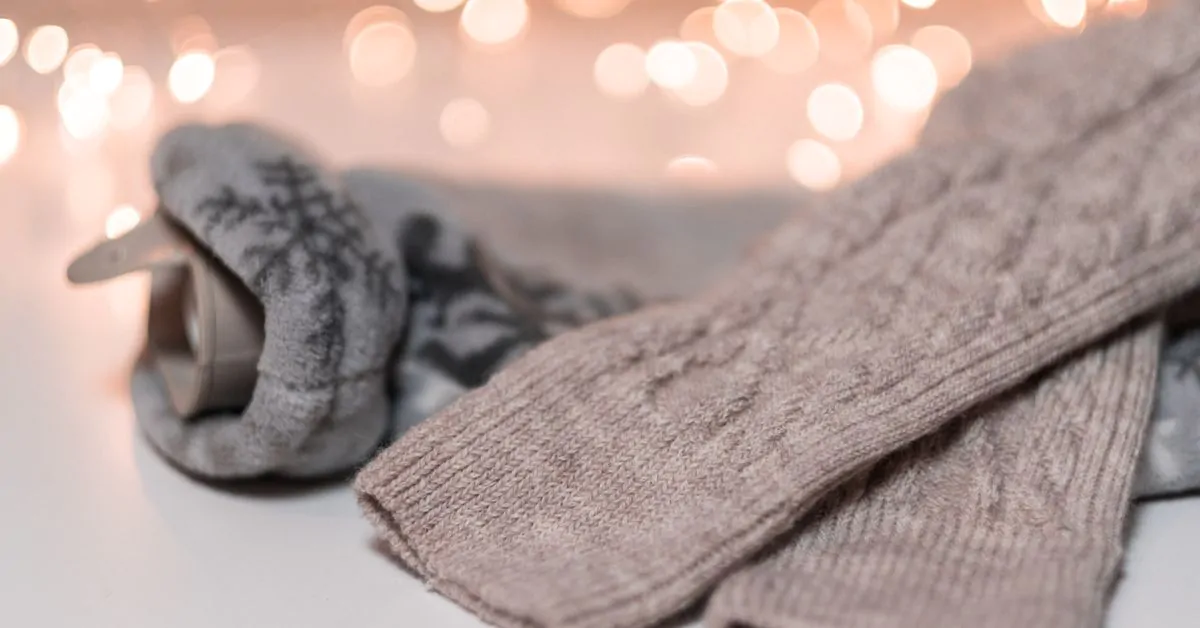
Chilly evenings set in, the bed stays cold for a long moment after you turn out the light, and the rubber hot-water bottle has often disappeared to the back of a cabinet. A cotton sock filled with raw rice and tied snugly replaces it in five minutes.
All you need is a well-secured knot and 1 to 2 minutes in the microwave. The rice stores the heat and releases it slowly. This improvised hot pack stays warm for about twenty minutes, depending on the fabric’s thickness, and a bit less for a thinner sock.
A 100% cotton sock, filled with raw rice up to the heel
The fabric matters as much as the filling. The sock should be 100% cotton, with no shiny threads or metallic glitter. A synthetic or glittery knit can melt, carbonize the rice, and start a fire. For the same reason, metal clips or wire ties are out, because in a microwave metal creates sparks and an immediate fire.
Raw rice is the simplest filling to find. The recipe also works with lentils, dried beans, flaxseeds, pumpkin seeds, or cherry pits. Wheat, barley, or millet give soft, steady heat that’s gentle on sensitive areas.
Recovered cherry pits should be cleaned, freed from pulp, and dried in the sun or on a radiator before use. A damp grain releases vapor when heated.
To fill without splashing, place the sock on a glass, then pour the rice up to the heel. Do not fill the sock to more than 80%, so the rice can move. The hot pack remains flexible and can take the shape of the neck or the belly. Close with a double knot, or with a tight strand of wool if the sock is too short.
In the microwave, in 30 to 60-second bursts with a glass of water
Small bursts help avoid a microwave trap. The U.S. Consumer Product Safety Commission notes that with this heating method, the “core” temperature is higher than the surface temperature.
Overheating too intensely can cause a slow, internal burn that the user may not notice at first. Therefore, heat in 30 to 60-second bursts, with a glass of water beside it, and knead the sock between two passes to spread the heat evenly.
The glass of water serves two roles. It absorbs some microwaves and helps limit local overheating of the grains. It also helps prevent the filling from drying out with repeated uses.
Make sure the turntable rotates freely, because a hot pack pressed against a wall will receive microwaves in the same spot, and the grains in that area can burn very quickly. A medium power setting, 60–70% of the maximum, provides more leeway. The U.S. CPSC recommends, if you are unsure about your microwave’s power, to choose the shortest heating time.
| Reference | Typical value |
|---|---|
| Total heating | 1 min 30 sec at 800 W, 2 min at 600 W |
| Maximum duration | 3 minutes total, even in intervals |
| Rest before use | 1 minute |
| Interval between heats | 1 to 2 hours minimum |
| Heat delivered, rice | 30 to 40 minutes |
| Heat delivered, cherry pits | up to 50 minutes |
Test on the wrist before applying to the skin
Right after you take it out of the microwave, the heat has not finished rising. The seeds can continue to heat after removal, hence the one-minute rest and a final kneading. Place the sock against the inside of the wrist or the forearm. The heat should feel gentle. If it stings, wait longer. A thin cloth between the hot pack and the skin helps reduce heat transfer to the skin.
Some people perceive heat poorly. Young children may feel it less and might not be able to remove a hot pack that’s too warm on their own. The elderly are also at risk, as are people with certain conditions, including diabetes. For everyone, the same area should not stay under heat for more than about 20 minutes.
Do not use it to warm beds. The Australian NSW Fair Trading agency warns against using grain sacks to heat bedding because bedding retains heat and the bag can ignite. An overheated hot pack can release heat in an uncontrolled way, potentially burning the skin or igniting a cover or even the bedding.
Smell of burning, scorched grains: when to discard the rice
Most incidents come from microwave overheating. Some people reheat the hot pack because it seems warm, even though the core is already hot. This progressive overheating eventually carbonizes the grains. The U.S. CPSC recommends waiting for full cooling before a new heating. Stay close to the microwave during the entire heating process.
A burning odor means stop immediately. Put the sock in the sink, on a non-flammable surface, and let it cool completely, then discard without reheating. Do not use a conventional oven for this homemade hot pack. There is no safe heating time for a sock, and excessive heat will scorch the fabric. Store the hot pack dry, as moisture makes the grains mold.
Commercial models sold in stores aren’t always better explained. During a CPSC check, eight microwaveable hot packs were deemed unsatisfactory due to a lack of clear guidance on heating times, power, and safety instructions.
In summer, freeze it in an airtight bag
The same sock can serve as a cold compress when it’s hot outside. Before putting it in the freezer, place it in an airtight freezer bag to prevent the grains from softening. The bag also prevents the odors from foods from seeping into the fabric.
It cools in a few hours in the fridge or 20–30 minutes in the freezer. For longer-lasting cold, plan for 2–3 hours. Knead it before applying so it remains pliable and contours to the body. For longer-lasting cold, a bag of ice water does a better job. It stays cool far longer than cherry pits.