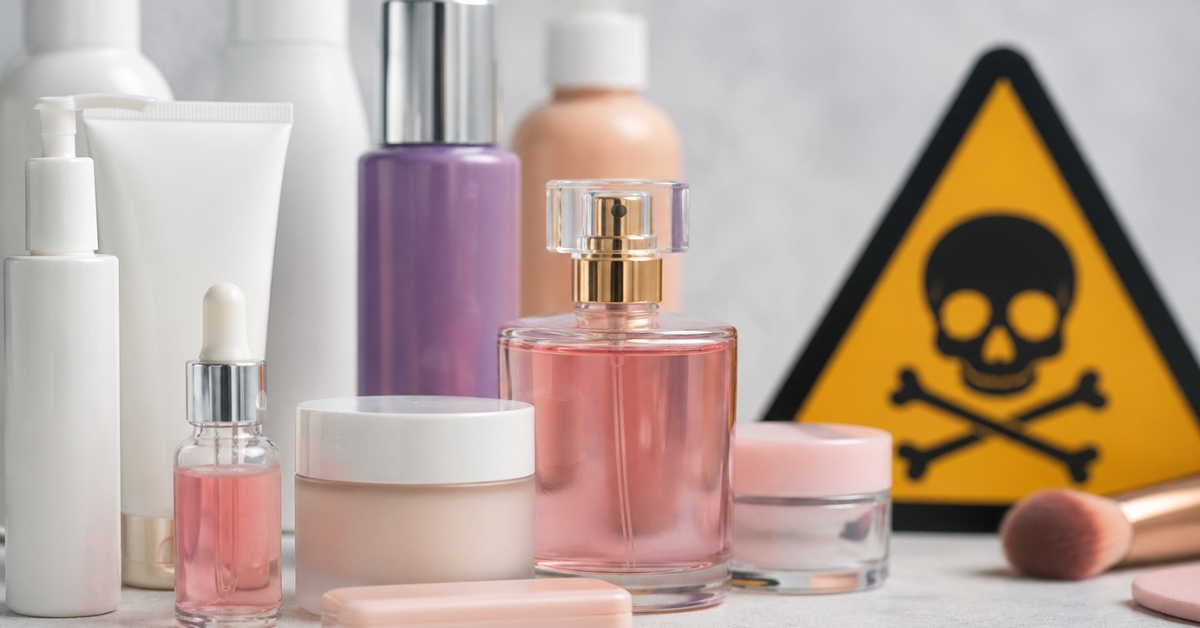
What if stepping away from your cosmetics for a few days could change everything? A study reveals a dramatic drop in toxins in just five days.
This study, conducted with one hundred female college students, demonstrates the direct impact beauty products have on the body’s contamination levels.
How Reducing Cosmetics Quickly Attenuates Exposure to Endocrine Disruptors
Cutting back on cosmetics for a simple five-day period is enough to significantly lower exposure to several troubling chemicals, including endocrine disruptors. This remarkable finding comes from a thorough study led by the National Institute of Health and Medical Research (Inserm), in partnership with Grenoble Alpes University and the CNRS, published in Environment International. The scientists observed a dramatic 39% drop in the urinary concentration of bisphenol A, a substance labeled as “of extreme concern” by European health authorities.
The research team, led by Claire Philippat, a scientist at Inserm, developed a particularly innovative intervention protocol. For five consecutive days, the participants drastically reduced the number of cosmetic products used daily. At the same time, they replaced their usual hygiene products – soaps, toothpastes, and shampoos – with alternatives provided by the research team, strictly free of synthetic phenols, parabens, phthalates, and glycol ethers. This methodological approach allows for precise isolation of the cosmetics’ impact on the body’s exposure to deleterious chemicals. “What’s striking is the speed with which these reductions appear, in only five days,” notes Nicolas Jovanovic, a doctoral student at Grenoble Alpes and the study’s first author.
Monoethyl Phthalate, Methylparaben, BPA: Notable Reductions Measured
The comparative analysis of urinary levels before and after the intervention reveals particularly encouraging declines. The researchers observed a 22% reduction in monoethyl phthalate, a compound used notably to stabilize perfumes, as well as a 30% decrease in methylparaben, a preservative identified as a possible endocrine disruptor. The dramatic 39% drop in bisphenol A concentration stands out as the most striking result, while the detection of propylparaben, another suspected endocrine disruptor, proved less frequent.
These observations demonstrate the direct influence of cosmetics on the body’s chemical burden. The rapid elimination of these traces is explained by the body’s natural detoxification mechanisms, which are especially effective for these molecular categories.
Bisphenol A: A Persistent Pollutant Despite the Ban
The notable presence of bisphenol A in urine samples raises particular questions for the scientific community. This substance has been banned in French cosmetics since 2005 due to its reproductive toxicity, yet it evidently continues to reach consumers. “Its presence could result from contamination during production or from packaging materials,” explains Claire Philippat. Indeed, unlike food-related packaging that is tightly regulated in Europe, cosmetic containers have largely escaped such rigorous health surveillance.
Health and Economic Impact: Promising Projections
For the first time in this field, the Grenoble team conducted a public health impact assessment. Their projections, focused on BPA, suggest that a widespread change in cosmetic routines could prevent about 4% of asthma cases in children exposed in utero. These health benefits would be accompanied by substantial cost savings, estimated at up to roughly $10 million annually in treatment and hospitalization costs. Rémy Slama, head of research at Inserm, cautions, “these are hypothetical projections, but the results underscore the major public health stakes involved in reducing exposure to these compounds.”
Beyond individual efforts, the researchers stress the need for stronger regulatory action. “Without a mandatory label signaling the presence of dangerous substances in cosmetics, it remains extremely difficult for anyone to interpret packaging,” lament the scientists. This study is particularly timely as the European Parliament weighs a controversial reform of cosmetic regulation. The proposed text, vigorously opposed by UFC-Que Choisir, would grant more time to industry players to remove products containing substances classified as carcinogenic, mutagenic, or toxic to reproduction.