

While root vegetables can indeed stay in the ground all winter, harvesting them in autumn may be necessary to protect them from severe cold and stagnating moisture, which can cause rot. Another major risk: roaming pests and rodents that may gnaw at your underground stores. If you don’t have a suitable pantry or basement to keep your fresh vegetables, building a vegetable silo, buried or above ground, remains the most effective traditional technique. Learn how to easily design your silo to preserve the firmness and nutrients of your harvest for several months without using any energy.
How to store vegetables without a cellar?
In loose, well-drained soil, some vegetables tolerate overwintering in place quite well. The approach is to apply a dense mulch by spreading a thick layer of fallen leaves, ferns, or dry straw, possibly sheltered by a tarp to insulate the rows from direct frost and excess moisture.
Another option is to harvest everything before the hard frosts and store the crop in a dark cellar, provided the humidity and ventilation are controlled. A refrigerator, however, is not a viable long-term option: beyond occupying space, its dry air tends to soften the flesh and wilt the skins. To extend your harvest without energy-intensive equipment, you can also try homemade lacto-fermentation or build a vegetable silo. This rustic structure regulates natural moisture, blocks freezing, and keeps out voles and mice.
Which vegetables keep well in a silo?
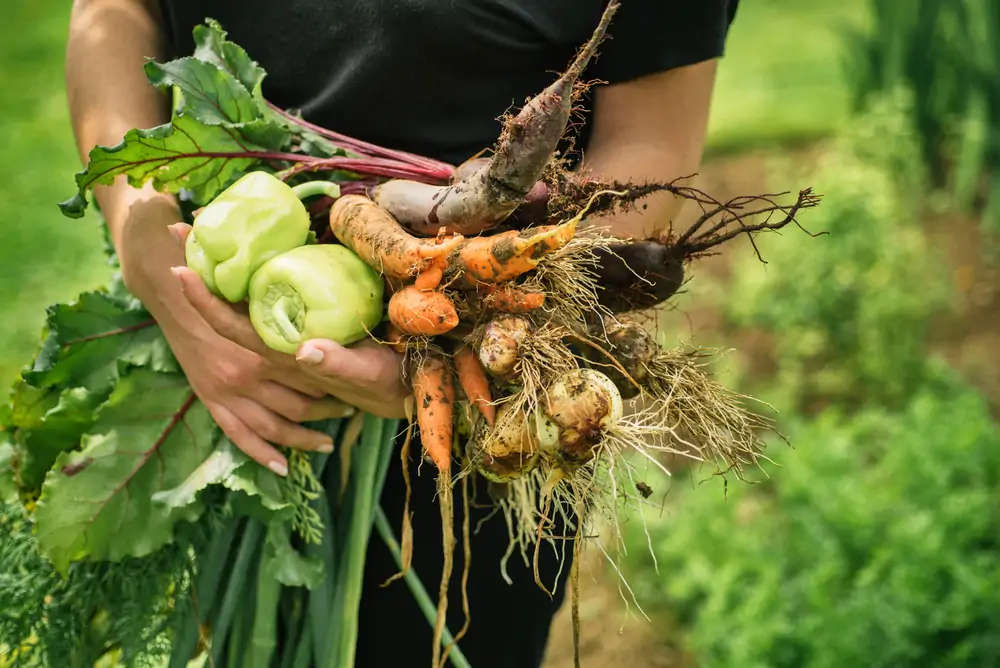
The silo works especially for winter storage vegetables: carrots, turnips, celeriac, parsnips, rutabagas, beets, black radishes, and Jerusalem artichokes. To successfully store them, a few harvesting rules apply:
- Harvest on dry, sunny days to avoid pulling up roots soaked with surface moisture.
- Carefully lift vegetables using a fork to avoid nicking their skin.
- Let the roots dry on the ground for a few hours, then remove excess earth with a soft brush. Never wash vegetables with water before storage: residual moisture promotes mold growth.
- Trim the foliage 1 or 2 cm above the crown by twisting it manually or with a cleaned pruner to prevent leaf regrowth.
- Sort rigorously: any vegetable that is split, worm-eaten, or questionable should be eaten first and kept out of the silo.
How to build a vegetable silo?
1 – Create a traditional buried silo
To build a buried silo, mark off a raised or non-floodable area of your garden to prevent standing water. Dig a trench about 60 cm to 1 meter deep, with a width proportional to your harvest volume.
Line the walls and bottom with a fine-mesh metal grid (galvanized hardware cloth) to deter rodents. At the bottom, lay a draining bed of gravel or bricks, then cover with 10 to 15 cm of dry straw or non-decomposed fallen leaves. Store your vegetables without them touching, interspersed with insulating layers of straw.
Close the trench with rough-cut wooden boards, a burlap sheet, and a waterproof tarp held in place with stones. Essential: insert a bundle of hollow branches or a perforated elbow tube to act as a ventilation chimney, allowing condensation to escape while keeping rain out. You can also repurpose an old washing machine drum that’s already perforated and rodent-tight—ready-to-use as a buried silo.
2 – Build a classic above-ground silo
If your soil is too damp, clayey, or rocky to dig, choose an above-ground silo. Erect a rectangular enclosure using untreated boards louvered for airflow or dry-stacked concrete blocks.
Line the bottom with compacted straw, dry fern fronds, or other insulating plant materials. Place your root vegetables in spaced rows, then cover with a layer of untreated sawdust, dry sand, or straw. Repeat for two or three tiers, finishing with a thick layer of topsoil and straw. Cap it with a sloped wooden roof or metal sheet to shed rain away from the storage area.
3 – Build a silo from wooden crates
Ideal for a garden shed, lean-to, or unheated garage, the wooden-crate silo allows for easy rotation. Use wooden crates or ventilated crates. Line the bottom with newspaper or burlap, add a bed of slightly cool sand or dry sawdust, lay out your vegetables, and cover them completely. Stack the crates in a stable way with air circulating between them, then top with a wool blanket or an old burlap insulating bag.
4 – Set up a silo in terracotta pots
Perfect for small spaces or sheltered balconies, the terracotta pot method leverages the natural porosity of clay to regulate moisture without stifling the plant tissues. In a large terracotta pot with a drainage hole, place a shard over the hole, add a layer of clay balls, then spread a layer of smooth river sand. Alternate layers of vegetables and sand until a few inches from the rim. Close with an inverted saucer topped by a heavy stone to block rodents.
5 – Make a quick silo using a plastic trash can
A thick outdoor plastic garden trash can with a secure lid provides an inexpensive, airtight silo option:
- Drill a series of small 2–3 mm holes at the bottom of the can to vent any accidental condensation.
- Place the can either buried three-quarters into the soil in a shaded corner or propped against a north-facing wall.
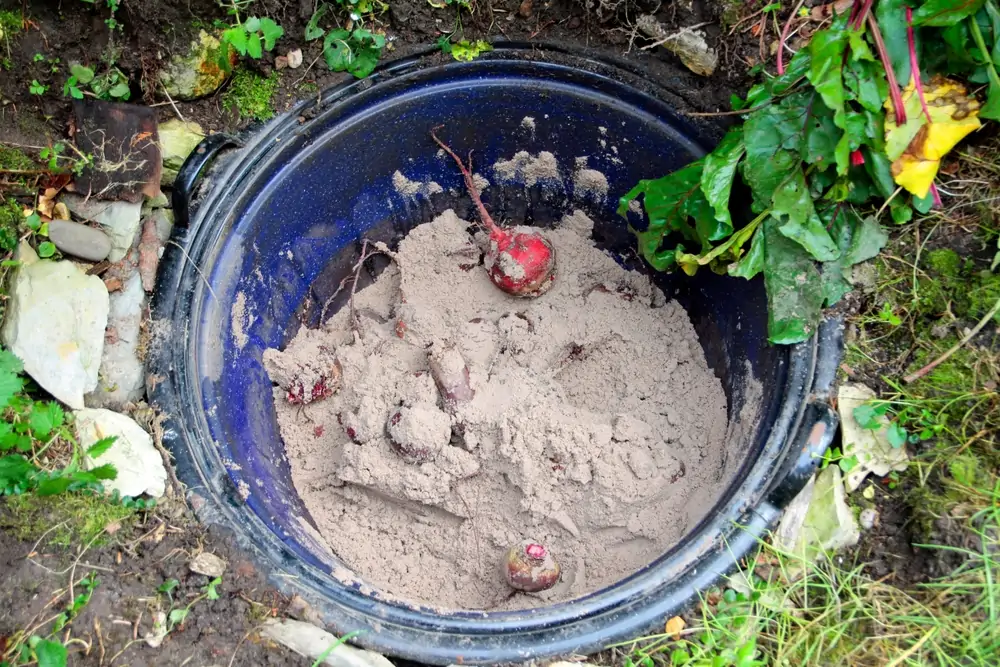
- Fill the space by alternating vegetables with clean river sand that is just cool to the touch (the sand should never be wet, just slightly cool to slow drying).
- Finish with 10 cm of pure sand, place the lid with a safety clip, or secure it with a heavy rock.
Some tips for maintaining your silo
To extend the shelf life of your produce until spring comes back:
- Keep an eye on the temperature-humidity balance: the interior should stay dark, cool (ideally around 1 to 4 °C / 34 to 39 °F), and free of condensation. If a prolonged severe cold spell hits, add straw mattresses or corrugated cardboard on top of the structure.
- Regularly inspect the stock: when you are taking vegetables for cooking, check neighboring storage items. Remove any specimen displaying signs of premature wilting or mold to prevent contamination of the whole layer.
- Watch for pests: check the walls for gaps. If you detect intrusions, use mechanical traps or turn to natural repellents such as elder branches or compresses soaked in peppermint essential oil near the exterior walls.
- Close up promptly after handling: after every harvest, carefully reposition the mulch and the protective lid to maintain thermal inertia.
Read also