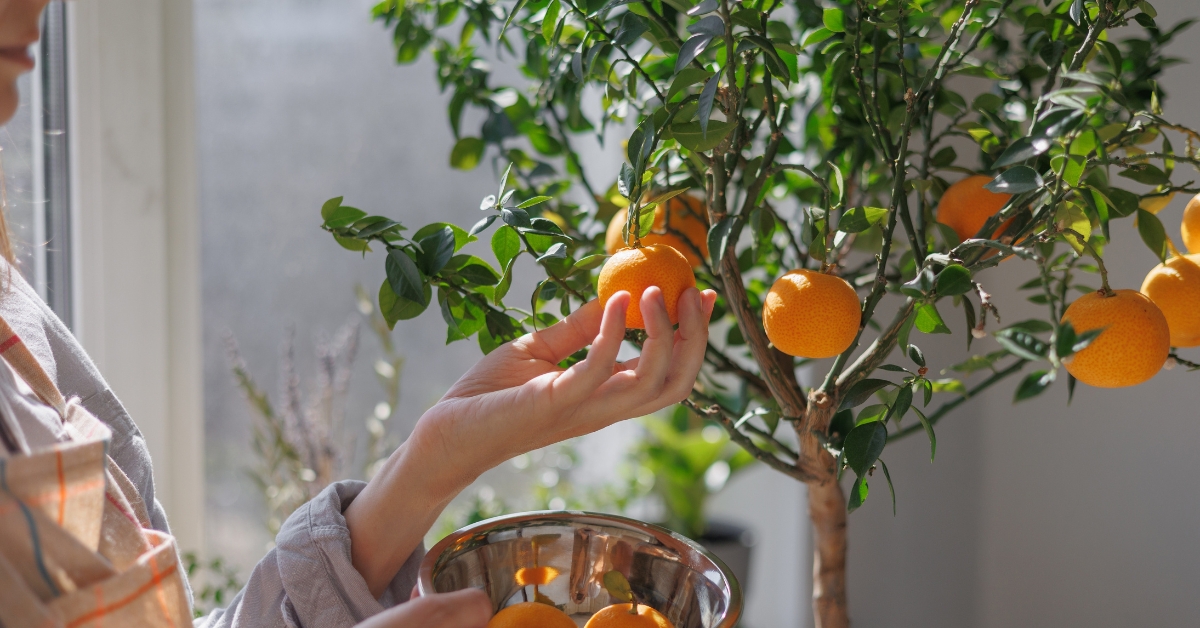
A dwarf fruit tree is a rather special tree that we keep small in order to grow it in spaces with limited room. But to succeed, you need to have a few keys to cultivate it properly. Here we go!
What is a dwarf fruit tree?
A dwarf fruit tree is generally not an indoor plant, but like any potted plant, the conditions for welcoming it require less space than other varieties. Planting a fruit tree in a pot isn’t easy when you know that some fruit trees can reach 5, 6, or even 8 meters tall. More than the pot itself, the size of standard fruit trees often prevents planting them in small spaces such as tiny backyards.
A dwarf fruit tree is a tree whose final mature dimensions are at least 40% smaller than the original variety. Most often, these dwarf varieties also require annual pruning to stay as compact as possible, so you’ll want to stay on top of your shears!
Varied dwarf fruit trees
Becoming a potted fruit shrub is not within reach for every fruit tree. The constraints of what is called dwarfism (a phenomenon also seen in domestic animals) mean that some varieties adapt far more easily, while for others it’s simply impossible.
Here are the varieties you can most safely imagine as balcony fruit trees:
- Dwarf apricot
- Dwarf almond
- Dwarf pear
- Dwarf apple
- Dwarf cherry
- Dwarf plum
- Dwarf peach
How and when to plant a dwarf fruit tree
Whether in a pot or in the ground, you’ll have from mid-November to mid-March to embark on the planting adventure.
The situation is less clear if you buy your fruit tree in a pot, in which case you’ll only need to wait until the following year to transplant it if it feels a bit cramped.
Planting a dwarf fruit tree in the ground
Start by preparing your dwarf fruit tree for planting by pruning the tip of the roots to push it to regrow feeder roots that will help it anchor itself better in the soil and find water more easily.
Dig a hole at least 20 inches (about 50 cm) deep and 20 inches (50 cm) in diameter. Don’t hesitate to water directly into the hole if the soil seems a touch dry.
Place your dwarf fruit tree in the hole and backfill with soil just enough to keep it from tipping. Install a stake (chestnut wood is ideal for this) and secure it to the tree. Once done, completely fill the hole and pack the soil firmly with your foot.
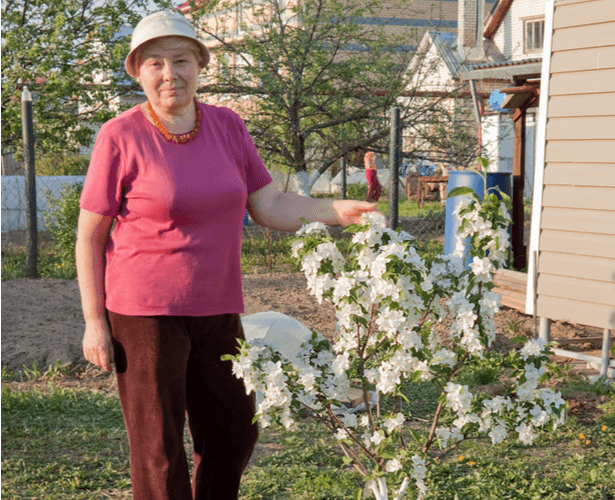
To water more easily afterward, form a basin on the surface and water generously (two watering cans at minimum) before mulching everything with a thick layer (about 20 cm of straw, 15 cm of wood chips, etc.).
Planting a dwarf fruit tree in a pot
The first question to ask before planting is “what pot for a dwarf fruit tree?”. Avoid plastic pots. Not to mention their carbon footprint or the fact that they can’t be produced in the United States due to competition from China, they simply won’t have the longevity of a true dwarf fruit tree planter.
Choose the largest possible pot with a minimum of 20 inches (about 50 cm) in diameter and 24 inches (about 60 cm) in depth. Place 8 to 10 cm of clay pebbles or gravel at the bottom to ensure drainage essential to the growth and health of your future dwarf fruit tree in a pot.
For the rest, do the same as for planting in the ground.
How to prune dwarf fruit trees
Pruning the pruning of fruit trees is a discipline in its own right that depends on each fruit tree, whether it is dwarf or not.
With the only difference that for dwarf fruit trees it will be, in any case, every year that you’ll need to intervene to keep them from losing their compact habit, from beginning to spread too much or growing too large and thus risking a drop in fruit production.
You are now equipped to start a mini fruit-producing venture!