
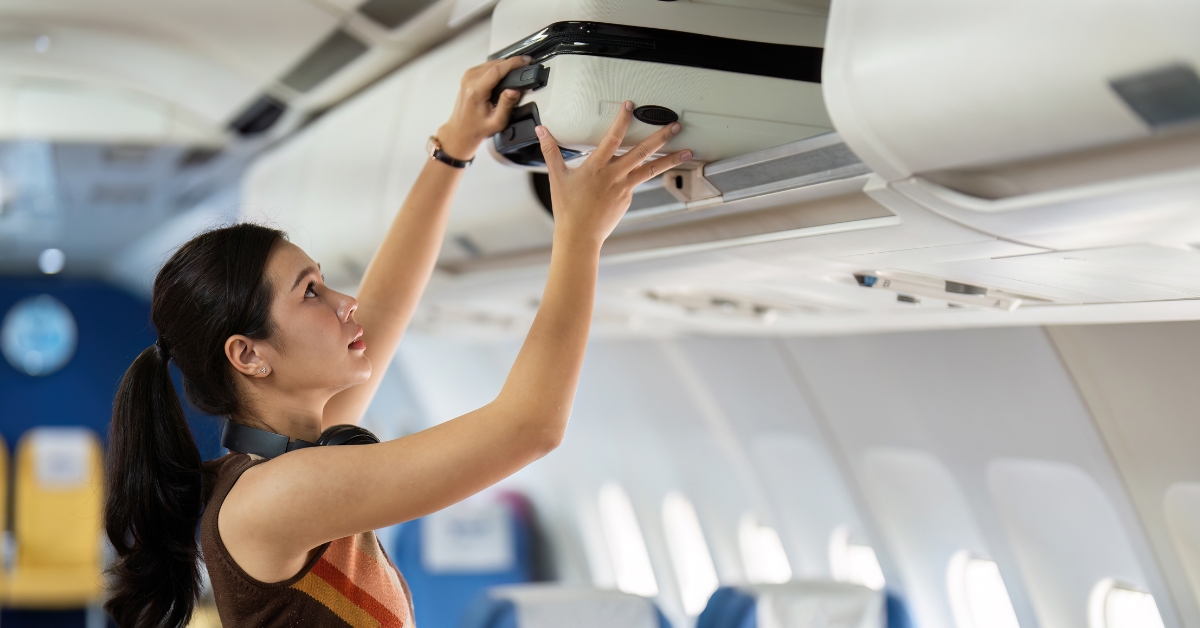
The baggage in the cabin could soon slip free from the clutches of fees on all European flights. This prospect, vigorously championed by the European Parliament, signals an unprecedented upheaval for the millions of travelers navigating the realm of low-cost airlines. Currently forced to shell out between 15 and 50 euros for the simple privilege of keeping their belongings within reach, passengers on EasyJet, Ryanair, or Volotea could finally see the burden of these ubiquitous ancillary charges lightened.
The current market state: a pricing labyrinth for baggage
Today, deciphering the world of baggage conditions set by low-cost carriers is akin to a true endurance test. Each carrier rolls out its own rules regarding dimensions, weight, and pricing, weaving a regulatory tangle that can overwhelm travelers who are not in the know.
Major low-cost carriers currently impose this essential service within a range of 15 to 50 euros. This pricing can sometimes exceed the original ticket price, turning a seemingly attractive offer into a genuine financial trap for unsuspecting consumers. A single misstep can prove particularly costly at boarding.
This setup not only fuels legitimate passenger frustration but also creates a clear distortion of competition among European airline players.
The European Project: Toward Universal Free Standard Cabin Baggage
The European Commission, backed by the European Parliament, aims to mandate free standard cabin baggage of 7 kilograms across all flights within the European Union. This measure would be accompanied by maintaining the right to a traditional carry-on, such as a small backpack, a laptop bag, or a handbag.
The objective stated by European institutions is to harmonize commercial practices and to guarantee greater transparency for consumers. The initiative also seeks to eradicate tariff hassles that can arise during booking or boarding.
For travelers, this transformation would mark a major turning point. Adopting this measure would eliminate ancillary charges for a standard cabin bag, while substantially improving the readability of prices offered by airlines. Harmonizing transport conditions at the European level would also reduce tensions during boarding procedures, creating a calmer travel experience.
This reform could also significantly facilitate comparisons between different fare offers, enabling consumers to make informed choices based on truly comparable prices. The impact would be felt as soon as the measure comes into force, immediately transforming the travel economy for millions of European passengers.
The fierce resistance of low-cost carriers
In response to this proposal, low-cost airlines are orchestrating intense lobbying to preserve their current business model. According to their estimates, revenues generated by ancillary services, primarily baggage, account for up to 20% of their total turnover.
Carriers argue that removing this revenue source would destabilize their financial balance, mechanically driving up airfares. This increase would affect not only their own prices but also those of traditional carriers, due to reduced competitive pressure in the market.
Beyond purely financial considerations, the airlines cite substantial indirect costs. Requiring the free transport of a 7-kilogram bag per passenger would add considerable weight to aircraft, increasing kerosene consumption by tens of millions of euros per year for a large airline.