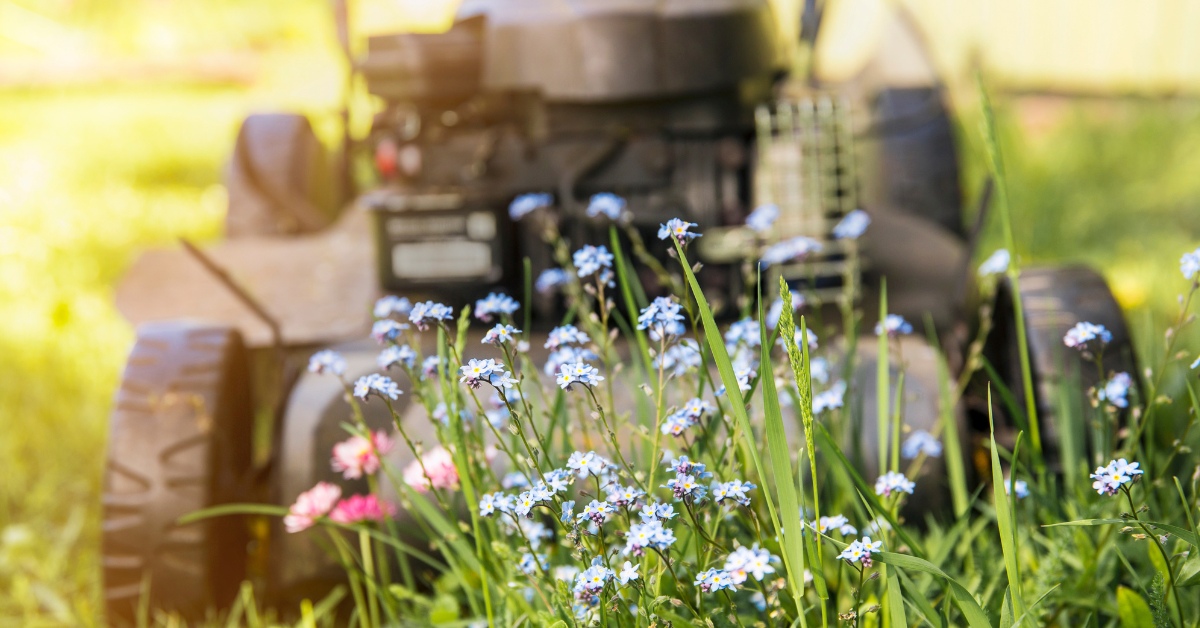
“In May, do what you please.” And if this year that meant… not mowing your lawn? Behind this simple gesture lies a real ecological lever. By letting the grass grow freely, you provide a vital refuge for many species and actively contribute to biodiversity preservation.
Originating in the United Kingdom, the No Mow May movement is gaining traction with American gardeners. And for good reason: in just a few weeks, a plain yard can transform into a living ecosystem.
Not mowing your lawn anymore: a simple gesture with immediate effects
When the mower goes quiet, nature reclaimes its domain. Poppies, daisies, dandelions, and clover reappear, drawing butterflies, ladybugs, and other insects essential to ecological balance.
This resurgence of wild plants is not accidental: these so-called “wild” species often boast rich nectar and pollen. They provide a vital food source for pollinators, especially in spring.
And this small change has a tangible impact: within weeks, an unmowed garden can host up to 10 times more insects than a neatly trimmed lawn.
A crucial month for bees and pollinators
May is a key period for bees. Flowers produce abundant nectar, essential for colony survival. A hive can hold up to 50,000 individuals—and it requires millions of flowers each day to function properly.
By letting your lawn grow, you directly support this fragile balance. Fewer mowings mean more food available, and healthier bees as a result.
This gesture is especially important given the decline of pollinators today, largely due to pesticide use and the loss of natural habitats.
A garden more resilient to drought
Beyond biodiversity, not mowing offers another often underestimated benefit: greater heat resilience. Taller grass shields the soil from the sun, reduces water evaporation, and promotes natural humidity.
Conversely, a lawn kept too short dries out quickly and requires more irrigation. During drought periods, this simple practice can make a real difference in your water usage.
How to adopt No Mow May without turning your yard into a wilderness
You don’t need to abandon your entire yard. You can comfortably maintain a mowed zone for paths or aesthetics and let a portion become a natural meadow.
This approach, called “differential mowing,” enables you to balance biodiversity with practicality. It’s increasingly used in public spaces as well.
Another simple tip: create a small path you mow through the tall grass. It gives a maintained look while preserving ecological benefits.
And after May? Extending the effects year-round
No Mow May is a wonderful entry point to a more natural garden. But its effects can be extended: space out mowing, raise the mowing height, or leave certain wild zones intact year-round.
You can also enrich your garden by sowing nectar-rich flowers or installing a water source for insects. All of these simple actions can transform your outdoor space for the long term.
Adopting No Mow May means embracing a letting-go attitude to allow life to reclaim its rightful space. This small habit shift, far from signaling neglect, demonstrates real ecological awareness. By putting away your lawn mower for a few weeks, you transform your yard into a vital link in the local green fabric. So this summer, between aesthetics and biodiversity, why not choose to cultivate the wild?