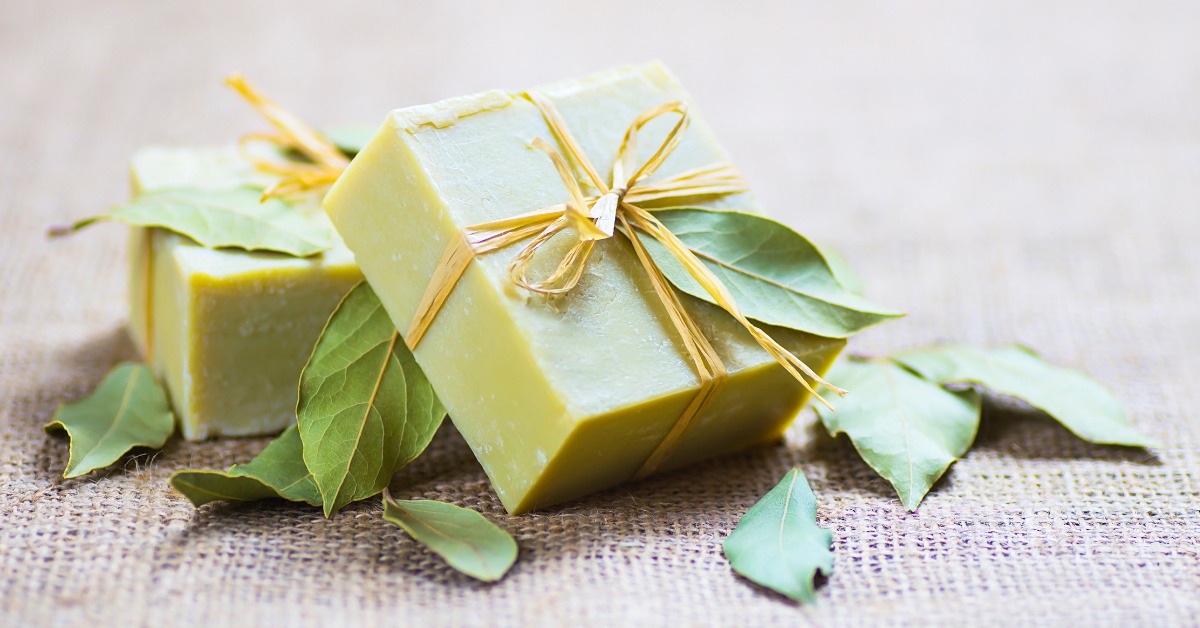
Natural, ancient, renowned for being gentle on the skin… Aleppo soap checks many boxes. But not every soap sold under that name is created equal.
Indeed, dermatologists typically recommend Aleppo soap mainly for dry skin, acne, eczema, or psoriasis.
Aleppo Soap and Its Many Virtues
A predecessor of Marseille soap, Aleppo soap is also used as:
- Natural shampoo: 1 to 2 times per week
- Face mask: leave Aleppo soap on for one minute, then rinse with clean water
- Shaving foam
- Detergent for delicate laundry
- Mite repellent: place a bar in a closet to protect clothes.
Be aware that most commercially sold Aleppo soaps are made from animal fats, which have the tendency to clog pores and thus lead to breakouts and other nuisances.
What Makes a Good Aleppo Soap?
A genuine Aleppo soap should not be greasy and its color should be golden brown. When cut in half, its green center, more or less dark, should emit a pleasant aroma of bay laurel and olive. Aleppo soap takes about 10 months to reach maturity. As such, it floats in water and can be stored indefinitely in a dry place, away from sunlight.
Aleppo Soap Is a Quality Artisanal Product
- True Aleppo soap is derived from a blend of bay laurel and noble olive oils.
- The olive oil and bay laurel oil that go into the different Aleppo soaps are carefully selected each season with the utmost care.
A good Aleppo soap should offer traceability of its ingredients through production controls and the documented proportions of the ingredients across the range.
- The master soap maker crafts the soap following the millennia-old artisanal method of cooking the oils. This slow method helps the soaps retain all their plant-based actives.
- The Aleppo soap dough rests for a day in cauldrons (preferably copper), then the soap mixture is poured, cooled, and hand-cut into smaller bars.
- The bars of Aleppo soap are then stored in the soapery and left to mature in an outdoor air-drying tower for nine months.
- Like a fine wine, time enhances Aleppo soap: the longer it ages and matures, the better it becomes. Over time, Aleppo soap softens, and once in your home, your block of Aleppo soap will continue to mature.
Beware of Aleppo Soaps… That Aren’t
In the market, you’ll see Aleppo soaps that only have the name Aleppo.
- Counterfeits with reduced olive oil content, often replaced by palm oil or coconut oil.
- As for the laurel oil in these so-called “Aleppo soaps,” it’s sometimes entirely absent!
How to Recognize a Real Aleppo Soap?
A traditional Aleppo soap is recognized by its exterior golden-brown color and green interior. It often bears a seal on one face, exudes the characteristic olive oil and laurel aroma, and shows a short ingredient list. Beware of soaps that are overly perfumed, very colorful, or sold at abnormally low prices.
Aleppo soap also exists in liquid form, but these liquids are usually highly glycerin-rich and less moisturizing than the solid bar.
Moreover, some Aleppo soaps contain preservatives that can be harsh on the skin. They are therefore more suitable for normal skin.
Why Favor Aleppo Soap?
Aleppo Soap Preserves the Environment
100% biodegradable, Aleppo soap contains no palm oil, whose intensive cultivation quickly depletes soils and triggers ecological disasters, notably in Indonesia where palm cultivation drives deforestation. In general, it’s best not to buy soap containing palm oil, even if labeled “natural” or “vegetable.”
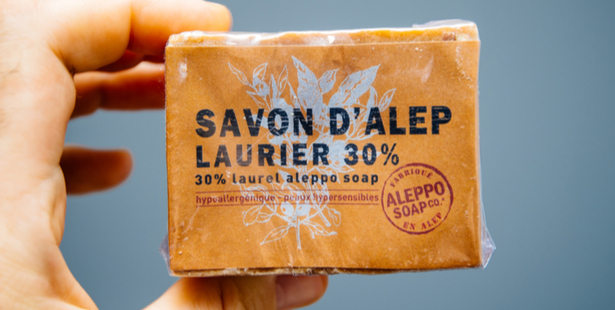
The Aleppo Soap Is Not Toxic
It is very pure, free of any additives, preservatives, or fragrance. Be sure the soap you buy is free of EDTA, sodium laureth sulfate, sodium lauryl sulfate, parabens, cocamide DEA, preservatives, gelling agents, colorants, and, of course, palm oil.
It is hypoallergenic. It’s a plant-based soap, with no animal or mineral fats. Made from two complementary oils, it lets the skin breathe unlike many other soaps.
Aleppo Soap Is Baby-Friendly
It can even be used for bathing babies and children.
The Neobulle Aleppo Soap brings you the benefits of bay laurel and olive oils. It’s suitable for the whole family and especially for baby skin. Contains 20% organic bay laurel oil.
To discover at bébé-au-naturel.com
Which Aleppo Soap to Choose?
There are different types of Aleppo soaps, so you should choose based on the intended use: body wash, intimate hygiene, shaving…
1. The 5% Laurel Aleppo Soap
Excellent for family use, the laurel soap fights eczema, dry skin… and it’s the most economical of the Aleppo soaps.
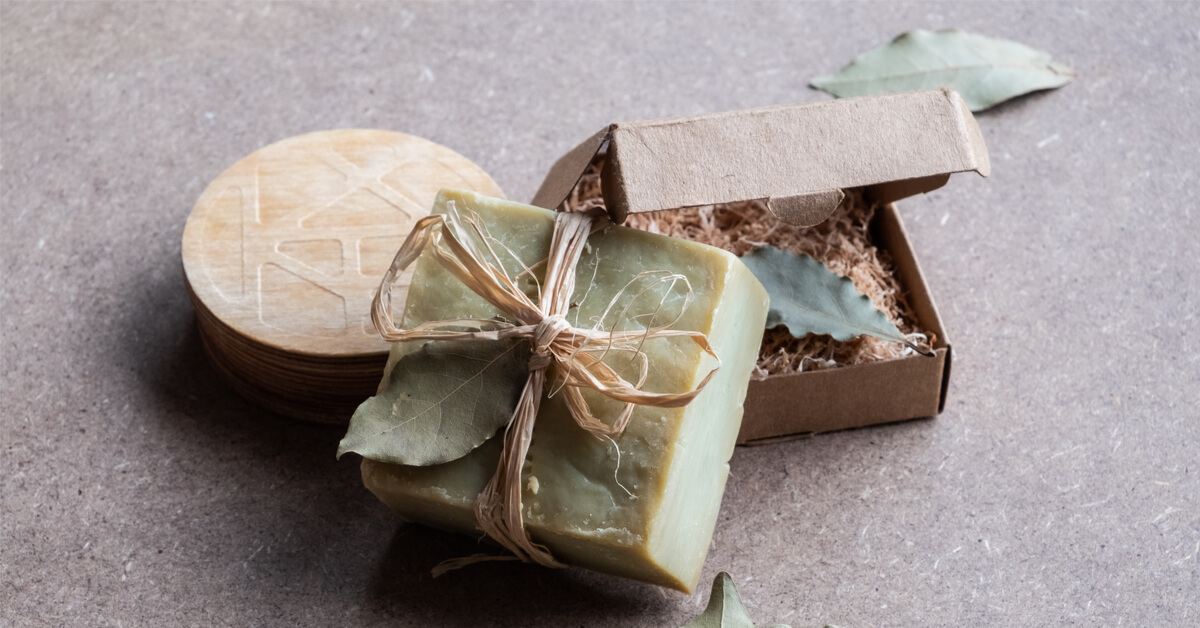
2. The 25% Laurel Aleppo Soap
Its use is more pleasant than the first, because laurel soap has a more appealing fragrance.
It also helps effectively fight eczema, dry or sensitive skin, psoriasis, acne…
3. The 40% Laurel Soap
Extremely pleasant, this 40% laurel Aleppo soap is very good for the whole family’s cleansing.
4. The 80% Laurel: The Royal
This one is concentrated and should be used mainly during psoriasis or acne flare-ups and for stubborn dandruff.
5. The White Premium Alepia
The best of Aleppo soaps, made from first-press olive oil and laurel, produced by cold saponification.
In Premium version, it benefits from a fresh laurel fragrance, very different from the distinctive scent of ordinary Aleppo soap. Natural, Dead Sea mud, or essential-oil variants, premium Aleppo soap is a pleasant alternative to classic Aleppo.
One drawback: its slightly higher price, due to the very high quality of the oils and its high laurel content.