
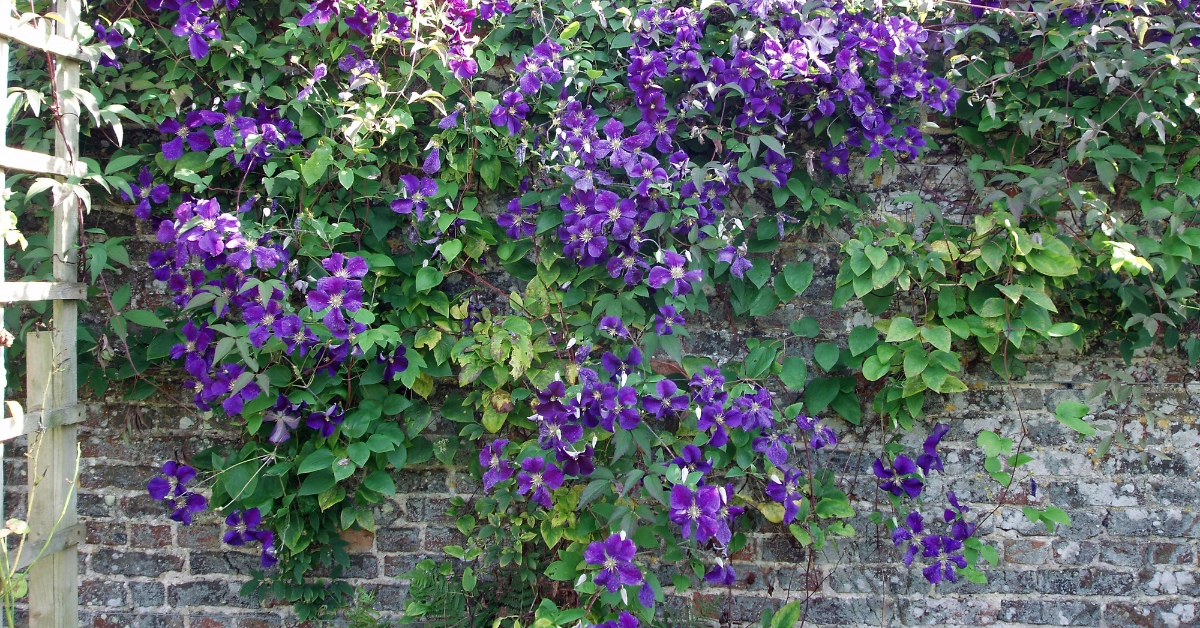
When we talk about climbing plants, we often forget they are living beings with specific needs. Before choosing a species, it’s essential to define the intended use: aesthetic, thermal, or ecological. Here’s how to choose your climbing plant wisely based on your needs.
Climbing plants on walls: aesthetics and thermal insulation
A damaged wall can be given a new lease on life at a fraction of the cost thanks to vegetation. But beyond the visual aspect, greening a wall is an excellent way to limit heat buildup in summer. By creating a natural screen, plants reduce the building’s thermal inertia and protect the masonry.
- Grapevine, climbing hydrangea and trumpet vine : perfect for covering large areas.
- Ivy : hardy and evergreen, it clings on its own thanks to its natural tendrils.
Enhancing biodiversity with vertical walls
Using climbing plant supports helps create ecological corridors where ground space is limited. In terms of biodiversity, ivy is the undisputed king:
- Nectar and Pollen: Its late-blooming flowers (September–October) are vital for bees before winter.
- Food resource: Its berries feed many bird species in the heart of winter.
- Natural shelter: Its dense foliage provides refuge from predators and the elements.
Balcony climbing plants: turning your small balcony into a paradise
For a successful balcony layout, go vertical to gain space. As long as you use a container with enough volume (minimum 12 to 16 inches deep), several species thrive on a trellis:
- Honeysuckle and Jasmine: Ideal for enchanting scents on summer evenings.
- Passionflower and Clematis: Recommended for their striking and colorful blooms.
Climbing plants for screening: creating a natural privacy hedge
A fence or mesh can become a true privacy hedge against nosy neighbors. Depending on your patience, two options are available to you:
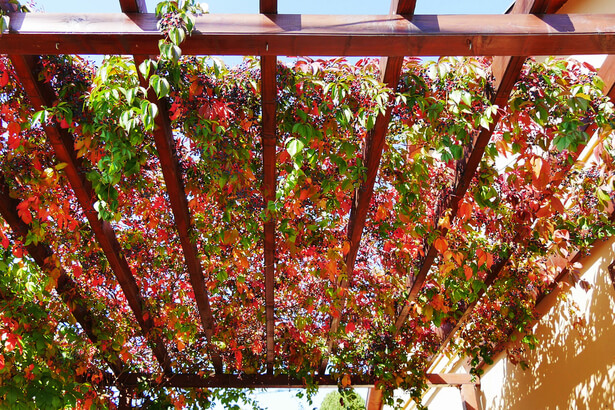
- Perennial plants: Virginia creeper (for its sumptuous autumn colors), climbing roses or clematis for a long-lasting solution.
- Annuals: Ipomoea or nasturtium. Their rapid growth lets you green a support in just a few weeks, with renewal through self-seeding.
Shade under a pergola or arbor
To naturally stay cooler, a green pergola beats any umbrella. Hops and kiwifruit (Actinidia) offer broad, dense foliage that provides strong UV protection.
Expert tip: If wisteria or the grape are aesthetically unbeatable, be mindful: the drop of blossoms (wisteria) or fruit (grape) can be messy on a terrace with light-colored pavers or wooden decking.
Indoor climbing plants: for living decor
An indoor climbing plant helps create a jungle vibe by letting the stems run along walls or ceilings. The Hoya (wax flowers), certain jasmines, or Bougainvillea (in a bright sunroom) are excellent choices, provided they have a suitable support (wire, trellis) to guide their growth.