
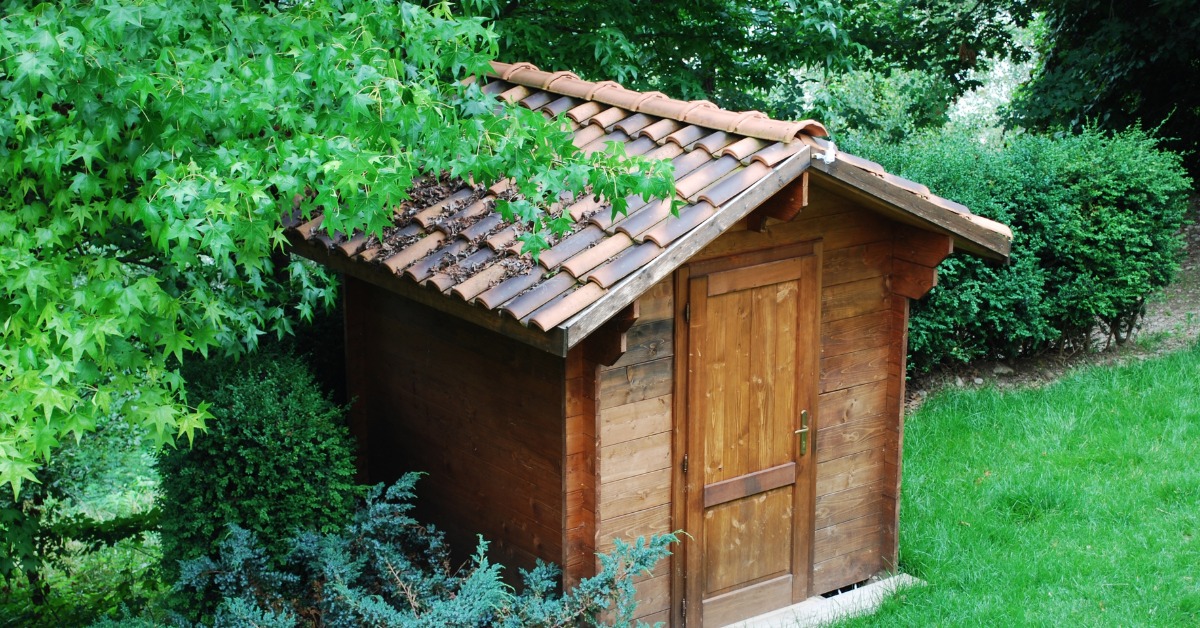
This reduction significantly lowers costs for homeowners aiming to build a shed, a garage, a pool, or install ground-mounted solar panels.
The planning and development tax falls after years of steady increases
A glimmer of hope is emerging for French homeowners: the planning and development tax, familiarly nicknamed the “garden shed tax,” is seeing its first decrease in 2026 after several fiscal cycles. This 4% reduction is especially welcome for millions of households looking to improve their property by adding annexes or upgrading their outdoor spaces.
This favorable fiscal turn breaks with a string of successive increases that had weighed heavily on family budgets. In 2024, the tax rose by 3%, followed by another 1.75% rise in 2025. The reversal observed in 2026 stems from changes to the construction cost index published annually by INSEE, the benchmark used to calculate this tax. The drop signals a slowdown in the construction sector and a moderation of building costs.
Lower flat-rate values across the country
Concretely, the flat-rate value of the planning and development tax now sits at €892 per square meter in the provinces, down from €930 in 2025. In Île-de-France, where land pressure typically keeps amounts higher, this value falls from €1,054 to €1,011 per square meter. This €43 per square meter decrease represents substantial savings for residents of the Paris region, especially on larger projects.
Pools also benefit from this downward dynamic with a uniform flat-rate applied nationwide. The flat-rate for these aquatic installations drops from €262 to €251 per square meter, generating savings of about €10 per square meter that, multiplied by the pool’s area, can amount to hundreds of euros.
A calculation that takes territorial specifics into account
Nevertheless, the final amount of this tax is not determined solely by national flat rates. The French tax system allows for local coefficients that vary by local government. Municipalities can apply a rate ranging from 1% to 5%, while departments are capped at 2.5%. Île-de-France also has a regional rate set at 1%.
These different rates add up to determine the final percentage applied to the flat-rate values. Thus, contrary to a common misconception, a homeowner will never pay the full €892 per square meter for a “garden shed” but only a fraction of that sum, determined by location and the tax decisions of local authorities.
Concrete examples to better understand the impact
To illustrate these complex mechanics, consider the example of an 18-square-meter pool built in the provinces. Applying the maximum rates (a total of 7.5%), the homeowner would owe €338.85, calculated as: 18 × 251 × 7.5%. This reduction in the flat-rate value thus generates direct savings for all types of improvements, regardless of scale.
The planning and development tax applies whenever a project requires urban planning authorization, whether a building permit or a simple prior declaration. First instituted in 2012 and collected by municipalities, this levy has the advantage of being short-term, unlike annual property taxes that burden households year after year.
Regions leading in outdoor development
France’s enthusiasm for garden sheds and other exterior improvements shows no signs of waning. According to INSEE data, the Auvergne-Rhône-Alpes and Nouvelle-Aquitaine regions rank among the areas most equipped with garden structures, reflecting the dominance of single-family homes with generous green space. Occitanie rounds out the podium, benefiting from a mild climate conducive to outdoor work and DIY projects.
These statistics reveal a profound shift in lifestyles, with households seeking dedicated spaces for storing gardening tools, creating craft workshops, or simply expanding their living area. This trend helps explain why several million projects across the country fall under this tax and why it matters for many homeowners.
Legal tax-optimization strategies
For homeowners aiming to manage their tax load, several exemptions operate within the legal framework. Automatic exemptions apply to structures under 5 square meters or not exceeding 1.80 meters in height, allowing modest improvements without tax consequences.
The Urban Planning Code also provides specific exemptions, including reconstruction after a disaster within a maximum ten-year window, developments mandated by a natural risks prevention plan, or sheds tied to a primary residence financed by a zero-interest loan, subject to a surface area exceeding 100 square meters.
Locally, some municipalities grant exemptions for constructions that require a prior declaration, typically those under 20 square meters. These provisions vary widely by commune and should be checked carefully before any improvement project.
Garden shed tax: use the official simulator
Homeowners must meet certain administrative obligations to comply with current regulations. The project must be declared within 90 days of completion, after which penalties can be automatically applied if missed.
To precisely forecast the cost of improvements, taxpayers have access to an official simulator that estimates the tax based on project characteristics and property location. This tool, regularly updated, incorporates the latest rate changes and territorial specifics, ensuring a reliable and accurate estimate.
This 4% cut to the planning and development tax in 2026 opens a favorable window for finally pursuing long-delayed home improvement projects. In a climate where every euro matters, this positive tax shift signals encouragement for the construction sector and for enhancing the living standards of French households. The measure supports purchasing power, especially welcome given global economic uncertainties.