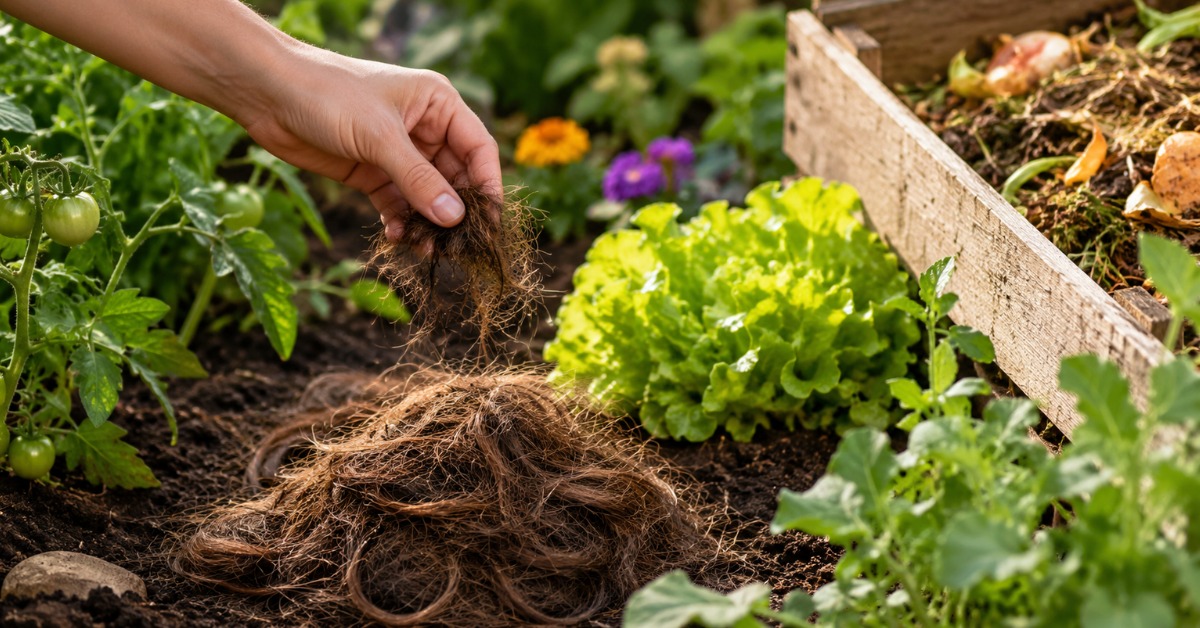
After a haircut or just a quick brushing, hair almost always ends up in the trash. Yet these natural fibers are bursting with useful properties for the garden. Slow-release fertilizer, protective mulch, or a natural repellent: your trimmed hair could become a valuable ecological ally.
This surprising practice is catching the eye of more and more fans of sustainable gardening. For good reason: it helps cut waste while naturally enriching the soil without chemicals.
Why Hair Is Useful in the Garden
Human hair is primarily made up of keratin, a protein naturally rich in nitrogen, but also containing sulfur and trace minerals. When deposited in soil, it breaks down slowly over a period that can last up to two years.
This gradual decomposition releases essential nutrients for plants, much like a natural slow-release fertilizer. Unlike some chemical fertilizers, hair nourishes the soil over time without the risk of overdosing.
They can be particularly useful for:
- tomatoes;
- squash;
- salad greens;
- nitrogen-hungry indoor greens.
Be Cautious with Chemically Treated Hair
Agricultural experts advise avoiding hair that has been heavily chemically treated, especially hair with harsh dyes, relaxers, or large amounts of styling product residues. Natural or lightly treated hair is preferable to preserve soil balance.
Hair to Deter Slugs and Moles from the Garden
Cut hair can also become a valuable ally against garden pests. Its texture and especially its odor act as a natural barrier capable of disrupting several animals and small invaders in the vegetable patch.
When scattered around sensitive plantings, they can notably deter slugs, which dislike dry, fibrous surfaces. Hair then forms a kind of uncomfortable obstacle that slows their advance toward tender young shoots, particularly vulnerable in spring.
Moles are also among the animals this traditional trick aims to repel. Highly sensitive to human odors, they tend to avoid tunnels near hair newly deposited in the soil or directly in the molehills. Some gardeners use hair collected from brushes or at the hair salon as a natural repellent to disrupt their setup.
While this method may not guarantee perfect effectiveness, it has the advantage of being completely free, eco-friendly, and harmless to garden biodiversity. To maximize its effects, refresh the hair regularly, especially after heavy rains.
A Valuable Aid for Improving Soil
When incorporated directly into the soil, hair also improves soil structure. Its fineness creates small spaces that promote:
- aeration;
- water movement;
- reduced compaction.
This property can be especially helpful in heavy clay soils that tend to retain too much moisture.
How to Use Hair as Mulch
Hair can also serve as a natural mulch at the base of plants. This protective layer helps conserve soil moisture while limiting weed growth.
But caution is advised: use it sparingly. A layer that’s too thick risks forming a compact mass that blocks water and air from circulating properly.
The ideal approach is to:
- mix it with fallen leaves;
- combine it with straw or hay;
- spread it in a very thin layer.
Hair Is Perfect for Compost
In compost, hair acts as a “green” matter, rich in nitrogen. It balances well with the so-called “brown” materials such as:
- fallen leaves;
- cardboard;
- twigs;
- sawdust.
You can also add hair collected from brushes as well as pet fur. To speed up their decomposition, it’s better to distribute them in small clumps rather than in large piles.
A Zero-Waste Trick That Gardeners Love
Reusing hair in the garden fits perfectly into an eco-friendly, waste-free gardening mindset. This practice helps reduce household waste while limiting the use of industrial fertilizers—a simple, free, and surprisingly effective solution that turns everyday trash into a resource for biodiversity and soil health.
FAQ – Cut Hair and Gardening
Are hair fibers really good for plants?
Yes. Thanks to their nitrogen-rich protein content, they provide nutrients to plants as they break down.
Can you put hair in compost?
Yes, hair makes an excellent green material rich in nitrogen to balance compost.
Do hair fibers actually deter animals?
Their odor can disturb some animals such as rabbits or deer, though effectiveness varies with conditions.
Can colored hair be used in the garden?
It’s best to limit chemically treated hair to avoid residues that could potentially harm the soil.