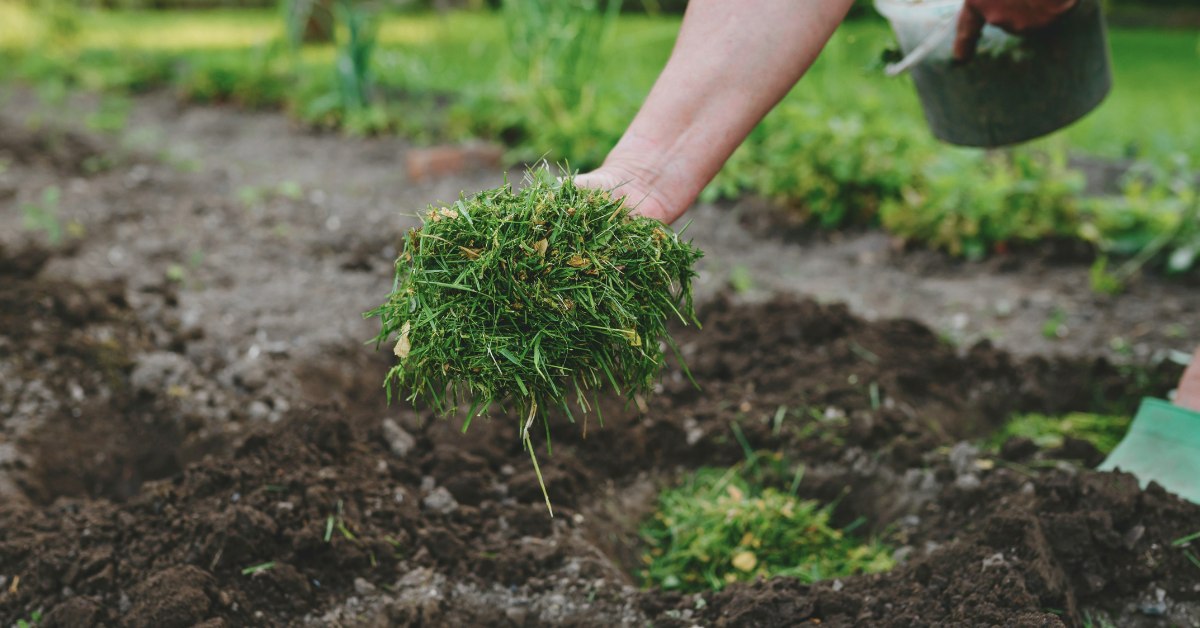
It’s lawn-mowing season, lawn care season, and mulching season! Across the United States, you hear the hum of mowers—gas-powered, electric, or manual. Piles of clippings pile up, and municipal services suddenly face a flood of “green waste” in the curbside bin. Yet the clippings most of us discard can actually be put to use for mulching.
Using lawn clippings for mulching
How much grass do you harvest?
For a rough idea, a 100-square-meter area (that’s about 1,076 square feet) left fallow yields about 30 kg of clippings on the first mow—roughly 66 pounds for that 1,076-square-foot plot. Scale up to 1,000 m², and you’re looking at about 300 kg of clippings, or roughly 660 pounds, which can contain around 240 kg of water (about 530 pounds). In other words, a real little mountain of “green waste” to put to work!
From April through October, you can, of course, use the clippings for compost, but you’ll likely have more than you need and may not want to overwhelm your compost pile. Clippings are also perfect for mulching to protect soil and plants.
A mulching with clippings… short-term
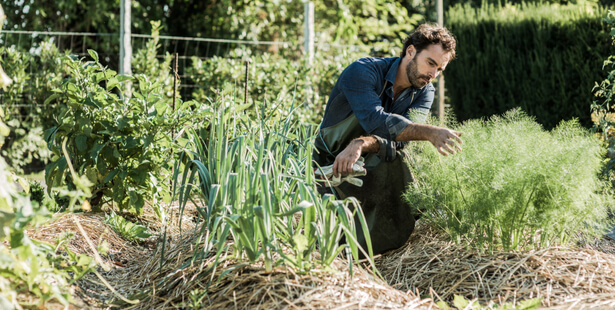
Mulching a vegetable garden is the classic use for lawn clippings. It fits perfectly with the peak vegetable-growing period and with many garden plants—perennials, biennials, and annuals alike.
Warning: avoid grasses that have been treated with products (fertilizers, herbicides, etc.) and clippings that contain seeds.
Before mulching, ensure the soil is weed-free. Mulch is not a substitute for weeding; it’s meant to suppress weed growth.
The nitrogen in the grass will give a little boost to vegetables. Apply clippings at the base of vegetables—particularly leafy crops that need it most (spinach, lettuce, cabbage, leafy greens) or to cucumbers, squash, zucchini, pumpkins, and potatoes.
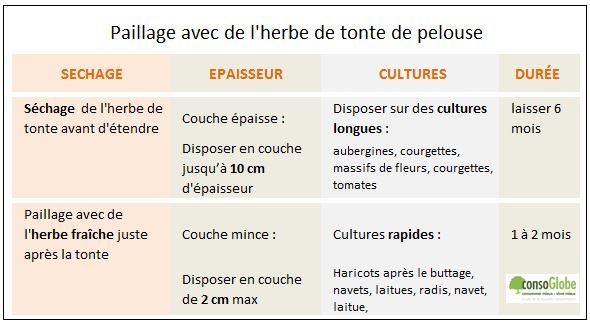
The mowing mulch should be renewed more often than mulch made from small branches or dead leaves. Use clippings that contain few seeds and that haven’t been treated.
Drying mulch is recommended
Since lawn clippings are damp and can go moldy, it’s best to dry them as much as possible before spreading as mulch. To do this, spread them out in the sun; flip them so they dry evenly on all sides. With well-dried mulch, it won’t heat up the soil, won’t become acidic, and won’t suffocate the soil or roots.
What to do with seed-containing clippings?
If your lawn already has a lot of seeds because of frequent reseeding, you can mix the clippings into your compost after drying. In compost, fermentation and the rise in temperature will destroy most seeds. You can also leave a little lawn clippings on the lawn to act as mulch.
The Mulch for the Vegetable Garden
In the early months of spring—April and May—let your soils warm up in the sun before mulching. Then, when you sow your crops in neat straight rows, mulch between the rows as soon as the vegetables break through, or after hilling.
Should you bury the mulch?
Not at all, because burying a mulch increases the risk of white grubs, wireworms, and other soil-dwellers. When you bury a woody mulch (bark, leaves, chips, straw, bagged mulch), it can soak up soil nitrogen to break down, depriving plants of the nitrogen they need.
Take care of your soil – mulch, amendments, green manures, by Catherine Maillet
Set out to meet your soil! – This playful, interactive workbook helps you understand your soil: texture tests, pH analysis, observation of soil life, bio-indicator plants…
Available on Cultura.com
Ethan Hartwell
I break down everyday products to understand what they truly contain and what they imply. My goal is simple: make information clear and useful so people can make more responsible choices without complexity or unnecessary noise.