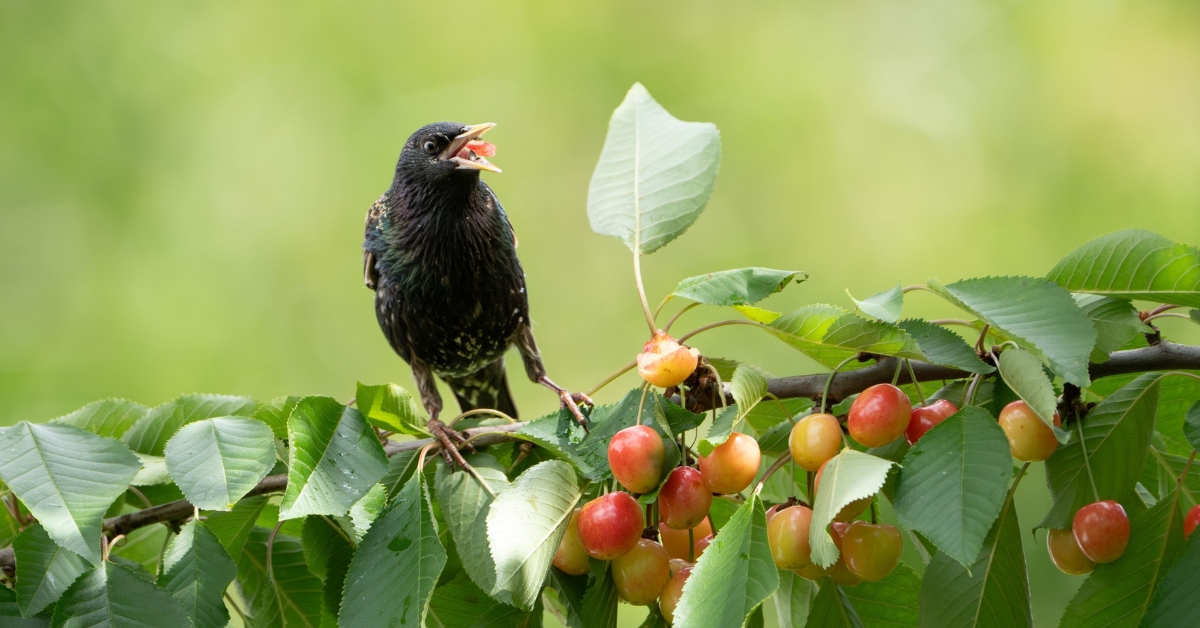
The critical period for cherry trees begins with the appearance of the first fruit, the moment when birds ramp up their attacks. In the heart of home gardens, cherry trees take on particular importance, because protecting their fruit directly contributes to healthy, uncontaminated eating. Indeed, while birds are essential to ecosystems, they can undermine weeks of diligent care in just a few hours, demanding a swift and well-tailored response.
Why birds target cherry trees in spring
With the return of warm days, cherry trees enter a particularly sensitive phase. This period also coincides with the birds’ breeding season, which greatly increases their activity in gardens. By mid-March, the breeding and nesting season begins, leading to a higher presence of birds near fruit trees.
Thus, birds quickly spot ripening fruit and grow accustomed to it. Moreover, cherry trees become prime targets for precise biological reasons.
The red fruits, rich in sugar and water, attract birds seeking quick energy. According to Mon Jardin Ma Maison, « blackbirds and starlings drain your cherry trees in a matter of hours ». Moreover, during hot spells, hydration becomes a key factor, pushing these species to favor juicy fruit. Yet, these birds also play an essential sanitary role in the garden, helping to remove pests. The Ligue pour la Protection des Oiseaux notes that a pair of blue tits consume thousands of insects in the spring, thereby limiting chemical treatments.
Protecting cherry trees from birds without disrupting ecological health
Faced with this pressure, cherry trees require solutions that are appropriate. Bird netting remains the most effective method. These nets feature meshes of 10 to 25 mm, allowing access to be blocked while avoiding deadly traps. However, installation must be meticulous, because a poorly tightened net can still let birds peck at the fruit. Still, these devices carry some risks.
TF1 Info reminds that some nets can “trap small animals that end up dying of exhaustion.” It is therefore essential to favor fine, well-secured meshes and to regularly monitor their condition. In parallel, deterrent methods, such as shiny objects or sound devices, can complement protection. However, their effectiveness wanes quickly, as birds habituate.
Cherry trees: Sustainable strategies against birds
To protect cherry trees sustainably, timing is crucial. According to Le Parisien, you should intervene “at the appearance of the fruit” to prevent birds from forming habits. Combining several methods significantly increases effectiveness. A single list to summarize the essential strategies: install properly sized and well-taut nets, multiply visual and audio deterrents, regularly change their placement, and offer birds an alternative food source. Indeed, feeding birds can divert their attention from the cherry trees.
However, this approach remains partial, because certain species, such as starlings, stay attracted to the fruit. Moreover, as Mon Jardin Ma Maison notes, the best strategy is to protect the fruit “at the critical moment, then release the pressure.” This approach preserves ecological balance while securing the harvest. Finally, the health dimension goes beyond simply protecting the cherry trees. By maintaining the presence of birds, the garden keeps its natural regulators. This reduces pesticide use and, in turn, improves the nutritional quality of the fruit. Thus, protecting one’s cherry trees becomes an act that is agricultural, environmental, and health-conscious.