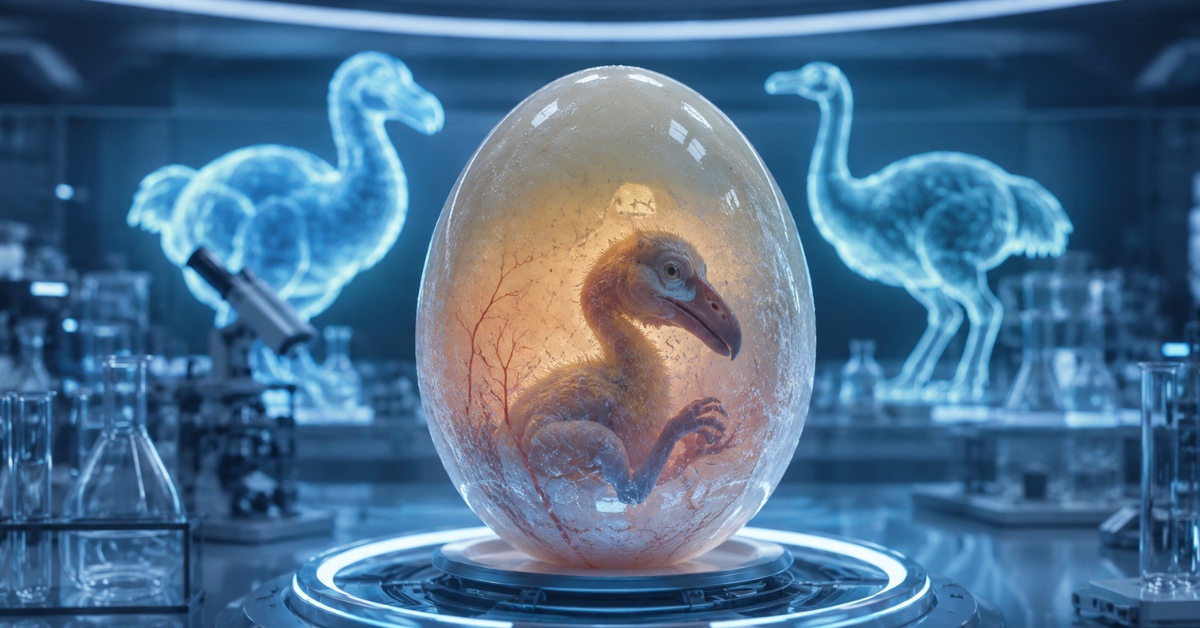
Colossal Biosciences, a biotechnology company, announced the birth of 26 healthy chicks using an artificial egg equipped with a synthetic shell, a biotechnology breakthrough of note.
Adapted to Giant Species
This innovation is presented by the startup as a pivotal step toward its long-term goal: to resurrect extinct bird species, such as the dodo of Mauritius or the giant moa of New Zealand. The company, already known for its mammoth cloning and dire wolf projects, says the size of this artificial egg can be adjusted to accommodate future embryos of giant species.
This eggshell would be capable of shielding the embryo from microbes while allowing oxygen to pass through and moisture to be retained. Up to now, attempts to hatch birds in artificial vessels faced low success rates or risks of genetic damage tied to oxygen delivery. Colossal claims to have solved this challenge with an ultra-thin silicone membrane that is semi-permeable. It mimics the natural gas exchange flawlessly, with a transparent window to observe the embryo’s development.
Major Scientific and Technical Hurdles
Despite this progress, the scientific community remains cautious because the announcement has not undergone any peer-reviewed publication. Additionally, experts note that the shell is only one piece of the puzzle: avian reproduction is far more complex than mammalian reproduction. Indeed, the embryo develops simultaneously with the egg inside the mother, which prevents relying on simple in vitro fertilization. To recreate an extinct species, researchers would first need to genetically modify DNA at an ultra-early stage—a long, labor-intensive process with a currently very low success rate.
Nevertheless, this artificial egg already serves as a valuable tool for biologists to study organ formation in real time as the embryo develops. Colossal also hopes that this technology could enable genetic modification of endangered birds to make them resistant to diseases or better adapted to climate change. However, some ecologists point out that this technological approach does not address the root causes of the biodiversity crisis: protecting existing birds hinges first on habitat preservation and addressing daily threats such as collisions and predators.