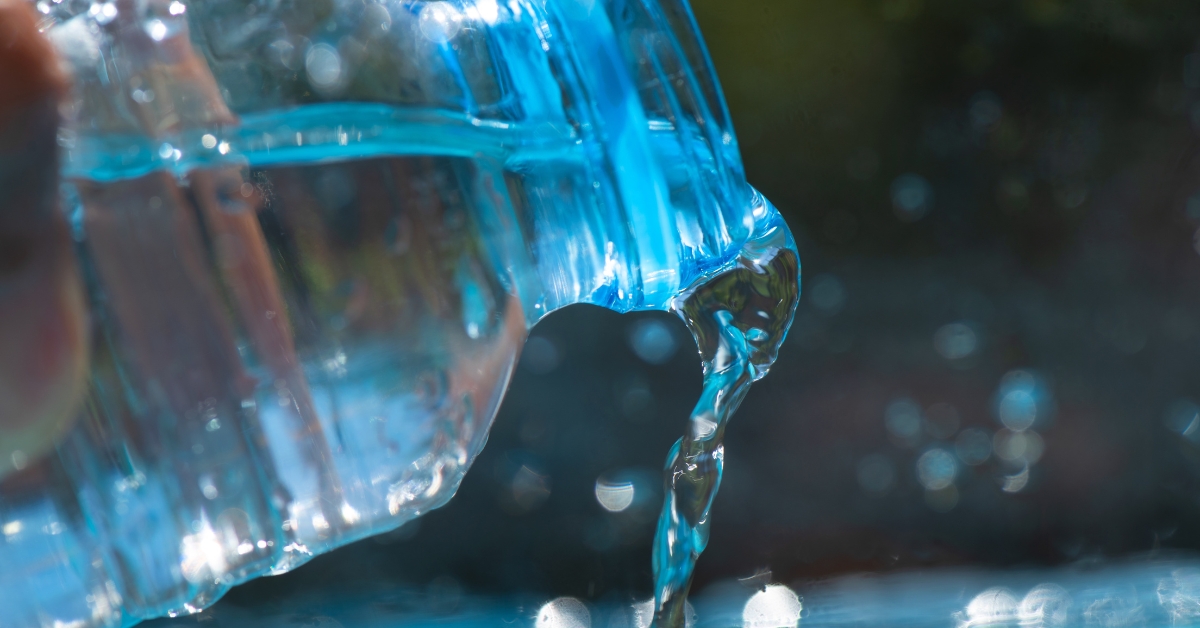
Should we talk about widespread contamination? According to a new study conducted by American researchers, of three bottled water brands tested, only one was free of microplastics.
Invisible Plastic Dust
Every day, we drink plastic without realizing it. A shocking study, published by American researchers in the prestigious scientific journal PNAS, has just highlighted this by analyzing the water from three major bottled brands. The result is unequivocal: two of them are heavily contaminated with plastic residues, while a single brand’s water was completely pure.
Behind this pollution lie microplastics, small fragments the size of a pinhead (between 1 and 5 millimeters). But the real danger comes from “nanoplastics,” plastic specks so tiny they are completely invisible to the naked eye. They measure less than one thousandth of a millimeter, i.e., far smaller than the thickness of a strand of hair, which allows them to bypass our defenses.
They Invade Our Organs
Thus, a single liter of bottled water on average harbors 240,000 floating plastic fragments. Nanoplastics, these ultra-fine particles, account for 90% of this invisible cocktail, with the remaining 10% corresponding to traditional microplastics. A one-liter bottle contains nearly a quarter of a million polymer particles that can enter the bloodstream and lodge in the heart, the brain, and other organs.
This invasion worries doctors at the highest level for a simple reason: the body’s natural barriers are not equipped to stop them. Unlike larger pieces that are expelled, these nanoplastics are so tiny they can cross the walls of our digestive tract. They slip directly into our bloodstream, traveling throughout the body to settle in vital organs like the heart and brain.
A New Imaging Technique
If this discovery is possible today, it is thanks to a major technological achievement. Until now, scientists remained somewhat “blind” to nanoplastics, lacking suitable tools. The American team has therefore invented an ultra-powerful laser imaging technique paired with an intelligent algorithm, capable of scanning water at high speed to detect and precisely identify the signature of each type of plastic, even below 100 nanometers.
This breakthrough radically changes our understanding of the danger posed by nanoplastics. By revealing that bottled water actually contains ten times more plastic than previously thought, the study alerts both the general public and authorities. It finally provides scientists with the tool they lacked to measure the precise impact of this plastic pollution on our daily health.
- https://www.pnas.org/doi/10.1073/pnas.2300582121