
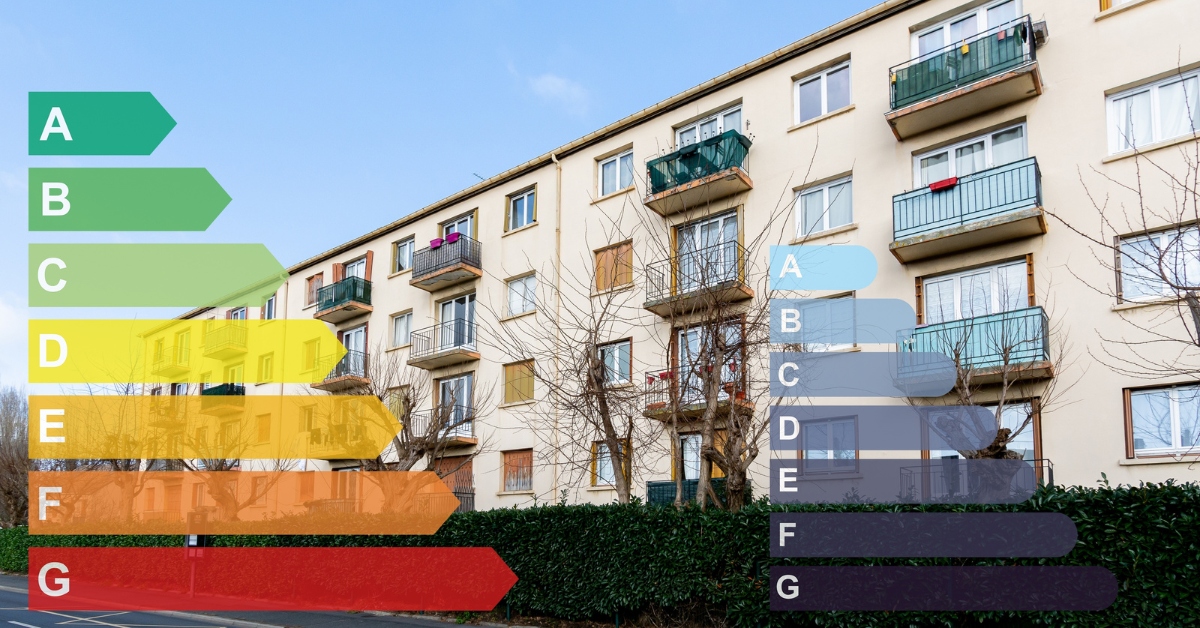
The French government is weighing a new change to how the Diagnostic de Performance Énergétique (DPE) is calculated, a reform that could automatically alter the rating for as many as 2.28 million homes.
Energy-inefficient properties slipping away
This coefficient, already cut from 2.58 to 1.9 in recent years, could soon drop to around 1.7. The aim is to fix the current technical rules that heavily penalize electrically heated homes. Specifically, small units on the ground floor or under the roofs of older buildings, which suffer the greatest heat losses.
This technical revision represents a major stake for the French housing stock, since it could change the rating of 2.28 million homes. This amounts to removing more than half of the current energy-inefficient “passoires thermiques” from the F and G categories, and all without any renovation work being required. The previous revision on the same principle had already allowed around 850,000 homes to artificially improve their energy label, according to data from the finance ministry (Bercy).
Risks of gaming the system
On the side of real estate professionals and landlords, this prospect is, of course, welcomed with relief. In principle, the law is supposed to progressively ban the rental of properties rated G starting January 2025, then F in 2028. This measure would ease the financial pressure on owners facing very costly renovation work, and also help avoid a major crisis and a sweeping freeze in the already highly saturated rental market.
The measure nonetheless faces sharp criticism; some industry experts denounce an “on-paper” improvement. Indeed, this regulatory change reduces the number of energy-inefficient properties purely virtually, without reducing actual consumption or lowering tenants’ energy bills. Moreover, these successive fluctuations of the DPE also directly affect the negotiating value of real estate. Indeed, the value can fall by 15% to 25% depending on a simple letter change in the diagnostic. An effect that opens the door to many abuses…