
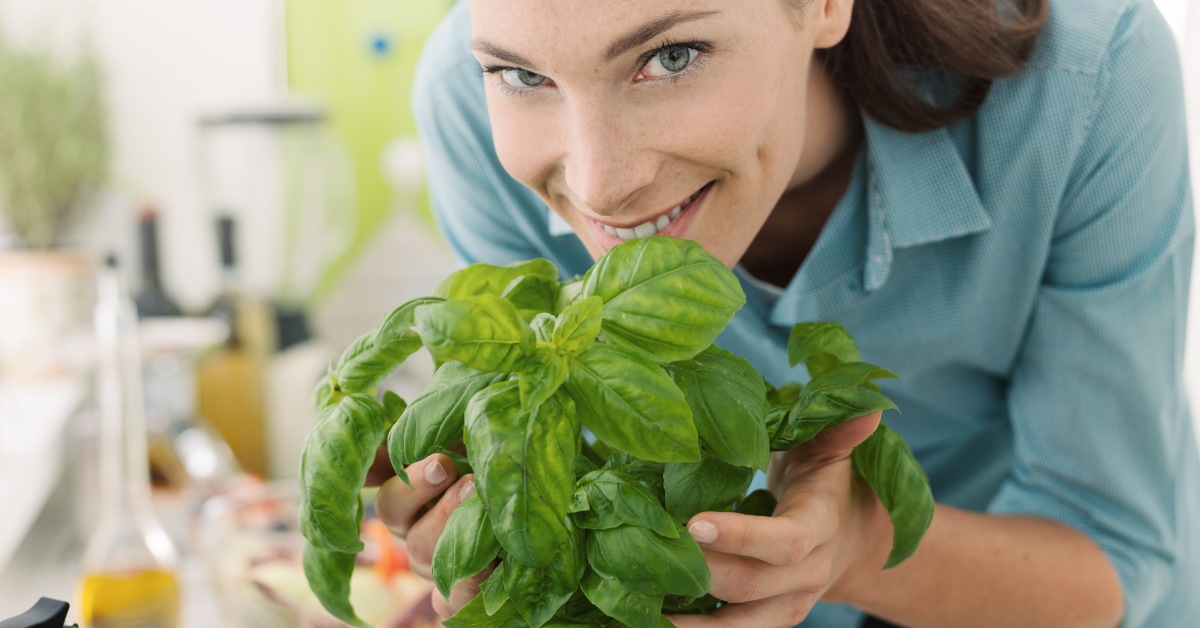
With its sun-drenched aroma, basil is an essential herb for summer dishes. But behind its delicate leaves and slightly peppery taste lie real benefits for digestion, gut comfort, and antioxidant balance.
Basil, King of Aromas
Basil, Ocimum basilicum, belongs to the Lamiaceae family, like rosemary, sage, or mint. Its name comes from the ancient Greek basilikón, meaning “royal plant.” Since antiquity, it has been valued for both its aromatic qualities and its traditional uses in herbal medicine.
Today, there are more than 150 varieties of basil. Alongside common basil, widely used in Mediterranean cooking, you’ll find Genovese basil, essential for Italian pesto, or Thai basil, with a more anise-like note, common in Asian dishes.
At home, you can easily grow basil in a pot. It needs sun, regular watering, and soil that doesn’t dry out too quickly. This way you can pluck a few fresh leaves to flavor your dishes, salads, or teas.
What are the health benefits of basil?
Sprinkling basil on your dishes isn’t just inviting a taste of the South to your plate. Like many natural herbs, it also brings valuable nutrients and several protective plant compounds.
Basil helps with digestion
Basil has traditionally been used to ease digestive discomfort. It can be helpful after a heavy meal, for bloating, heaviness, or mild abdominal cramps.
Its leaves are thought to stimulate digestive functions and bile secretion. This can help the body better digest fats. That’s why a simple basil infusion after a meal can be a useful habit.
A herb rich in antioxidants
Basil contains several antioxidants, including rosmarinic acid. These compounds help fight free radicals involved in cellular aging.
It also contains eugenol and linalool, two aromatic molecules studied for their soothing and anti-inflammatory properties. This doesn’t make basil a medicine, but it can be a helpful ally in a varied diet.
Support during times of stress
As an infusion, basil can also be enjoyed in the evening, notably after a busy day or a heavy dinner. Its vegetal and lightly peppery scent favors a sense of relaxation.
For an even gentler effect, you can pair it with lemon balm, another herb known for its impact on digestion and inner calm.
How to use basil in infusion or tea?
To enjoy basil’s digestive benefits, infusion remains one of the simplest methods. It allows you to use fresh leaves without heating them too much.
Place a small handful of basil leaves in a cup of simmering water. Cover, steep for 10 minutes, then strain. This herbal tea is best enjoyed after meals, three or four times a week.
Avoid boiling the leaves for too long. Basil is delicate, and excessive heat can dull its aroma.
Basil essential oil: benefits and precautions
In aromatherapy, there are mainly two basil essential oils: the Sweet Basil Essential Oil, Ocimum basilicum CT linalool, and the Tropical Basil Essential Oil, Ocimum basilicum var. basilicum.
The sweet basil essential oil is mainly used for digestive comfort. The tropical basil essential oil, more potent, is often reserved for diluted massages to help with tensions, cramps, or menstrual discomfort.
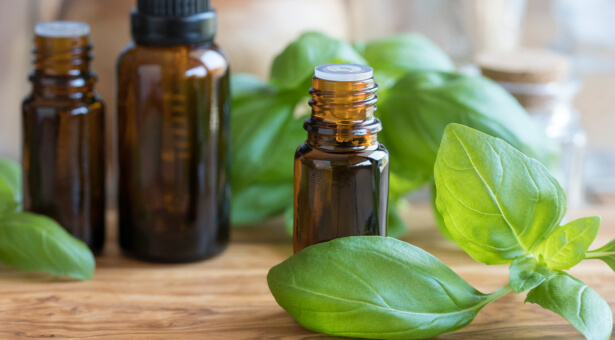
The tropical basil essential oil contains estragole in particular. This compound calls for careful use. It’s better to favor short, properly dosed uses, and never apply it undiluted on the skin.
Common basil or sacred basil: what’s the difference?
Common basil, used in cooking, should not be confused with sacred basil, also called Tulsi. These two plants belong to the same broad botanical family, but their uses differ.
Common basil is valued mainly for its aroma, its digestive benefits, and its antioxidant richness. Tulsi, on the other hand, is a major plant in Ayurvedic tradition. It is often presented as an adaptogenic plant, used to help the body better cope with stress.
If you already have a Tulsi-focused article on consoGlobe, this is where you should place the internal link to strengthen the interconnection between the two topics. Tulsi, sacred basil with incomparable anti-stress and purifying benefits
How to enjoy basil on a daily basis?
The simplest approach is to use it fresh. Add it at the last moment in dishes, as its leaves don’t tolerate long cooking. It flavors tomatoes, grilled vegetables, salads, cold soups, and homemade sauces.
Simple idea: a flavorful homemade pesto
- 1 large bunch of fresh basil
- 30 g pine nuts or sunflower seeds
- 30 g Parmesan cheese or nutritional yeast
- 1 small garlic clove
- 4 tablespoons olive oil
- A splash of lemon juice
Blend quickly all the ingredients until you achieve a smooth texture. Serve this pesto with pasta, roasted vegetables, a slice of bread, or a potato salad. For a more economical version, replace the pine nuts with sunflower seeds.
The smart zero-waste tip: if your basil starts to wilt, blend it with a little olive oil and freeze it in an ice cube tray. You’ll have ready-to-use portions to flavor your dishes.
FAQ on the health benefits of basil
Is basil good for the stomach?
Yes, basil has traditionally been used to support digestion. It can help with bloating, digestive heaviness, or mild spasms.
Can you drink basil tea every day?
Moderate consumption of basil tea generally isn’t a problem for healthy adults. However, it’s best to vary the plants you use and seek medical advice if you’re on medication or have a chronic illness.
What are the dangers of basil essential oil?
Basil essential oil is highly concentrated. It is not recommended for pregnant or nursing women, young children, or people with liver issues. It should not be used without caution.
What’s the difference between basil and sacred basil?
Common basil is mainly used in cooking and for digestive comfort. Sacred basil, or Tulsi, is more closely associated with Ayurvedic tradition and stress management.