
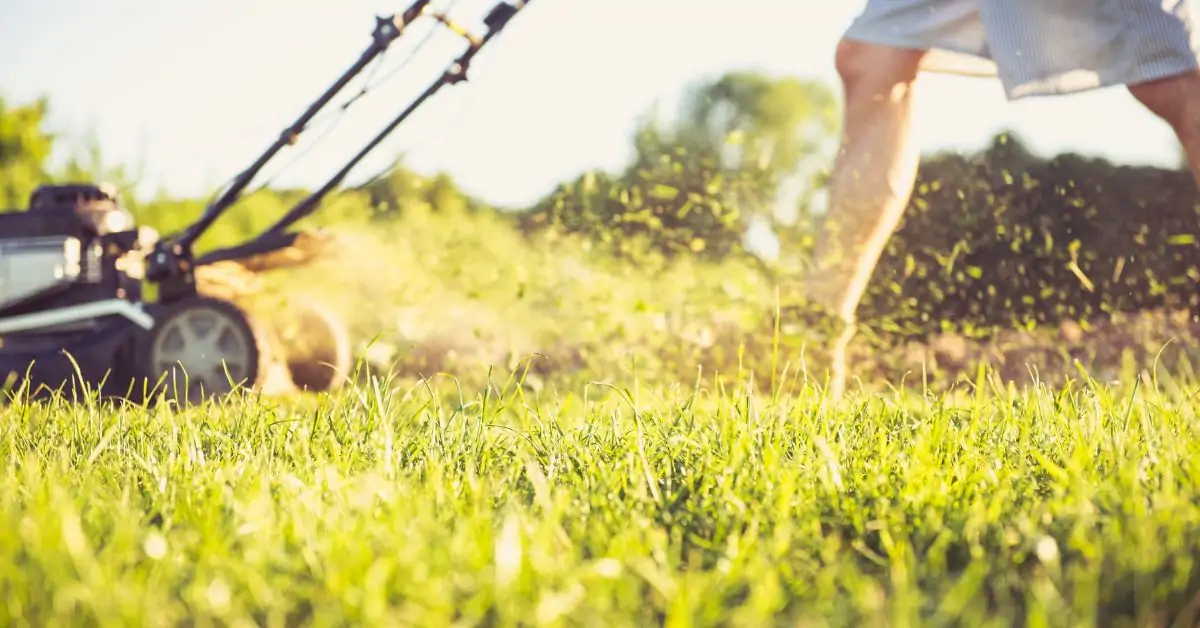
Not mowing your lawn in summer can foster biodiversity, keep soil cooler, and create a charming cottage-garden feel. But letting the grass grow without limits isn’t always appropriate. In dry periods, tall grasses can become a problem, especially in areas prone to wildfires.
The right solution isn’t necessarily to stash the mower away for good. It’s about mowing less often, not too short, and smarter. Beneath our feet, a multitude of insects, small animals, and microorganisms live in the lawn.
The mowing that’s too short endangers the insects living in our lawns
The National Audubon Society recommends avoiding lawns mowed too short and too often. A lawn cut to the bone quickly becomes a “green desert.” It looks neat, but it offers little food and shelter for insects, birds, hedgehogs, snails, or amphibians.
When blades ride too close to the ground, they can injure or kill many small animals. They aren’t always visible, but they’re there: larvae, beetles, spiders, worms, caterpillars, and tiny amphibians taking shelter in fresh grass.
Yet insects play a crucial role in garden balance. They feed birds, help with pollination, and contribute to the decomposition of organic matter. Removing them weakens the entire little life chain that animates the garden.
Another important point: wildflowers, such as dandelions, clover, daisies, or plantains, feed pollinators. Cutting them too early prevents them from flowering and going to seed. Whenever possible, it’s better to let some areas wait until the end of flowering before mowing.
What height should you mow the lawn at in summer?
In summer, it’s best to never cut the grass too close to the ground. A mowing height around 7 to 10 cm (about 3 to 4 inches) helps preserve wildlife and also protects the lawn from heat.
A taller blade of grass shades the soil. It reduces evaporation, slows drying, and helps the turf better withstand hot spells. Conversely, a close shave exposes bare soil to the sun. The result: the soil heats up faster, dries out sooner, and the lawn yellows.
For highly used areas—such as a path, a play corner, or a dining space—regular mowing remains feasible. However, borders, the base of trees, slopes, or back-of-yard areas can be left wilder. This is the idea of differentiated mowing: maintain what’s truly used and let the rest breathe.
- In summer, avoid mowing below about 3 inches (roughly 7 cm).
- Keep some areas tall for insects and small animals.
- Mow less often as the heat sets in.
- Never run a robotic mower at night.
The right move: mowing from the center toward the edges
To give small animals time to flee, it’s better not to start at the edges. These zones often serve as refuges for insects, hedgehogs, amphibians, or lizards.
The proper method is to start mowing from the center of the yard, then work outward. Wildlife can then head toward hedgerows, flowerbeds, or remaining tall grasses.
Before you run the mower, take a few minutes to survey the garden. Look beneath piles of leaves, at the base of hedges, and near shady areas. A hedgehog, a toad, or a ground nest may be hiding there.
As for robotic mowers, be cautious. They’re convenient, but they can seriously injure nocturnal wildlife. Hedgehogs, in particular, often curl up into a ball rather than flee. It’s therefore best to schedule these devices only during daytime hours, never at night or at twilight.
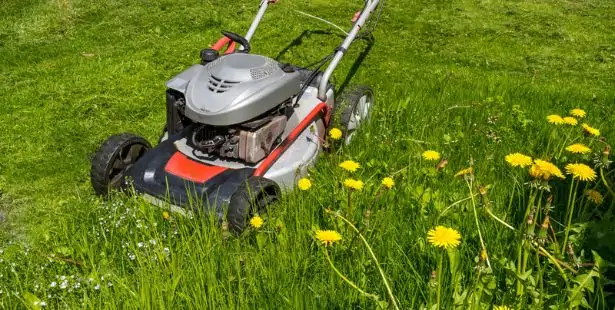
Mulching, a gentler mowing for the soil
The mulching practice involves leaving finely cut grass on site. It slowly decomposes and naturally nourishes the soil. This technique also reduces green waste to be disposed of.
During hot periods, mulching can be beneficial if the grass isn’t too tall and the cut is fine. It forms a light vegetative cover that helps retain moisture. However, if the grass is very tall or damp, it’s best not to leave large clumps on the ground, as they can smother the lawn.
The clippings can also be used in the vegetable garden, in thin layers, around water-loving vegetables. They serve as homemade mulch. The rule is simple: better several thin layers than one thick mat. If too thick, the grass may ferment and emit an unpleasant odor.
Garden tip: Let the clippings dry for a day or two before using them as mulch. They’ll be easier to spread and will limit fermentation risks.
Encouraging wildlife in gardens with differentiated mowing
If you want to welcome more animals into your garden, leave several zones with tall grasses. They’ll become valuable refuges, especially in summer. Insects find food there, small mammals hide there, and birds come to forage.
Differentiated mowing also helps you rediscover spontaneous plants. Poppies, dandelions, clover, daisies, or yarrow sometimes appear unaided. They were simply waiting in the soil for a bit of quiet to thrive.
Caroline Caironi, a landscape designer in the Gard department of southern France with the Terracoopa cooperative, advocates this approach. The idea is to keep unmowed zones, for example around trees or along borders. These spaces are often underutilized by homeowners but are very useful for biodiversity.
You can also sow a mix of local wildflowers in parts of the garden. Favor species suited to your region and avoid overly exotic mixes. The goal isn’t to create an artificial prairie, but a living, simple space that’s useful for pollinators.
And wildfire risk in summer?
Letting grass grow doesn’t mean neglecting maintenance altogether. In dry regions, tall and dried-out grasses can contribute to fire starts. It’s important to tailor your practices to climate, weather, and local regulations.
If you live in a fire-prone area, check with your city hall or county authorities. Some communities require vegetation clearance around homes. In such cases, you must of course follow local obligations.
The most balanced solution is to keep a short strip near the house, along paths and buildings, while preserving taller pockets elsewhere. This way, the garden stays safer without becoming hostile to biodiversity.
Turning your lawn into a living garden
A perfect lawn demands a lot of maintenance, water, and mowing passes. By contrast, a lawn with more freedom gradually becomes a small ecosystem. It changes in color, height, and texture. It hosts flowers, insects, and sometimes birds that come to feed there.
This less-controlled garden may be surprising at first. It doesn’t resemble the uniform lawns you see in catalogs. Yet it’s often more resilient, cooler, and more interesting to observe. In summer, this isn’t a drawback: it’s a real strength.
Ultimately, mowing your lawn well in summer isn’t about cutting everything to a razor edge. It’s about choosing the right places, the right height, and the right moment. The garden remains pleasant for people while giving real space to living things.