
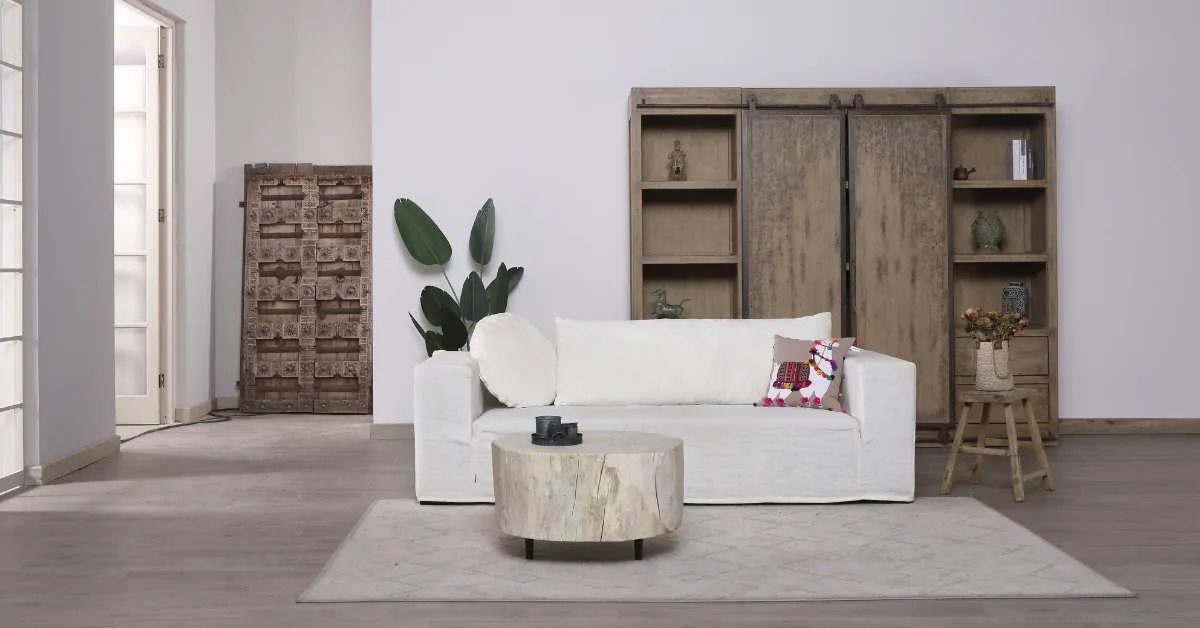
Wabi-Sabi is the current decorating trend right now! Minimalist, clean, and in harmony with nature, it has plenty to win us over. That said, be careful not to reduce Wabi-Sabi to a mere decorating concept—it’s actually much more than that: a philosophy of life that invites you to slow down, consume less, and look at everyday objects in a new way.
What to remember:
Wabi-Sabi values simplicity, natural materials, patinated objects, craftsmanship, and imperfections. In decorating, it naturally sits within a more understated, more durable approach and closer to ecological decorating.
Wabi-Sabi, a state of mind above all
The term “Wabi-Sabi” actually brings together two concepts: simplicity, the melancholy (wabi) and the wear of time, aging things (sabi). If you ask a Japanese person to explain what Wabi-Sabi is, there’s a good chance they can’t do it in a few words. Because Wabi-Sabi is above all a philosophy of life, a way of feeling things, hard to put into words but very easy to understand at home: we stop chasing perfection, the new, the smooth, and we learn to love what has lived.
This way of life emerged in the 15th century when Japanese monks started using humble, local accessories during tea ceremonies, in response to the lavish ceremonies of the elite. By championing simplicity and humble materials, a new philosophy of life was born.
Today, living Wabi-Sabi means living simply, loving what surrounds us, and accepting all imperfections. Wabi-Sabi is therefore the exact opposite of our consumer-driven society that promotes beauty, novelty, and always wanting more. In decorating, this yields a fairly rustic, raw, and fuss-free look. Maybe that’s why we love it?
How to adopt Wabi-Sabi décor at home?
A Wabi-Sabi décor isn’t about emptying your interior or living in an austere house. The goal is to create a calming, authentic, and warm space, with objects chosen for their material, their story, and their usefulness.
Raw and patinated materials
How-to: for a Wabi-Sabi décor, start by prioritizing raw, rustic, and imperfect materials like stone, wood, linen, terracotta, ceramics, or hemp. The irregularities and wear reveal the authentic beauty of objects, so don’t try to erase them!
Visible marks of time passing
Smart idea: don’t hesitate to salvage old furniture or buy second-hand. The wear marks signal that these pieces have a history, that time has passed… A scratched table, a mismatched chair, a slightly patinated shelf can add a great deal of soul compared with a standardized, brand-new piece.
There’s no need to try to hide them! On the contrary, an imperfect space that ages with time is the very spirit of Wabi-Sabi. It’s also an easy way to curb unnecessary purchases, support second-hand, and extend the life of objects.
Minimal, artisanal furniture
Surround yourself with what you love, it doesn’t matter if items are mismatched, but don’t clutter your space!
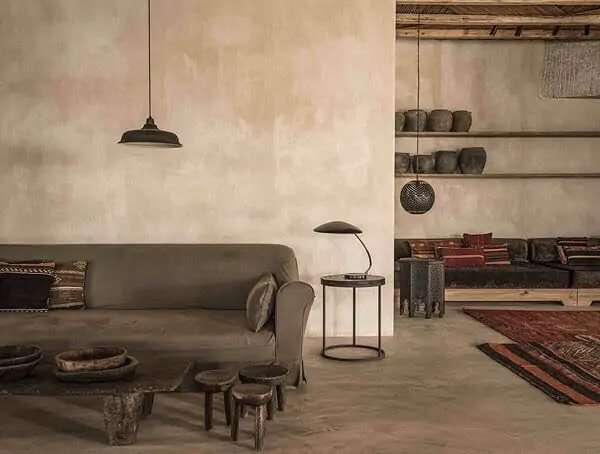
The protocol: declutter to the maximum to keep only what’s essential, namely simple, practical, artisanal, and raw-beautiful furniture. Furniture that is too flashy or too modern doesn’t really belong in a Wabi-Sabi interior. We lean toward simplicity, authenticity, and pieces that stand the test of time.
Nature as a source of inspiration
As for colors, make them as close as possible to those of natural elements. Choose rather light and neutral tones: beige, ecru, brown, stone gray, sage green, off-white, soft terracotta. Bright colors can appear, but only in small touches.
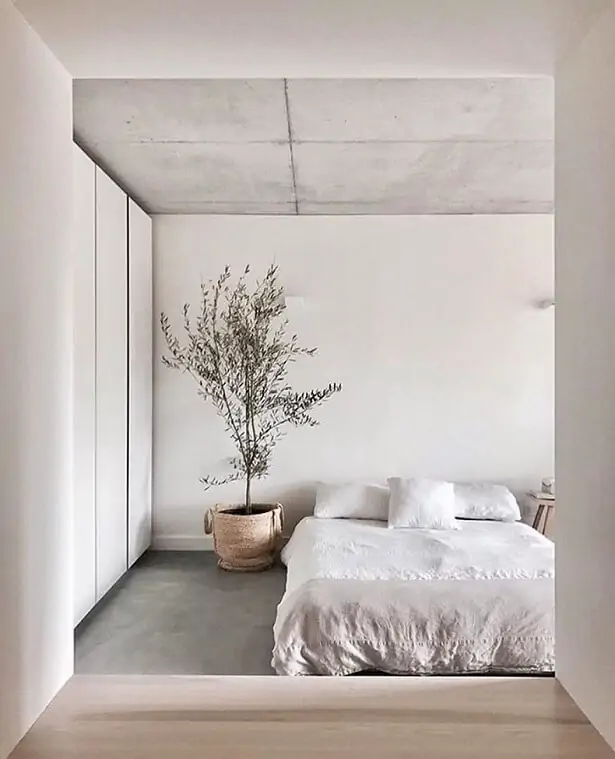
And more than just an aesthetic choice, a Wabi-Sabi decor should mainly bring you inner peace. The idea is to reflect in your furniture and space the imperfection of nature, but also the marks of human labor.
Bonus: Wabi-Sabi and zero waste—the decorating duo that makes sense
Wabi-Sabi blends perfectly with a zero-waste approach. Rather than replacing, we repair. Rather than discarding, we transform. Rather than chasing a millimeter-perfect trend, we compose a space that truly reflects who we are.
The sustainable alternative: to start without changing everything, begin with a single room. In the living room, swap out a few standardized decorative items for a wicker basket, a vintage piece, an antique vase, or a repaired lamp. In the kitchen, display beautiful jars, a wooden cutting board marked by use, or mismatched tableware. In the bedroom, favor natural fibers and calming colors.
This approach also aligns with upcycling and recycling: giving objects a second life, valuing simple materials, and reducing the pressure to always buy new.
Finally, trust yourself—the Wabi-Sabi spirit will find its place in your home naturally!
FAQ: Frequently asked questions about Wabi-Sabi decorating
What is the difference between Wabi-Sabi and minimalism?
Minimalism often aims to reduce the number of objects to lighten the space. Wabi-Sabi goes further: it also values raw materials, the marks of time, irregularities, and imperfect objects.
How can you make a room Wabi-Sabi without tearing it all apart?
Start by decluttering, then add a few natural materials: raw wood, linen, ceramic, stone, wicker. Keep objects that have a story and avoid purchases that are merely decorative.
Is Wabi-Sabi compatible with a modern house?
Yes, provided you soften overly cold lines with natural materials, handmade objects, and neutral colors. A contemporary home can easily embrace a Wabi-Sabi vibe.