
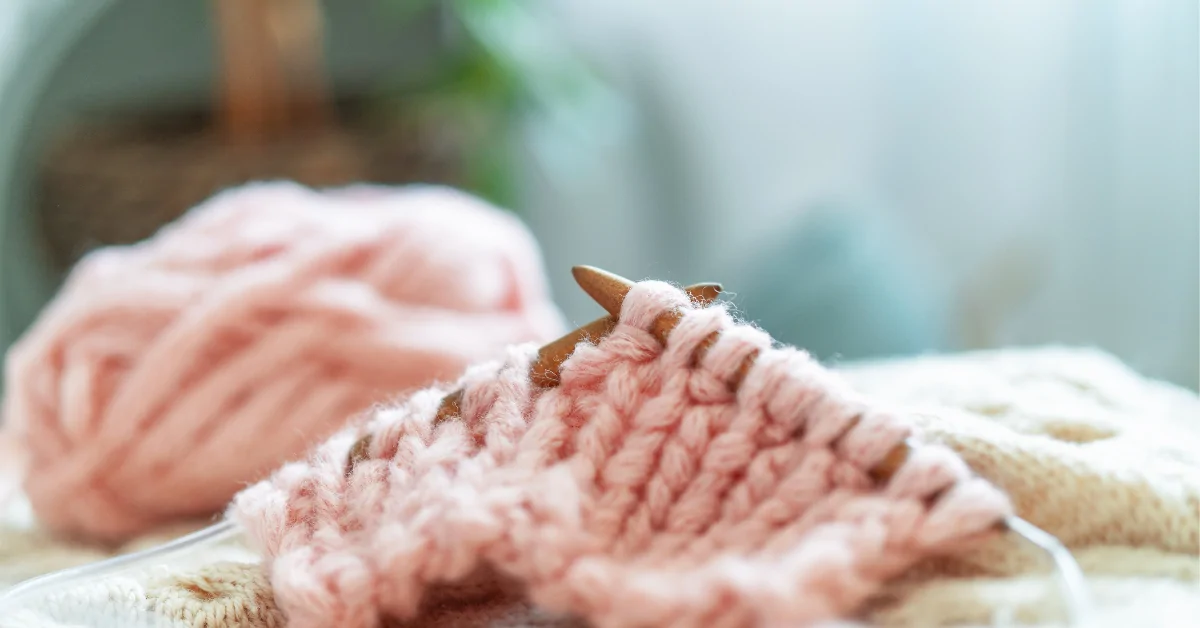
The do it yourself (DIY for “do it yourself”) has revolutionized the small world of knitting in just a few years. Today, people want to knit, and you can even do it without polluting, zero waste and—almost—free. Here are all our tips for learning to knit in a greener way.
How to Learn to Knit Without Polluting
Over the past decade, more and more young people are turning back to knitting, crochet, or sewing. Indeed, these creative arts offer many advantages: economic, they let you make sturdy clothes and accessories. In an era of fast fashion, you can create unique and original pieces to give or treat yourself.
Eco-Friendly Knitting?
These are eco-conscious activities since they require few resources, and they’re ethical: at the very least, you can be sure no child knitted your scarf! It’s possible to knit even greener by following a few tips…
Eco-Friendly Needles and Yarn
To knit, you don’t need a lot of gear: a pair of needles, some yarn, and optionally a pattern. Avoid trendy bundles like “needles – one pattern – two skeins,” unless you’re just starting out. Buy yarn and needles separately, which will usually be cheaper. In that case, opt for 100% organic yarn. The brand Bellelaine offers organic yarn skeins Made in France.
If you’re vegan and avoid wool garments, there are also organic cotton knitting yarns or even organic hemp yarns made in France!
Similarly with needles. There are needles of all sizes in all materials. If you need to buy, prefer bamboo needles, a renewable material derived from a plant that grows very quickly. Moreover, they feel nicer to the touch than plastic needles.
Gear: Consider Second-Hand and Upcycling
To find needles and yarn, you can shop second-hand, or even get donations. Ask around: many grandmothers still have old skeins and needles lying around, and will be happy to show you the stitches to get started. Plus, it’s an activity that builds connections across generations!
To find yarn, scour thrift stores or second-hand shops like Emmaüs: you’ll often find skeins in bulk at rock-bottom prices. Yarn shops also sell discounted skeins, perfect for beginners.
The zero-euro and zero-waste solution? Unravel an old sweater and reuse the yarn to knit it again! That’s how our grandmothers did it when a sweater was too small.
How to Learn Knitting
Knit sustainably also means taking the time to learn. If you’re starting from scratch, instead of staring at a “beginner knitting” tutorial, get out there and ask your grandmother or an older person in your circle to teach you. It’s much more relaxed and enriching.
Can’t find anyone in your circle who knits? There are plenty of knitting clubs, knit cafés, or knitting classes that bring all generations together. Check with your city hall or neighborhood community center. You can also post an ad at your local yarn shop for a service swap: “I’m looking for knitting lessons in exchange for computer classes.” You’ll surely attract fans!
In short, building social bonds while creating warm, eco-friendly accessories on a budget: knitting has it all.