
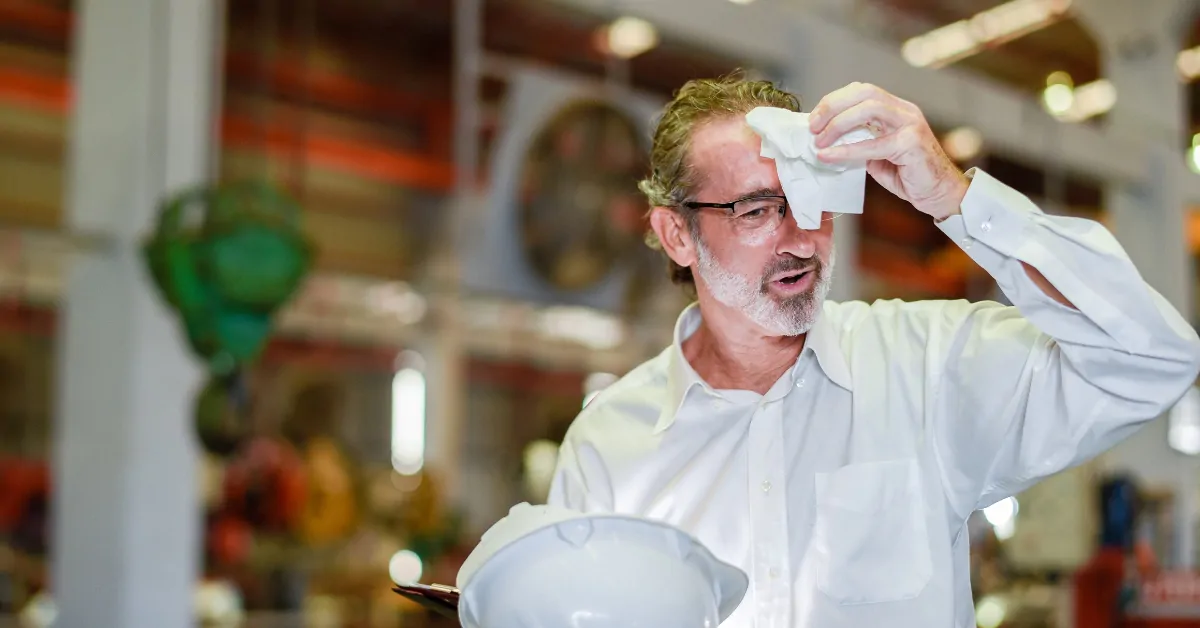
Facing the inexorable intensification of climate-related phenomena, ADEME, INRS, ANACT, and Groupe VYV launched the collaborative platform “Cooler at Work.” This tool centralizes proven field solutions to safeguard workers’ health despite extreme temperatures.
A Direct Threat to Health and Performance
Heat profoundly undermines human capacities: risks begin at 28°C (82°F) for physical work and 30°C (86°F) for office tasks, becoming critical above 33°C (91°F). Beyond physical failures and severe discomfort on construction sites or in workshops, heat waves also tax mental load by increasing stress, irritability, and losses of concentration, which degrade the work environment and multiply the risk of workplace accidents. Infrastructure also bears the thermal shock, sometimes causing server outages or temporary site closures.
In response to this climate reality, French legislation has tightened through the application of Article R.4463-2 of the Labor Code. Since July 1, 2025, employers are legally required to integrate the risk of high heat into their Single Document of Occupational Risk Assessment (DUERP) and to trigger preventive measures systematically. These actions must adjust dynamically and intensify according to vigilance thresholds (yellow, orange, or red) activated by Météo-France to protect teams as much as possible.
Greening the Exteriors of Businesses
First, a critical step is the essential thermal adaptation of the building stock, with architectural changes to block external heat and keep the interior cool in a restrained way. Experience shows that strategies combining exterior insulation, reflective shading, and ventilation with heat recovery (double-flow ventilation) to over-ventilate at night are effective. Additionally, green cooling technologies like geocooling (using the earth’s cool temperature) or adiabatic cooling (water evaporation) can be employed. To offset the financial cost of these structural renovations, companies can rely on incentives such as ADEME’s Heat Fund or Energy Savings Certificates (CEE).
The landscaping around the company premises also plays a key role in reducing ambient temperatures. Transforming mineralized and asphalt-covered parking lots into permeable spaces allows rainwater infiltration and promotes the creation of tree clusters. These landscaping changes lower the surrounding air temperature through natural shading and the evapotranspiration of trees. Consequently, they reduce the load on building air-conditioning systems and on parked corporate vehicles.
Flexible Work Scheduling
Daily operational adjustments provide an immediate lever to shield workers from heat peaks. Companies should adapt schedules by implementing staggered hours (start of shift at dawn), changing the order of tasks (reserving physically demanding work for the morning), increasing break frequency, and repurposing climate-controlled bungalows or shaded areas as recovery spaces. The use of innovative personal protective equipment, such as cooling T-shirts and vests, is also encouraged, but not as a substitute for comprehensive organizational measures.
But there must also be a culture of shared prevention, nourished by ongoing dialogue among management, supervisors, and employee representatives. Directly involving workers and field agents in designing safety manuals or in practical testing of new cooling textiles ensures both buy-in and the relevance of the guidelines. Informal, on-the-ground solutions spontaneously devised by teams on-site will help shape realistic business continuity plans genuinely tailored to each site’s constraints.