
Everyday products can also suffer from heat. Medicines, perfumes, creams, plant oils, or homemade cosmetics: not all react the same to high temperatures. Here’s how to spot signs of alteration and adopt the right reflexes.
What to remember
- Heat, light and humidity can damage perfumes, cosmetics and medicines.
- A perfume that changes color, becomes cloudy, or smells alcoholic should be set aside.
- A medicine that is deformed, melted or phase-separated should not be used without medical advice.
- Never leave medicines or perfumes in a car in direct sun.
- If in doubt about a treatment, consult a pharmacist or a physician.
Heat and everyday products: why you should be vigilant?
In summer, the home can quickly turn into a sauna. A humid bathroom, an attic bedroom, or a car parked in the sun is enough to weaken certain products.
Heat speeds up chemical reactions. Direct light can also degrade sensitive molecules. Humidity promotes changes in appearance, mold growth, or damage to packaging.
As a result: a perfume loses its balance, a cream separates, an oil goes rancid faster, and some medicines become less reliable.
The right reflex is therefore to tidy up your cupboards before the first heat waves. This avoids waste, but also nasty surprises.
Perfumes: signs of heat-related deterioration
Perfumes are often kept in the bathroom or on a dresser. Yet these are precisely the places to avoid. Heat, UV exposure, and humidity accelerate the oxidation of the fragrance.
Several signs should alarm you:
- the color darkens or turns yellow-brown;
- the liquid becomes cloudy;
- deposits appear at the bottom of the bottle;
- the scent becomes more alcoholic, acidic, or metallic;
- the top notes disappear quickly after application.
Indeed, the top notes are the most volatile. They are often the first to disappear. The perfume may then seem flatter, heavier, or unbalanced.
Where to store your perfumes in summer?
To extend their life, store your bottles in a dry, dark and cool place. A bedroom closet, a drawer, or a closed cabinet works better than a bathroom.
Some simple steps make a difference:
- store bottles upright;
- keep the cap tightly closed;
- keep the original packaging;
- avoid windowsills;
- don’t leave a perfume in a sun-exposed bag.
The refrigerator isn’t always helpful. It can cause condensation if the bottle is taken out often. For most perfumes, a cool closet is enough.
Medicines and extreme heat: essential vigilance
For medicines, the consequences can be more serious. First, some forms are temperature-sensitive. This includes suppositories, vaginal tablets, soft capsules, creams, gels, or ointments. A change in appearance should raise the alarm. If the product has melted, liquefied, separated, or shows an abnormal texture, it’s better to seek advice from a pharmacist.
Second, some medicines can make the body more vulnerable to heat. They can disrupt hydration, kidney function, or the body’s ability to regulate temperature.
In particular, depending on the case, these may include:
- certain diuretics;
- certain anti-inflammatories;
- certain antihypertensives;
- certain potent pain medications;
- certain antipsychotics;
- medications in patch form.
Warning: never stop a treatment on your own. During heatwaves, the right reflex is to seek advice from your doctor or pharmacist.
Acetaminophen, ibuprofen: beware self-medication during a heat wave
Facing fever or feeling unwell after heat exposure, self-medication can be risky. The FDA reminds that acetaminophen is not effective for heat stroke. It can also worsen liver injury.
Nonsteroidal anti-inflammatory drugs (NSAIDs), such as ibuprofen, do not treat heat stroke either. They can increase the risk of dehydration.
If you feel unwell, confused, skin that is very hot, vomiting, or a high temperature, you should cool the person down, give water if they are conscious, and call 911.
Storing medicines during the summer
The safest rule is simple: read the label and the packaging. The storage conditions are usually specified there.
Generally, three situations are distinguished:
- medicines to be kept at +2 °C to +8 °C: they must stay in the refrigerator;
- medicines to be kept under 25 °C or 30 °C: they should stay in their box, away from sunlight;
- medicines with no special mention: they store at room temperature, under normal conditions.
During periods of intense heat, choose the coolest room in the home. Avoid the kitchen, the bathroom, and areas near a window.
Also keep medicines out of reach of children. A box left on a table or in a bag can quickly become accessible.
Transport: the car is the worst place
The glove box, the cabin, and the trunk of a car left in the sun can reach very high temperatures. Even a few hours can cause problems.
For a trip, plan:
- an insulated, refrigerated packaging for products to be kept cold;
- cold packs, not in direct contact with the medicine;
- a non-refrigerated cooler bag for other treatments;
- the shortest possible travel time.
While traveling, keep your essential treatments with you. Avoid placing them in a trunk, a sun-exposed suitcase, or luggage left in the heat.
Sun and medicines: beware of photosensitivity
Some treatments can make the skin more sensitive to sun’s rays. This is photosensitivity. It can cause redness, itching, burns, or blisters.
This risk concerns medicines taken by mouth, injections, or applied to the skin. It can appear on the application area, but also on exposed parts of the body.
Before sun exposure, check the label. If in doubt, ask for advice. During treatment, seek shade, wear covering clothing, a hat, and high-SPF protection.
To learn more about smart heat-season habits, also read: these foods that help you stay better hydrated.
Cosmetics, oils, creams: they fear the heat too
Medicines and perfumes aren’t the only ones affected. Cosmetics can also suffer when the thermometer climbs.
A cream that separates, an oil that smells rancid, or a balm that melts should alert you. Natural, minimally processed, or homemade products are often more fragile.
Vegetable oils rich in delicate fatty acids, such as flaxseed oil or walnut oil, rancidify more quickly. Hydrosols and homemade preparations without preservatives should be used promptly.
To limit waste:
- buy smaller sizes in summer;
- note the open date;
- use a clean spatula rather than fingers;
- re-close jars after each use;
- store sensitive products in a cool cupboard.
A product that changes smell, color, or texture should not be applied to the skin. This precaution is even more important for children, pregnant women, and sensitive skin.
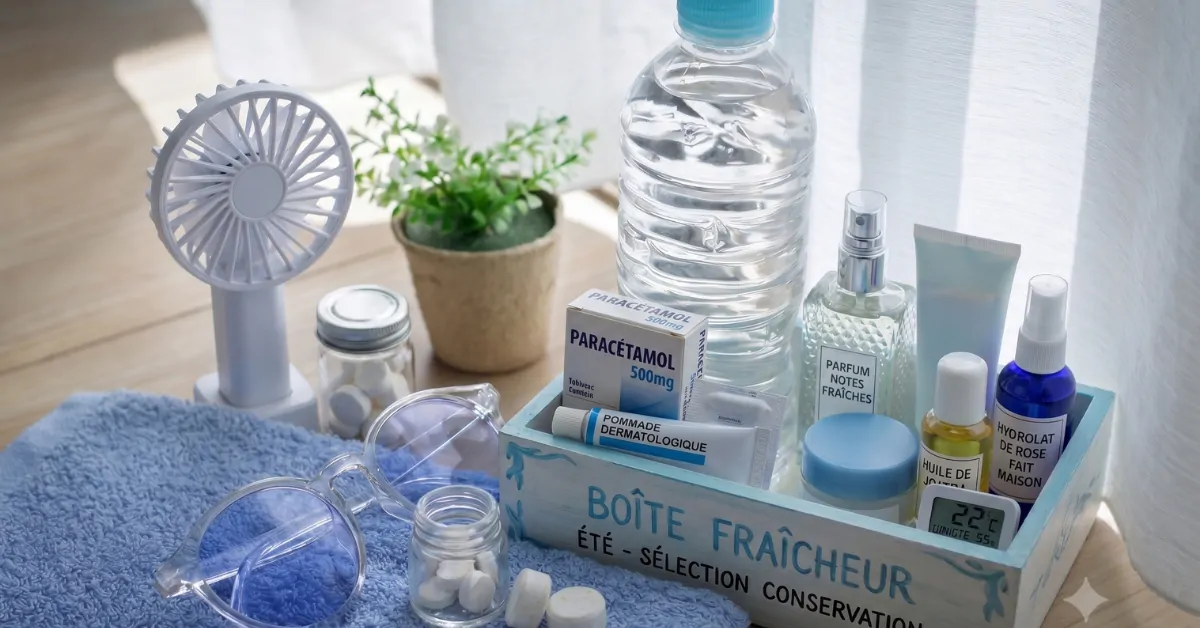
Home tip: prepare a “cool box” for the summer
To avoid scattering sensitive products around the house, set up a small box dedicated to hot weather.
Put in it:
- medications to monitor;
- important leaflets/instructions;
- a small indoor thermometer;
- fragile opened cosmetics;
- an insulated travel pouch for outings.
Store this box in the coolest room. Thus, the whole family knows where to find sensitive products, without leaving them in the bathroom.
Another waste-reduction tip: at the end of summer, do a cleanup. Return expired or unused medicines to the pharmacy. For cosmetics, discard those that have changed in appearance or smell.
Common mistakes to avoid at all costs
During hot periods, some reflexes may seem harmless. Yet they can accelerate product deterioration.
- leaving perfume on a dresser in full sun;
- keeping medicines in the bathroom;
- putting all products in the refrigerator without checking the label;
- carrying a treatment in a bag left in the car;
- using a cream that has changed its smell;
- stopping a treatment without medical advice.
Ultimately, good storage boils down to three words: shade, coolness, stability. Simple actions can preserve your products, your health, and your budget.