
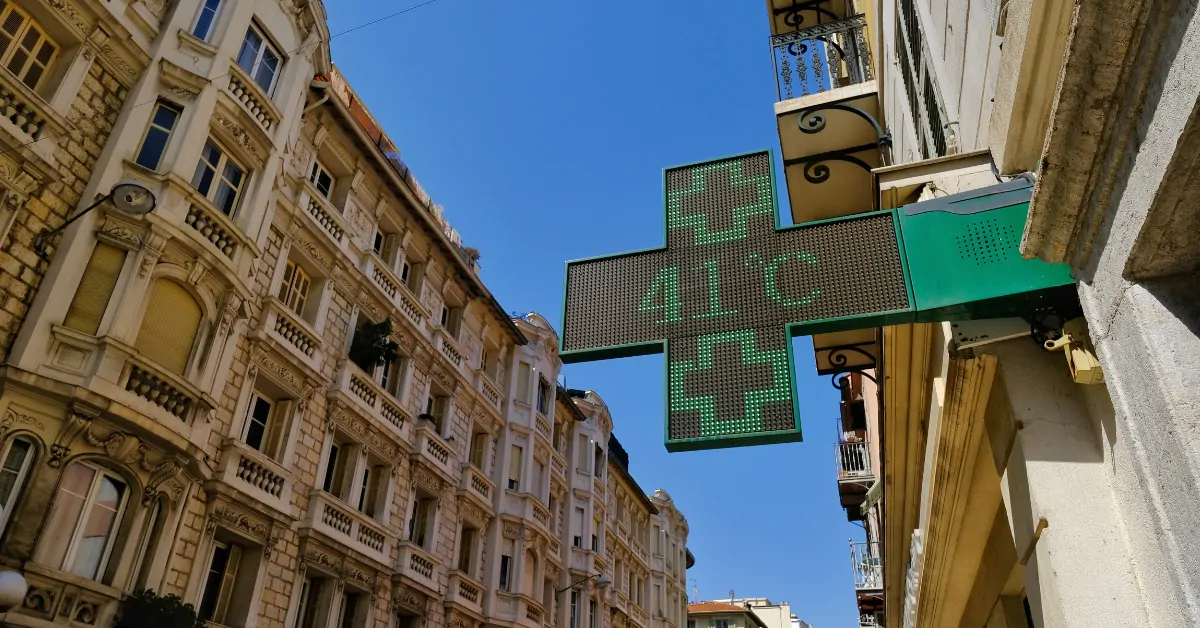
France remains insufficiently prepared for the consequences of climate warming, warns the High Council for the Climate in its 2026 annual report. Facing extreme heat and aging infrastructure, the agency is calling on the government to scale up its response.
Outdated Infrastructure
In its eighth annual report, the High Council for the Climate (HCC) delivers an alarming assessment, stating that France is not ready to face the consequences of warming. Published amid historic heat records for a June, the document deems current national policies as “insufficient.” While greenhouse gas emissions have begun to decline, the pace is judged to be two times too slow to meet the targets set for 2028.
According to the HCC, national strategies and adaptation plans implemented lack enduring funding commensurate with environmental stakes. The agency also warns against the trap of “maladaptation” — deploying technological or short-term responses that ultimately shift or worsen future risks. Experts note that many French infrastructures and land-use plans are obsolete, designed for a climate that no longer exists. Beyond quick fixes like air conditioning or water retains, there remains a pressing need for a deep, structural transformation of our ways of life.
Safeguarding a “Right to Cool”
This report also draws a direct link between delays in public action and widening social inequalities in the face of climate crises. Thus, extreme heat waves disproportionately affect low-income households, people experiencing homelessness, and exposed workers, causing excess mortality and major disruptions, notably in schools. Additionally, external geopolitical crises, such as the Strait of Hormuz, have driven up fuel prices, exacerbating the precarity of populations dependent on fossil fuels. In light of this, public subsidies for renovations or electric vehicles remain underfunded.
Overall, in its report, the HCC lays out 82 concrete recommendations that the government must address within six months. Among the priorities are doubling investments in low-carbon projects, safeguarding a “Right to Cool” through residential thermal retrofits, and strengthening health at work. Finally, the Council calls for restrictive measures, such as a moratorium on expanding airport capacity, while urging to move beyond a mere constraint mindset to build a truly resilient society.
- https://www.hautconseilclimat.fr/wp-content/uploads/2026/07/RANC-2026-5_WEB.pdf