
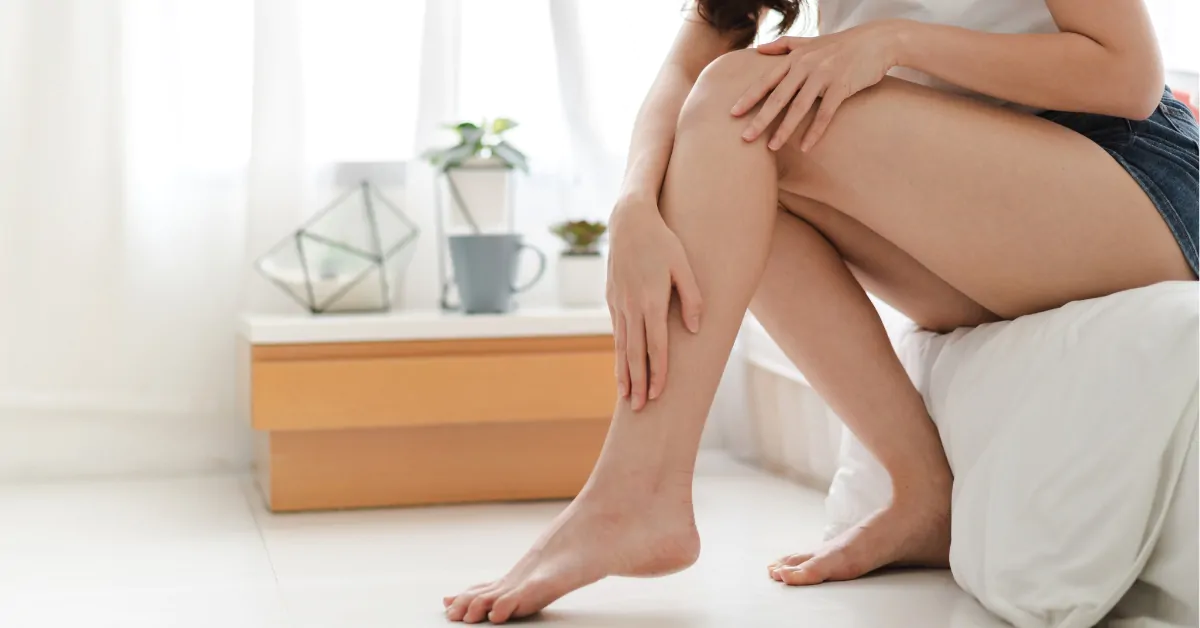
Heavy legs, swollen ankles, rings that won’t fit, a feeling of a puffy body… Water retention is common, especially when it’s hot or after a long day on your feet. Water retention is a frequent nuisance, particularly in warm weather or after standing for extended periods.
But beware: any swelling isn’t automatically harmless. It can be related to heat, venous circulation, diet, hormones, or certain medications. In some cases, it should also prompt a quick consultation.
Here are the right reflexes to better understand water retention, relieve heavy legs, and avoid mistakes, notably draining regimens taken too lightly.
What you should know
- Water retention is the buildup of fluid in the tissues, often visible in the legs, ankles, or feet.
- It can be promoted by heat, immobility, tight clothing, salt, or poor circulation.
- Never stop drinking to “deflate.” Proper hydration remains essential.
- Diuretics are medications. They should not be taken without medical advice.
- Sudden swelling, pain, or swelling on one side requires prompt medical consultation.
Water retention: what exactly is it?
Water retention, also called edema, refers to an abnormal buildup of fluid in the tissues. It often presents as localized swelling.
It is most noticeable in the legs, ankles, or feet. But it can also affect the hands, arms, face, or abdomen.
How to recognize water retention?
Several signs can point to water retention. They vary by person and by the underlying cause.
- Ankles or feet swell toward the end of the day.
- Legs feel heavy, tight, or uncomfortable.
- Shoes or socks leave more pronounced marks on the skin.
- Fingers swell, especially in hot weather.
- Pressing a finger into the skin may leave a small indentation for a few seconds.
This last sign is called the “pit” or pitting edema. It isn’t mandatory, but it can guide the diagnosis.
When should you seek urgent medical help?
A mild, bilateral swelling after a hot day isn’t the same as suddenly painful leg swelling.
Seek help right away in case of:
- sudden and sharp swelling of one leg;
- calf pain, warmth, or local redness;
- shortness of breath that is unusual;
- chest pain;
- significant edema or rapidly worsening swelling;
- swelling associated with heart, kidney, or liver disease;
- water retention during pregnancy;
- appearance after starting a new medication.
What are the possible causes of water retention?
Before taking action, it helps to understand why the body is holding onto water. The causes are numerous, sometimes simple, sometimes medical.
Heat and immobility
Heat dilates blood vessels. Result: venous return becomes less efficient, especially in the legs.
The effect worsens when you stand, sit, or stay still for long periods. Travel by car, train, or plane can thus worsen heavy legs.
Poor venous circulation
Water retention around the ankles can be linked to sluggish venous circulation. It may accompany varicose veins or venous insufficiency.
In this case, symptoms often worsen by the end of the day. They’re also more common in summer.
Too salted a diet
Salt promotes water retention because sodium pulls water into tissues. Processed foods often contain a lot of salt.
That includes deli meats, highly salted cheeses, prepared meals, sauces, chips, savory crackers, and brick soups—watch these!
Hormones
Hormonal fluctuations can also promote swelling. This concerns especially the menstrual cycle, pregnancy, menopause, or certain hormonal therapies.
If the swelling is bothersome, talk to your doctor or midwife.
Certain medications
Several treatments can cause or worsen water retention. This includes some antihypertensive drugs, corticosteroids, or hormonal therapies.
Never change your treatment on your own. Report the symptom to the healthcare professional who follows you.
What to do about water retention? The right natural reflexes
When water retention is mild and without alarming signs, several simple steps can help. They mainly aim to boost circulation.
1. Wear looser clothing
Clothes that are too tight can hinder venous return. This includes very tight jeans, shapewear, tight belts, or socks that leave marks.
In summer, favor natural fibers and relaxed cuts. Linen, cotton, hemp, or responsibly sourced viscose are more comfortable in hot weather.
2. Elevate your legs
In the evening, lie down with your legs slightly elevated for a few minutes. A pillow under the calves is enough.
You can also raise the foot of the bed a few centimeters if that helps.
3. Move often, even if just a little
The calf muscles act as a natural pump. With every step, they help blood move back toward the heart.
If you sit for work, stand up regularly. If you’re on your feet, walk a few minutes whenever possible.
- Do ankle flexions.
- Rise up on your toes, then slowly lower.
- Walk 10 minutes after lunch.
- Choose stairs over elevators when you can.
- Try swimming, gentle cycling, or water aerobics.
These moves are simple but very helpful. They stimulate venous return without jolting the system.
4. Favor coolness, not extreme cold
A cool shower on the legs can relieve the heaviness. Move upward from the ankles toward the knees.
Avoid very hot baths, saunas, steam rooms, and prolonged sun exposure. Heat often worsens symptoms.
Changing your diet to limit water retention
Diet doesn’t fix all causes. But it can help, especially when swelling is linked to salt or highly processed foods.
Reduce salt without sacrificing flavor
Adults should not exceed approximately 5 g of salt per day. That’s about one level teaspoon of salt across all foods.
The problem rarely comes solely from the salt shaker. Salt hides in many processed foods.
- Limit processed meals.
- Taste before salting.
- Rinse canned vegetables or legumes.
- Replace part of the salt with herbs.
- Use lemon, garlic, onion, spices, vinegar, or ginger.
Be cautious with potassium-based salt substitutes. They aren’t suitable for everyone, especially if you have kidney disease or are on certain medications.
Prefer fresh, water-rich foods
Contrary to common belief, you shouldn’t drink less to reduce water retention. Your body needs regular hydration.
Seasonal fruits and vegetables also provide water, fiber, and useful minerals.
- cucumber;
- zucchini;
- watermelon;
- melon;
- tomato;
- strawberries;
- greens (lettuce and others);
- fresh herbs.
During hot periods, drink regularly. Very dark urine is often a sign that you aren’t drinking enough.
Don’t neglect protein
An insufficient protein intake can contribute to certain edema, especially in cases of malnutrition or illness. In everyday life, the goal is to eat a balanced diet.
Plant-based proteins have a strong place in a healthy plate. They appear in legumes, whole grains, and nuts and seeds.
- lentils;
- chickpeas;
- kidney beans;
- tofu;
- tempeh;
- almonds;
- nuts;
- pumpkin seeds.
Pairing legumes with grains remains a good habit. Example: brown rice and lentils, whole-grain couscous and chickpeas, whole-wheat bread and hummus.
Should you cut out gluten or lactose?
Swelling can sometimes be linked to a food intolerance. But don’t confuse digestive discomfort with edema.
If you suspect gluten or lactose intolerance, seek advice. Poorly guided elimination diets can cause imbalances.
Homemade recipe: a refreshing drink that helps you cut back on salt
This recipe doesn’t “cure” water retention. However, it helps you stay hydrated without added sugar, while adding flavor.
Cool cucumber, lemon, and mint water
Ingredients:
- 1 liter of cold water;
- 1/2 organic cucumber, thinly sliced;
- 1/2 organic lemon, sliced;
- 6 mint leaves;
- a few slices of ginger, optional.
Preparation: place all ingredients in a pitcher. Let steep for an hour in the fridge. Serve with ice, without sugar or syrup.
This drink is a great substitute for soda and for highly flavored bottled waters. It pairs well with a lighter, lower-salt diet.
Massages, lymphatic drainage: are they useful for heavy legs?
Massage can relieve heavy legs. It promotes relaxation, stimulates local circulation, and provides a light, buoyant feeling.
Self-massage at home
After a cool shower, apply a plant-based oil or a light gel. Gently massage upward from the ankles toward the knees.
The movements should stay comfortable. Avoid strong pressure on any painful, red, or warm area.
In cases of significant varicose veins, suspected phlebitis, or unusual pain, don’t massage. Seek medical advice first.
Active drainage: move to boost the muscle pump
Active drainage uses the deep muscles, especially those in the calves. Walking, cycling, swimming, and water aerobics are well suited.
Pool activities are particularly beneficial. Water exerts gentle pressure on the legs while reducing impact.
Manual lymphatic drainage
Manual lymphatic drainage is a specialized technique aimed at stimulating lymphatic flow with very gentle movements.
It should be performed by a trained professional, such as a physiotherapist. “Drainage” treatments offered in spas aren’t all the same.
Care depends on the medical context. If edema is related to an underlying condition, a physician can guide you.
Drainage products: caution before you dive in
Drainage products are widely available in pharmacies, para-pharmacies, and online. They often promise lighter legs or a “detox” effect.
But natural does not mean risk-free. Some plants can interact with treatments or be discouraged in renal, cardiac, or liver disease.

Herbal supplements
Red vine, butcher’s broom, witch hazel, dandelion, orthosiphon, or cherry stems are often associated with circulation or drainage.
They can be helpful for some people, but they do not replace a balanced diet, physical activity, or medical advice.
Aquarietics
Aquarietics promote the elimination of water. They are sometimes found as plant blends or supplements.
Ask a pharmacist for guidance, especially if you’re taking a treatment, you are pregnant, or you have a chronic condition.
Diuretics
Diuretics are medications. They increase urine output and are prescribed in specific situations.
They can cause side effects such as dehydration or mineral imbalances. They should never be taken to “deflate” before summer.
Warning
Never take diuretics without a prescription. Do not combine several drainage products without professional advice, especially during hot weather.
Water retention: myths to debunk
The topic circulates widely on social networks. Some simplistic ideas can actually worsen the problem.
“You should drink less”
False. Dehydration can trigger headaches and fatigue. Drink regularly, especially when it’s hot.
“A single drainage regimen is enough”
False. If the cause is circulatory, hormonal, medication-related, or medical, a herbal tea won’t fix the problem.
“Swollen legs are always benign”
False. Persistent, painful, or asymmetrical swelling should be taken seriously.
“Raw foods make you swell with water”
Not directly. Raw vegetables can cause digestive bloating in some people. That is not the same as edema.
Simple daily actions to adopt
To limit mild water retention, it helps to act on several levers. No single action does everything, but their combination really helps.
- Walk every day, even a little.
- Avoid staying still for long periods.
- Wear non-constricting clothes.
- Elevate your legs for a few minutes in the evening.
- Give your legs a quick spray of cool water.
- Reduce salty processed foods.
- Hydrate regularly, don’t wait for thirst.
- Consult before using any drainage product.
Finally, listen to your body. A leg that swells suddenly, unusual pain, or shortness of breath should not be minimized.
Light water retention can often be improved with healthy lifestyle habits. But when it becomes significant or recurrent, it warrants a proper medical evaluation.