
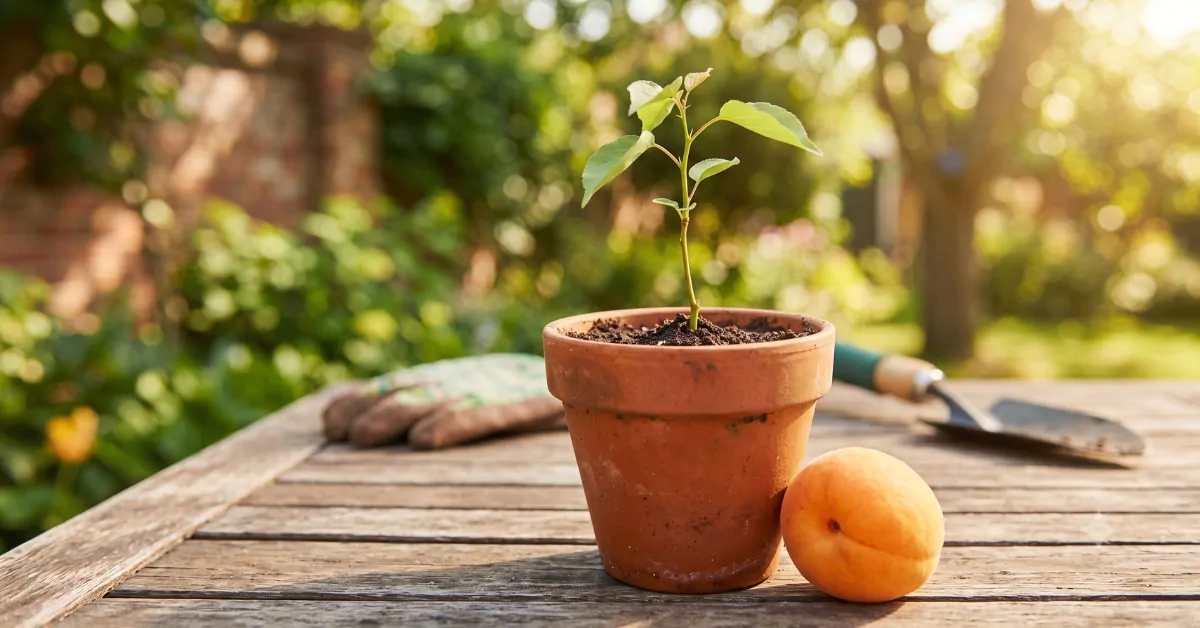
Apricots are a beloved summer fruit, just as tasty fresh as in pie, jam, compote, or dried fruit. When they’re in season, from mid-May to mid-September, they also offer a small, simple, and affordable gardening experiment: growing an apricot pit.
With a little patience, this pit can give rise to a young apricot tree. The success rate is never guaranteed, but the experience pleases curious gardeners. It also helps people understand the life cycle of a fruit tree.
What to remember
- A apricot pit must go through a cold period to break dormancy.
- The seed/stone does not guarantee fruits identical to the apricot you tasted.
- Well-drained soil, sun, and protection from cold winds are essential.
- It often takes 3 to 5 years before the first fruits appear.
- The almond-like kernel inside the pit should not be eaten in large quantities.
Before Germinating an Apricot Pit
Before planting a pit, start by choosing a ripe, tasty fruit, preferably from a local source. It’s even better if the apricot comes from a tree that wasn’t treated with chemicals or from a neighbor’s garden.
In 2026, French apricot production is expected to rise compared with 2025, according to Agreste. Nevertheless, harvests remain sensitive to weather fluctuations. Late frosts, hail, and drought can weigh heavily on orchards.
What will you do with your future apricots?
Not all apricots are alike. Some are perfect for biting into fresh, others hold up better to cooking. Still others are excellent for dried fruit or preserves.
Before attempting the seed, ask yourself a simple question: what would you like to do with your future harvest?
- For jams: opt for fragrant, slightly tart fruits.
- For pies: look for flesh that doesn’t release too much juice.
- For dried fruit: choose sweet, fleshy varieties.
- For fresh eating: aim for a balance of sweetness, aroma, and juiciness.
However, note: a apricot tree grown from a pit does not always faithfully reproduce the original variety. Pollination can be cross-pollinated. The result can thus be a lovely surprise, or yield fruits that aren’t as interesting.
To obtain a specific variety, it’s better to buy a young grafted tree. Seed germination remains an economical, educational, and deeply rewarding gardening experience.
Select the Right Apricot Variety
If you have access to apricots from older or rustic varieties, favor them. They’re often better suited to home gardens. They can also be more interesting for local biodiversity.
To choose well, also consider the harvest period. Varieties come in all summer long, from the earliest to the latest.
Early varieties
- Orangered
- Tom Cot
Mid-season varieties
- Rouge du Roussillon
- Kioto
Late-season varieties
- Orangé de Provence
- Bergeron
- Bergarouge
Waste-Not Tip
Take advantage of apricots that are a bit overripe to whip up a quick compote. Cut them into pieces, add a splash of lemon juice, then cook for 10 minutes on low heat. You don’t need to add lots of sugar if the fruit is very ripe.
How to Germinate an Apricot Pit?
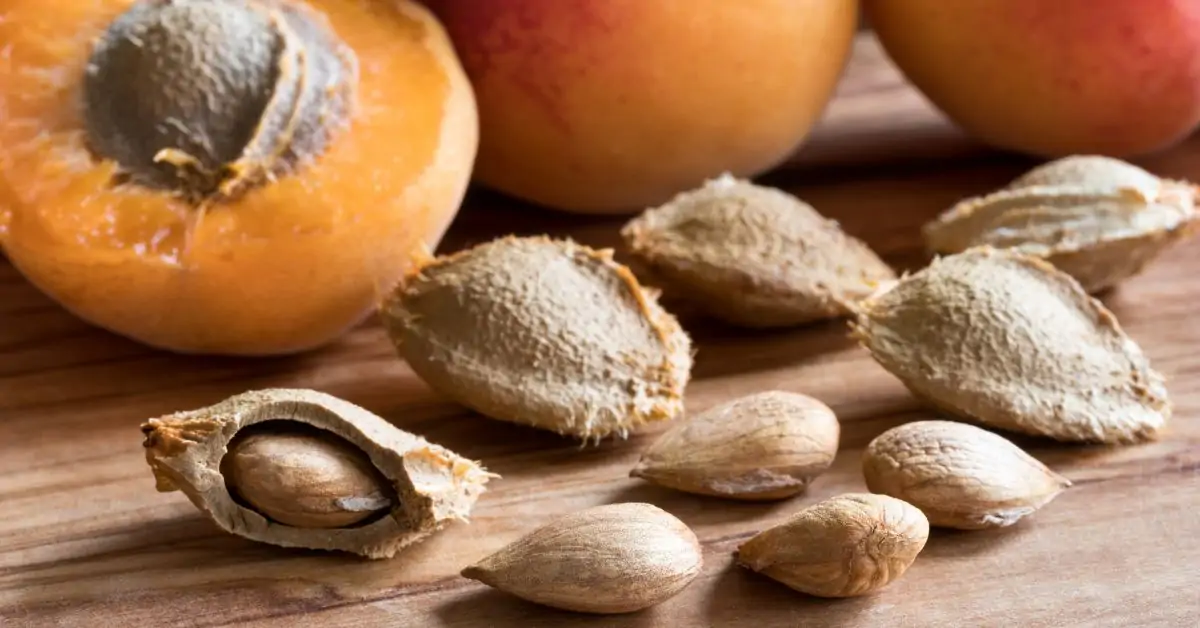
Once you’ve chosen the pit, clean it carefully with a brush and clear water. This step prevents any remaining fruit from molding around the pit.
Next, let the pit dry for a few days at room temperature. Place it in a dry, well-ventilated area away from direct sunlight.
Put the apricot pit in a pot
Take a terracotta pot at least 6 inches (15 cm) in diameter. Put a bottom layer of gravel or clay balls. Three centimeters will be enough.
The goal is straightforward: avoid standing water. Apricot trees like well-drained soils. However, they tolerate moisture poorly, especially in winter.
Then prepare a light mix:
- Two-thirds sand, to promote drainage;
- One-third potting soil blended with garden soil;
- a handful of mature compost, if the mix remains light.
Fill the pot halfway. Place the apricot pit with the tip upward, then cover with the substrate. Gently tamp, without compacting.
Keep the soil moist, but never soggy. Too much water encourages mold and can rot the pit.
Imitating a Cold Winter for the Pit
Like many seeds, the apricot pit is protected by a hard outer shell. In nature, it spends the winter outside before germinating in spring.
To reproduce this cycle, you need to provide a cold period. This step is called cold stratification.
Place your pot in the refrigerator for about 60 days. You can also place it outside, in a cold spot protected from heavy rain.
After this period, take the pot out and place it in a well-lit area. Keep the substrate cool. Germination can take several weeks.
Watch out for the kernel’s almond
The almond contained in the apricot pit may contain amygdalin. This substance can convert to cyanide during digestion. Do not consume it in quantity and do not use it as a home remedy.
How to Plant a Germinated Apricot Pit?
When the young shoot appears, let it strengthen before handling. Wait for the first true leaves to form. The seedling will then be less fragile.
If the season allows, gradually move the pot outdoors. Avoid full sun harshness during the first days. A too-rapid transition can burn the young leaves.
Then choose a suitable site:
- full sun, to promote flowering and maturation;
- well-drained soil, never waterlogged;
- a spot sheltered from cold winds;
- a location away from low-lying areas, to limit late frost damage.

To get a well-formed tree, select one main stem. It will become the future trunk. Gently remove any shoots that are too low as it grows.
In the following autumn, if the young trunk reaches 12 to 16 inches (30 to 40 cm), you can plant the apricot tree in the ground. Water well at planting, then mulch around the base.
Caring for a Young Apricot Tree Naturally
A young apricot tree needs mostly consistency. In the first years, monitor watering during dry spells. The soil should stay cool, but not overly moist.
Add a natural mulch at the tree’s base. Straw, fallen leaves, wood chips, or dry clippings reduce evaporation. They also nourish soil life.
However, keep a few inches of clearance around the trunk. Mulch that touches the bark can promote moisture-related diseases.
Preventing Apricot Tree Diseases
Apricot trees can be susceptible to monilial disease, especially during damp springs. This disease affects blossoms, shoots, and sometimes fruit.
To reduce risks, adopt a few simple practices:
- plant in a well-aerated location;
- avoid watering the foliage;
- collect mummified fruit fallen to the ground;
- prune lightly after harvest, in dry weather;
- disinfect tools between trees.
Finally, be patient. A tree grown from a pit may take 3 to 5 years before bearing its first fruits. It’s lengthy, but watching a tree grow from a simple pit remains a rewarding experience.