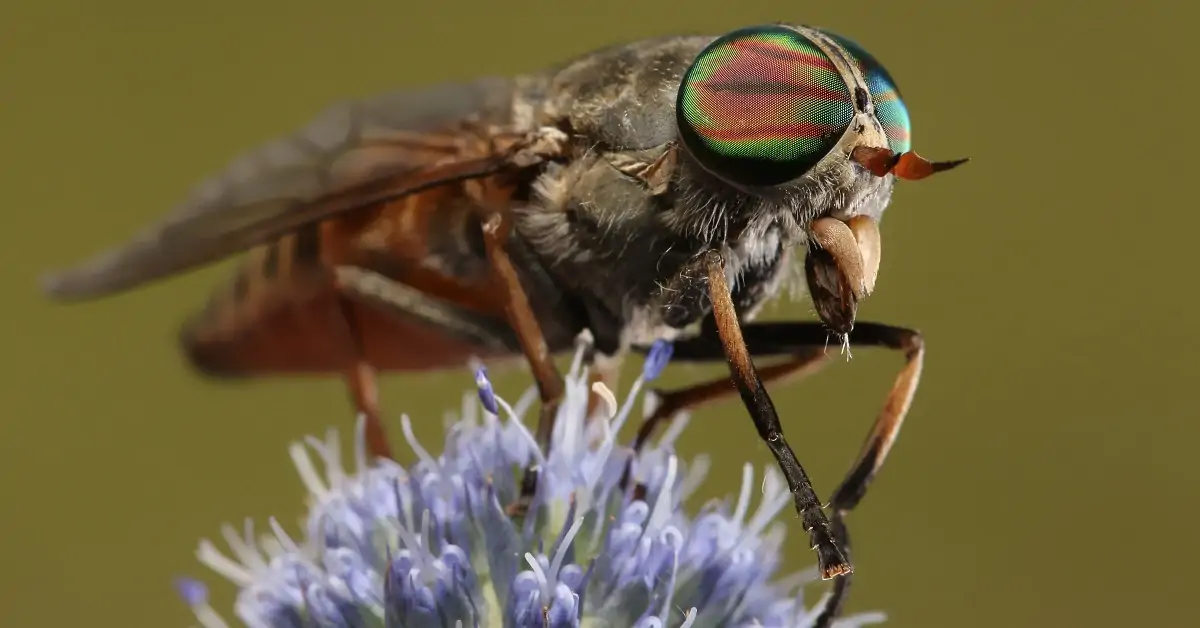
Horse flies are easy to recognize by their chunky fly-like appearance, with their large eyes and clear wings. They can be gray-black, striped, or coppery iridescent depending on the species. They crave the blood of animals, and you’ll often see them around pastures where cows or horses graze. But they also enjoy human blood!
The horse fly, one of summer’s unwelcome insects
Well, it’s a female you have to worry about, because the male horse fly is harmless and simply visits flowers. It’s the female that feeds on blood to nourish her offspring. Another clarification: the horse fly does not sting; it bites! We should rather talk about a horse-fly bite, to be precise. The female horse fly pierces the skin of her victim with a kind of stylet and then sucks the blood she needs to feed on.
The insect is active between May and September. If you’re hiking near animals, riding a horse, or heading into the woods, you may run into them. Horse flies also like bodies of water: you can find them by the poolside in summer.
How to avoid being bitten by a horse fly?
To avoid horse flies, wear long clothing and preferably light colors: horse flies tend to bite animals with darker skin. Dry off quickly after swimming in a pool, because horse flies love damp skin.
You can apply insect repellent. Horse flies dislike the odor of peppermint essential oil or common lavender: you can dilute a drop in your sunscreen, for example, before applying it to your body (except for children under six and pregnant or nursing women).
You can also use an insect trap. You can make one yourself, using a bottle neck inverted into the bottom of a bottle and adding syrup. There are also commercially available horse-fly and fly traps, made of an inverted funnel and a large dark ball. This heat-based, pesticide-free solution can be useful when you live near a barn or a stable.
What to do after a horse-fly bite?
It’s hard to notice a horse fly has landed on you, because its legs have pads that cushion its landing. However, the bite is painful, and the insect stays still while it sucks your blood. You can shoo it away, or even kill it once you realize it’s biting.
Reactions to a horse-fly bite can vary from person to person. For some, it’s just a mild sting that fades after a few hours; others may experience inflammatory reactions: the skin reddens, a bump forms… Some people may also develop allergic reactions, similar to wasp stings.
While, in most cases, a horse-fly bite is not serious, it’s possible that the female transmits diseases or parasites, such as anthrax or tularemia, or an infection transmitted by a flatworm.
When you’re bitten by a horse fly, the best first step is to clean the wound with a compress and alcohol, or with hexamidine. If you don’t have those, wash with water and soap. It’s not recommended to apply cold to horse-fly bites (as with wasp or bee stings) because cold can freeze potentially toxic substances.
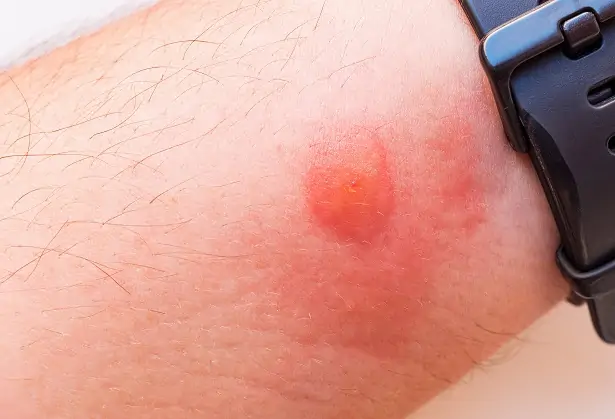
In most cases, the redness and mild swelling caused by a horse-fly bite disappear within a few hours. If the area becomes very swollen, extremely painful, or if hives or fever occur, call a doctor. If the person is allergic and experiences symptoms such as intense itching, facial swelling, nausea, or vomiting, a life-threatening anaphylactic reaction may be possible: call emergency services immediately.