
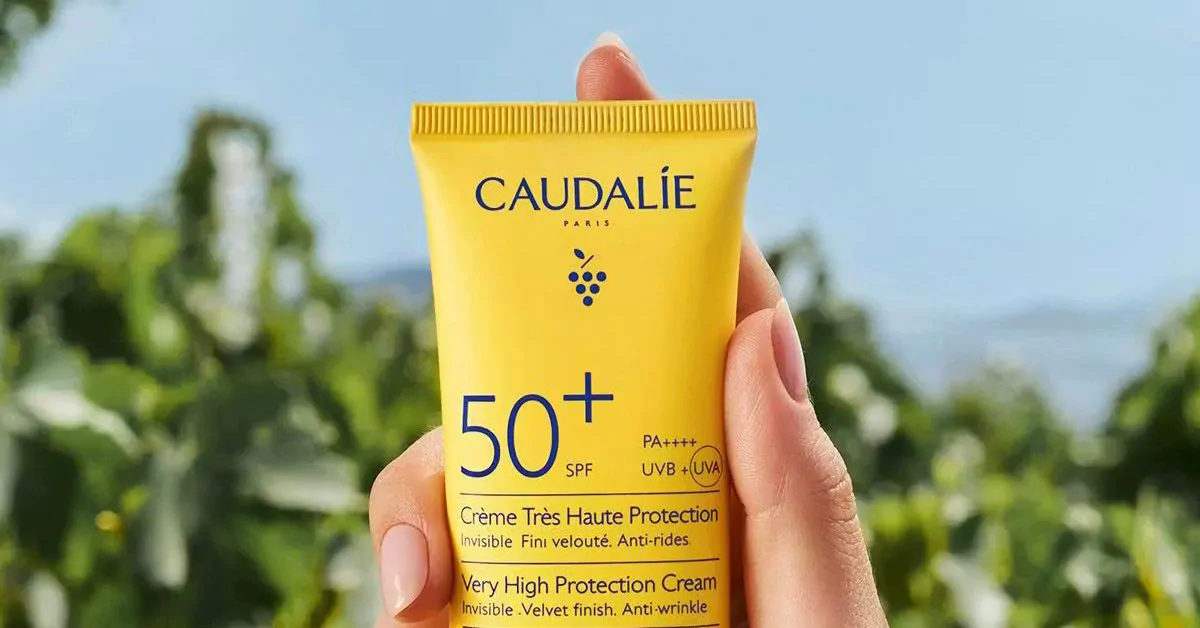
Most people today are aware of the need to protect their skin from the sun, and they invest in sunscreen as soon as sunny days arrive. The best products offer external protection against UVA and UVB rays, as well as internal protection that fights cellular damage. Here are a few explanations.
Choosing the Right SPF
Sunscreens are classified by their level of protection, expressed as a Sun Protection Factor (SPF) or protection index (PI) depending on the product. The protection levels are as follows:
- From 6 to 12: low protection.
- From 15 to 25: medium protection.
- From 30 to 50: high protection.
- 50+: very high protection.
This criterion is useful to help you choose your sunscreen, but it is not sufficient. It indeed only evaluates protection against UVB rays—the rays that cause sunburn—but does not account for UVA rays, which are responsible for skin aging and skin cancers. The SPF is therefore not the only point to check when you buy.
Opt for a product that protects effectively against UVA and UVB
UV rays split into two categories:
- The UVB: their intensity varies by the time of day and season and peaks in summer when the sun is highest. They penetrate only the superficial layer of the skin and trigger melanin production that causes tanning. Inadequate protection or overexposure can, however, cause sunburn as well as long-term skin damage.
- The UVA: they are present even when the weather is cloudy and can also pass through glass. They penetrate deeper into the epidermis and accelerate skin aging (fine lines, wrinkles, sagging, and pigmentation spots…).
It is therefore crucial to verify that your sunscreen protects against both types of UV. UVA protection is indicated on the product label or by the presence of the “UVA” logo.
Choosing the Filter Type
Sunscreens can incorporate mineral filters or chemical filters that operate differently.
Mineral filters
Mineral filters are made from mineral substances. They contain zinc oxide or titanium dioxide and reflect UV rays mechanically, dispersing them so they do not penetrate the epidermis. This type of filter tends to be better for people with sensitivities and for children, as it is less likely to cause allergic reactions.
Chemical filters
Chemical filters (or organic filters) absorb UV rays chemically. The rays penetrate the skin, but without causing cellular damage. Sunscreens containing chemical filters are typically lightweight and easy to apply. They also do not leave a white cast on the skin. However, they can cause irritation and are effective only about 20 minutes after application.
Pay Attention to the Product Texture
A sunscreen product can come in several forms. You’ll find creams, gels, sprays, milks, etc. Your choice will depend on your preference and the area you plan to cover. It’s typically recommended to opt for a fluid texture for larger areas. Here are some examples to match texture with use:
- Creams work well for the face, neck, and décolleté.
- Sprays and milks are ideal for the body.
- Sticks are especially suited for sensitive areas such as the lips, nose, scars, and tattoos.
If you’re looking for sun protection suitable for outdoor activities, choose a product that is water resistant. There are three types:
- “Water Resistant” products that hold up for about 40 minutes of swimming;
- “Waterproof” products that last about 80 minutes;
- “Sweat-Resistant” products that withstand sweating for about an hour.
To ensure effective protection, you should reapply after every swim.
The Caudalie brand offers a line of sunscreen products made from natural ingredients derived from grapes and vines. They provide effective protection against UVA and UVB rays and incorporate high protection indices. You can enjoy the sun with confidence!