When the house is left closed for several days or weeks, a nasty surprise can greet you on your return: sewer odors sometimes rise from sinks, basins, or showers. This phenomenon usually comes from the evaporation of the water in the traps. A few simple, natural steps can keep your pipes clean and your home smelling fresh during your absence.
Why do pipes smell bad after an absence?
Traps located under sinks, basins, showers, and bathtubs normally hold a small amount of water. This reserve forms a natural barrier that prevents gases from the pipes from coming back into the living space.
When no one uses the sanitary fixtures for several days, this water can gradually evaporate. The phenomenon is even faster in summer, when indoor temperatures rise.
A clogged pipe can also amplify odors. Grease, hair, soap and food residues gradually break down in the conduits. Before a long departure, it’s wise to perform preventive cleaning.
Clean the pipes naturally before you head out
You don’t need to use a chemical drain opener to maintain your drains. These products are often caustic, polluting, and hazardous to handle. They can also damage certain seals or pipes when used too frequently.
Simple ingredients allow for gentler maintenance.
Using baking soda
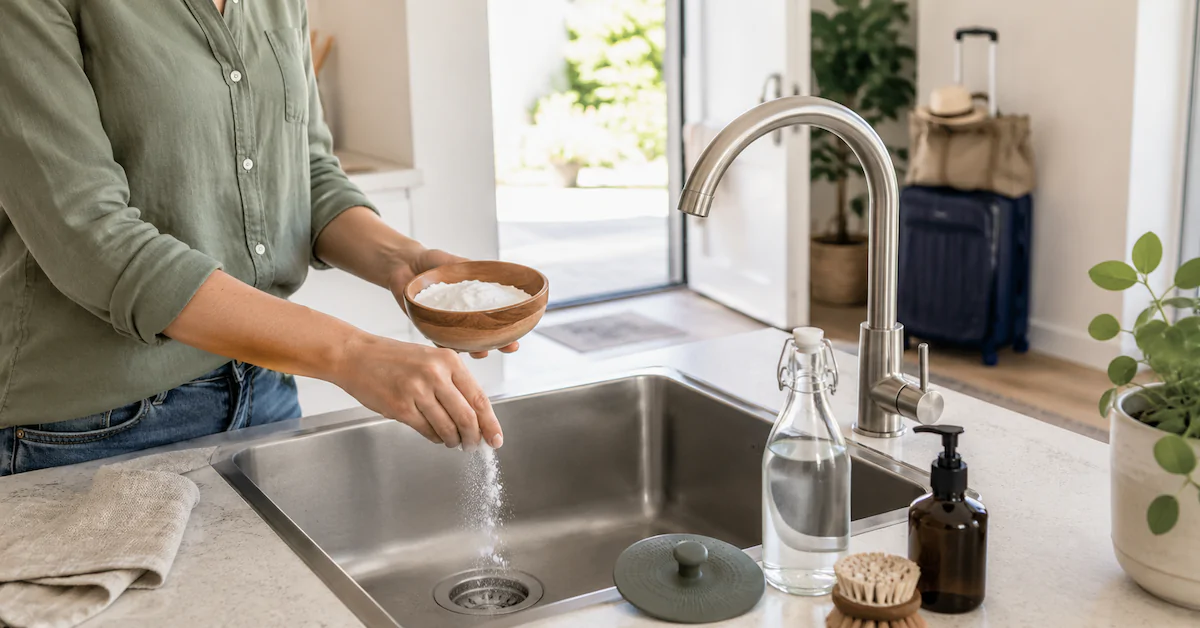
Pour two to three tablespoons of baking soda into the drain. Let it sit for about thirty minutes, then gradually flush with hot water.
Baking soda helps loosen some deposits and neutralize odors. It is especially useful in the kitchen sink where grease tends to build up.
However, avoid pouring boiling water into fragile PVC pipes. Warm water, not boiling, is usually sufficient.
Using white vinegar in moderation
The white vinegar can help dissolve mineral deposits and soap scum. Pour a small glass into the trap, let it sit for about thirty minutes, then rinse with hot water.
There’s no need to overdo it. Even natural, vinegar remains an acidic product. Its use should be occasional, especially if the pipes have old or fragile seals.
Mixing vinegar and baking soda creates an impressive fizz, but the two products largely neutralize each other. For effective maintenance, it’s better to use them successively or to favor mechanical action instead.
Dismantle and clean the trap
When odors persist, manual cleaning often remains the most effective solution.
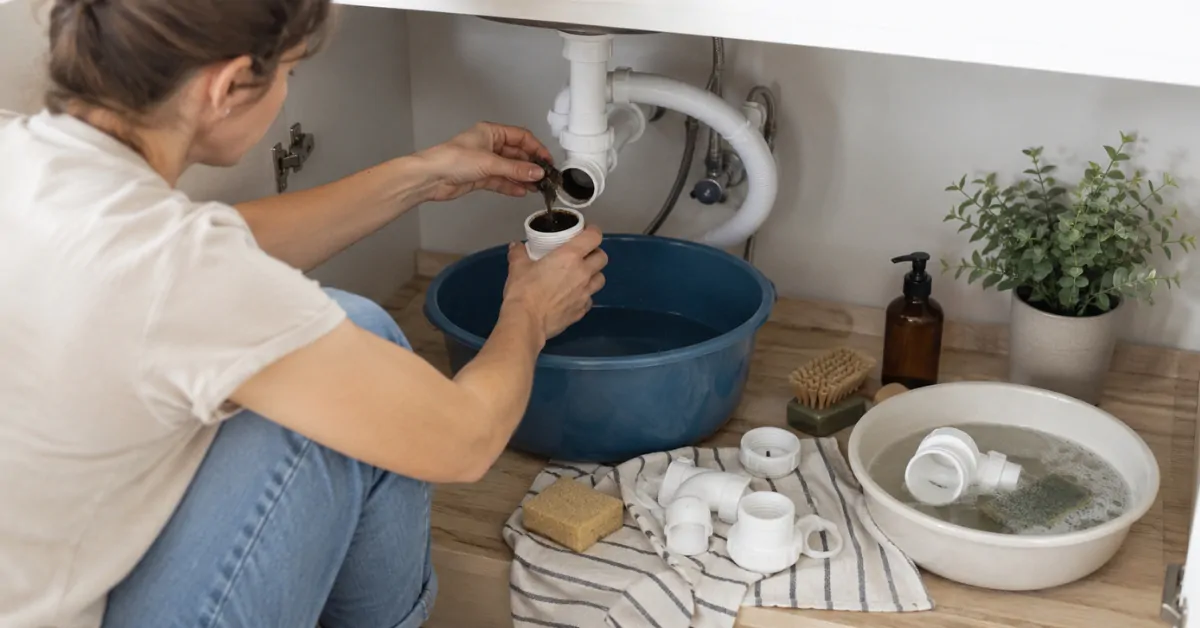
Place a bowl under the trap, unscrew it, and remove hair, grease, and accumulated residues. Clean the components with hot water and a bit of black soap.
Then check the condition of the seals before reassembling the trap. This simple operation helps prevent spills
pour de grandes quantités de produits dans les canalisations.
What to do in the kitchen sink before you leave?
Odors in the kitchen often come from food scraps stuck in the drain or grease deposits on the walls.
Start by removing visible waste. Then clean the strainer, the drain, and the overflow with a small reusable brush.
Let hot water run with a small amount of eco-friendly dish soap or black soap. This step helps reduce greasy deposits.
Just before leaving, run water again for a few seconds to properly fill the trap. Then close the drain with its stopper.
If your sink has two basins, be sure to treat both drains.
Shower and bathtub: remove hair and fill the trap
In the bathroom, hair, lint, and soap residue are the main causes of clogs and odors.
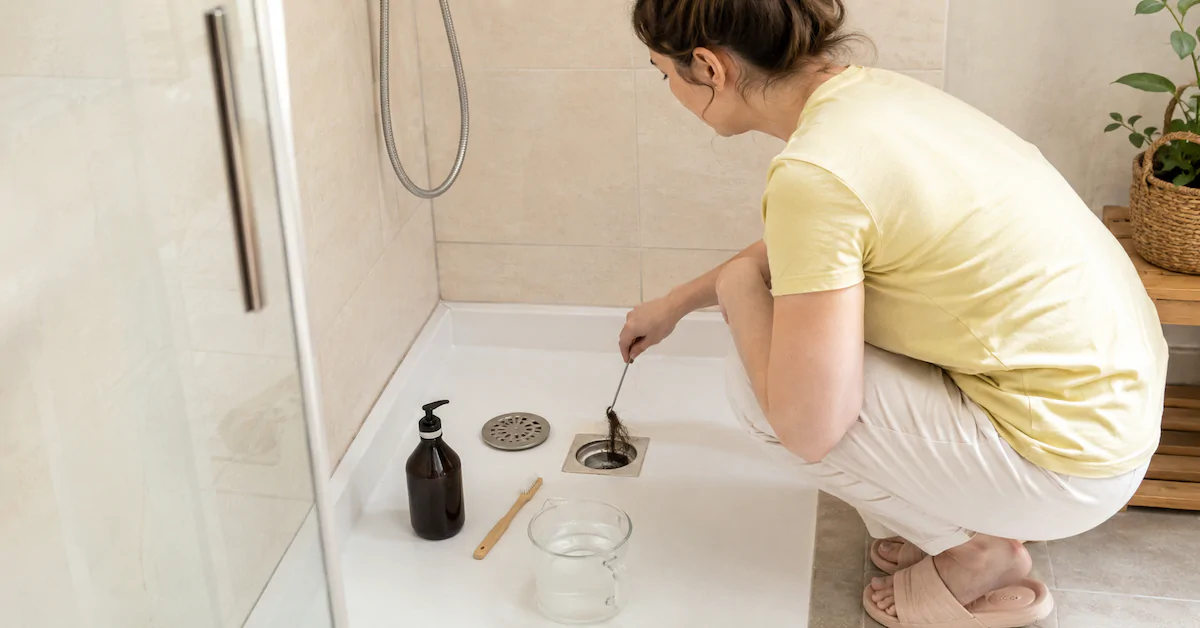
Remove the grid or drain cover, then pull out the buildup with a reusable cleaning hook. Avoid disposable accessories whenever possible.
Clean the grid with diluted black soap in warm water. An old toothbrush can be reused to reach hard-to-access areas.
Before leaving, gently pour one to two liters of water into the shower or tub. This precaution ensures the trap contains enough water.
Little-used sinks: don’t forget the overflow
A sink installed in a guest room or secondary bathroom is sometimes used very rarely. Its trap can dry out even outside vacation periods.
Run water in each sink before departure. Also clean the overflow opening, often forgotten, where soap and bacteria can accumulate.
To limit odors, close the drain. You can also place a reusable silicone stopper on the drain.
Close the drains to slow evaporation
Once the traps are cleaned and filled, closing the drains provides additional protection.
Use the stoppers already on the fixtures or washable silicone lids. They limit air flow, slow water evaporation, and reduce the risk of odors coming back up.
This solution is preferable to using disposable plastic films or tapes, which create waste and can leave residues.
Should you pour oil into the traps?
Some tips recommend pouring a thin layer of cooking oil into drains to limit evaporation.
This method is not recommended. Oil can solidify, trap debris, and contribute to clogs. It also complicates wastewater treatment.
Cooking oils should never be poured down the sink. They can be stored in a closed container and taken to an appropriate collection point.
Filling the traps with water and closing the drains remains a cleaner and more installation-friendly solution.
Avoid essential oils down the drains
Adding a few drops of essential oil to a trap may seem like a good idea to scent the home. Yet these highly concentrated substances are not benign for aquatic environments.
They do not fix the underlying odor problem either. A scent can only temporarily mask a dirty or dry trap.
Favor mechanical cleaning, baking soda, black soap, and good ventilation before leaving.
Things to avoid before a prolonged absence
Do not pour chemical drain cleaners just before leaving your home. In case of a chemical reaction, a leak, or a damaged pipe, no one may be able to intervene quickly.
Avoid also leaving waste in the sink drain, hair in the shower, or standing water in containers.
Never seal a pipe hermetically with a material that’s hard to remove. Use only suitable, reusable stoppers.
Finally, never mix different household products. Combining bleach with vinegar, limescale remover, or another acidic product can release toxic gases.
The checklist of steps to perform just before you lock the door
A few minutes are enough to prepare the plumbing:
- Remove hair and visible debris.
- Clean the drains, screens, and overflows.
- Run water in every drain.
- Ensure water flows normally.
- Close the drains with reusable stoppers.
- Empty the trash and kitchen compost.
- Leave surfaces clean and dry.
Upon return, open the windows for a few minutes and run water in each fixture. If a smell persists despite refilling and cleaning the traps, it may indicate a leak, poor ventilation of the pipes, or a deeper problem. A plumber’s intervention may then be necessary.