
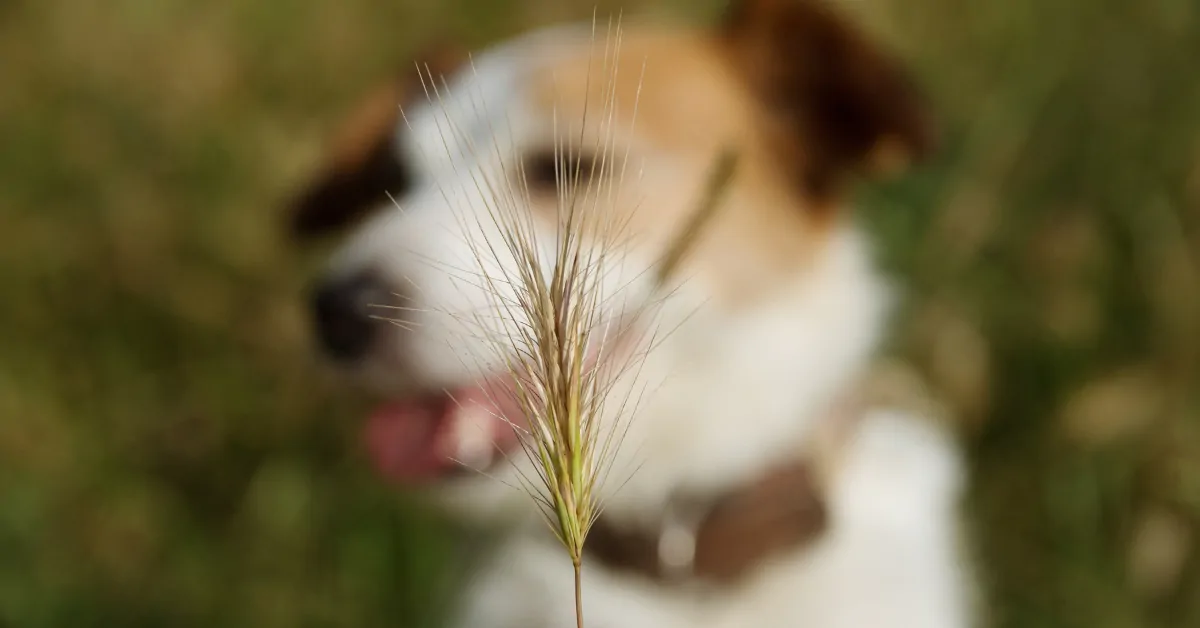
After a walk, a few minutes of inspection can prevent many complications. Foxtails easily cling to a dog’s or a cat’s fur, then can penetrate beneath the skin or into an opening. Ears, nose, eyes and paws are especially exposed. Here are the signs to recognize and the right reflexes to adopt.
What you need to know
- Dry foxtails easily cling to fur and progress in one direction.
- Sneezing, a closed eye, head tilt, or licking a paw should alert you.
- Inspect your pet carefully after every walk in dry grasses.
- If the foxtail seems embedded, seek veterinary care promptly.
Foxtails in dogs: a common spring and summer hazard
A foxtail is a small seed head from a wild grass. As it dries, it detaches from the plant and sticks to clothing as well as an animal’s fur.
Its pointed shape and tiny barbs act like a harpoon. The foxtail advances in the direction of its tip, but tends to exit only slowly in the reverse direction.
The risk generally increases from spring through late summer. Foxtails can be found in fields, meadows, gardens, vacant lots, and along trails.
All animals can be affected. However, dogs with long, curly, or thick coats are harder to inspect. Dogs with droopy ears are also more exposed at the ear canal.
Where can a foxtail lodge in a dog?
The foxtail can stay stuck to the fur. It can also penetrate under the skin, especially between the toes. Some get into the ears, nostrils, eyes, or genitals.
Once inside, this plant foreign body can continue to advance through tissues. It can then cause inflammation, a wound, an abscess, or an infection.
In the most serious cases, an inhaled foxtail can reach the airways. A foxtail lodged in the eye can, meanwhile, injure the cornea.
What symptoms should alert you after a walk?
Signs vary depending on where the foxtail lodged. They can appear suddenly, during the walk, or several hours later.
Foxtail in the nose
The dog sneezes suddenly and repeatedly. It may rub the muzzle with its paws. Nasal discharge, sometimes with blood, can also appear.
Foxtail in the ear
The animal frequently shakes its head, scratches an ear, or keeps its head tilted. It may also show pain when you approach its head.
Foxtail in the eye
The eye becomes red, watery, or painful. The dog blinks a lot or keeps the eye closed. A quick consultation is essential to limit the risk of corneal injury.
Foxtail in the paw
The dog starts limping or constantly licks the same area. Redness or a small opening may appear between the toes. Swelling or an abscess can then form.
What to do if you find a foxtail on your dog?
If it is simply resting on the coat, remove it carefully before it sinks in. However, do not attempt to extract a foxtail that is already embedded in the skin or lodged in an opening.
Contact your veterinarian promptly if your dog sneezes nonstop, limps, keeps one eye shut, or shakes its head continuously. The more the foxtail advances, the harder it can be to locate and remove.
The veterinarian can examine the affected area and remove the foreign body under proper conditions. Depending on its location, sedation, anesthesia, or additional tests may be necessary.
Do not apply any product in the ear or eye without veterinary advice. Also avoid giving human medications.
How to protect your dog against foxtails?
During the risky period, stick to open paths. Avoid as much as possible tall, dry, or recently mown grasses. In the yard, rake up grass clippings and mow grasses before they dry.
After each outing, inspect your dog methodically. Run your hands through its coat, then examine carefully:
- the inside and around the ears;
- the eyes, lips, and nostrils;
- the spaces between the toes and under the paw pads;
- the armpits, groin, and belly;
- the genital area and the underside of the tail.
Regularly brushing dogs with long or curly coats can make inspection easier, particularly around the ears and between the toes. Ask a groomer or your veterinarian for advice before planning a major haircut.
Foxtails may look harmless, but they can cause painful injuries. Regular inspection and a swift response to the first signs help protect your companion.