
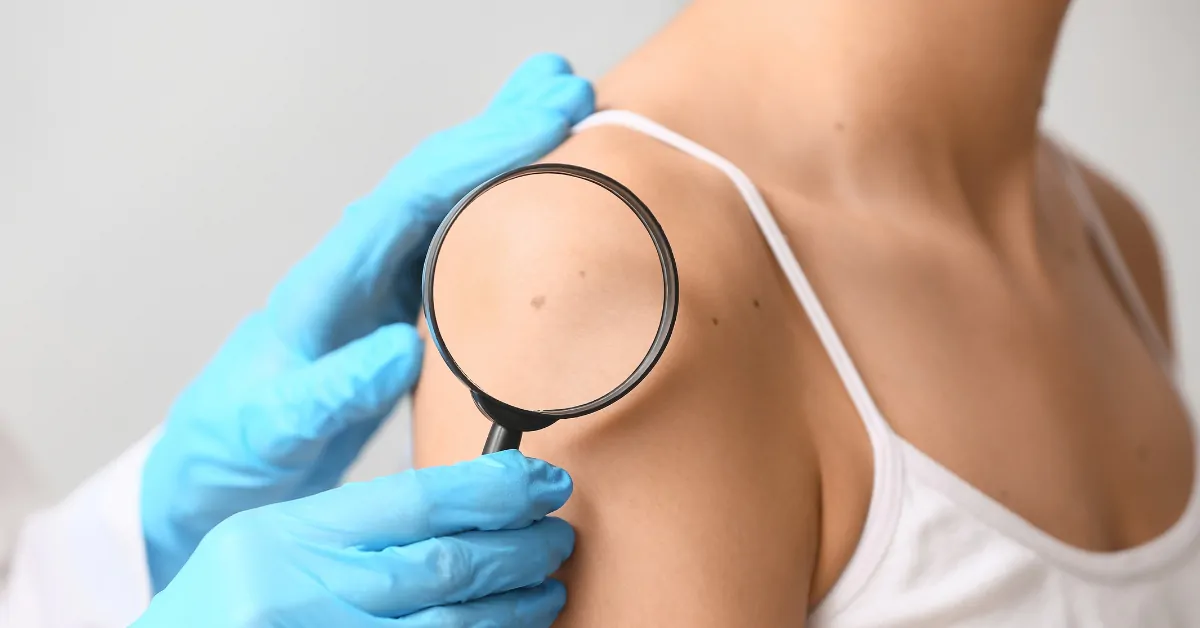
Two years after revolutionizing antiviral vaccination, the technology behind messenger RNA (mRNA) takes a major step forward: Merck and Moderna announce the first positive clinical results (1) from a personalized skin cancer vaccine, signaling the dawn of a new era for precision medicine. On August 19, 2026, the two labs confirmed that their Phase 3 INTerpath-001 trial met its endpoints in 1,137 patients with high‑risk melanoma.
mRNA to Fight Melanoma
The pandemic propelled messenger RNA (mRNA) to the forefront of global health. Today, Moderna and Merck are turning the trial into proof that the same approach can train the immune system to attack tumors. The autogeneous intisimeran (V940/mRNA-4157), combined with the immunotherapy Keytruda, represents the first personalized cancer therapy based on mRNA to reach the Phase 3 stage. The results show statistically significant improvements in relapse-free survival and distant metastasis-free survival, compared with standard treatment alone.
“For many years, the idea of creating an mRNA treatment tailored to a patient’s cancer was aspirational. We are now helping to turn that vision into reality,” says Stéphane Bancel, CEO of Moderna.
Moderna and Merck Reach a Decisive Milestone: The First Phase 3 in Personalized Oncology
The INTerpath-001 trial enrolled 1,137 patients with stage IIB through IV melanoma that had been fully resected, randomized 2:1 to the combination therapy versus Keytruda alone. Earlier Phase 2b data with five years of follow-up already showed a 49% reduction in the risk of recurrence or death, and a 59% reduction in the risk of distant metastasis. Professor Georgina Long, principal investigator and medical director of the Melanoma Institute Australia, called the results a “historic moment for the adjuvant treatment of melanoma.”
The full data will be presented in October 2026 at the European Cancer Congress, according to Suzette Delaloge, chair of the board of the French National Cancer Institute, who notes that “this is a very well-conducted clinical study in which France participated extensively.”
From Prevention to Therapy: How Does This Cancer Vaccine Work?
Unlike preventive vaccines, intisimeran is a therapeutic vaccine. It does not protect against infection, but trains the immune system to recognize and destroy residual cancer cells after surgery. The process relies on analyzing the tumor’s unique signature for each patient. Researchers identify up to 34 neoantigens—these tumor-specific abnormal proteins—then encode their sequences into a synthetic mRNA.
Once injected, the mRNA enters the patient’s cells and temporarily turns them into factories producing tumor antigens. The immune system learns to target cells bearing these markers, creating a durable immunological memory against the patient’s skin cancer.
The mRNA offers a decisive advantage over traditional approaches: speed in design and production. While classic protein‑based vaccines require months to develop, mRNA can be synthesized in a matter of weeks once the tumor sequence is analyzed. The platform remains the same across patients; only the coding sequence changes. A major asset for large‑scale personalization.
- How to spot a dangerous mole?
- STIs and cancers: when and how to get screened?
- How to apply sunscreen correctly: mistakes to avoid
- https://www.merck.com/news/merck-and-moderna-announce-phase-3-interpath-001-trial-of-intismeran-autogene-plus-keytruda-met-endpoints-of-recurrence-free-survival-rfs-and-distant-metastasis-free-survival-dmfs-in-patient/
- https://www.franceinfo.fr/sante/cancer/le-vaccin-contre-le-cancer-de-la-peau-represente-un-reel-espoir-souligne-l-oncologue-suzette-delaloge_8154662.html