
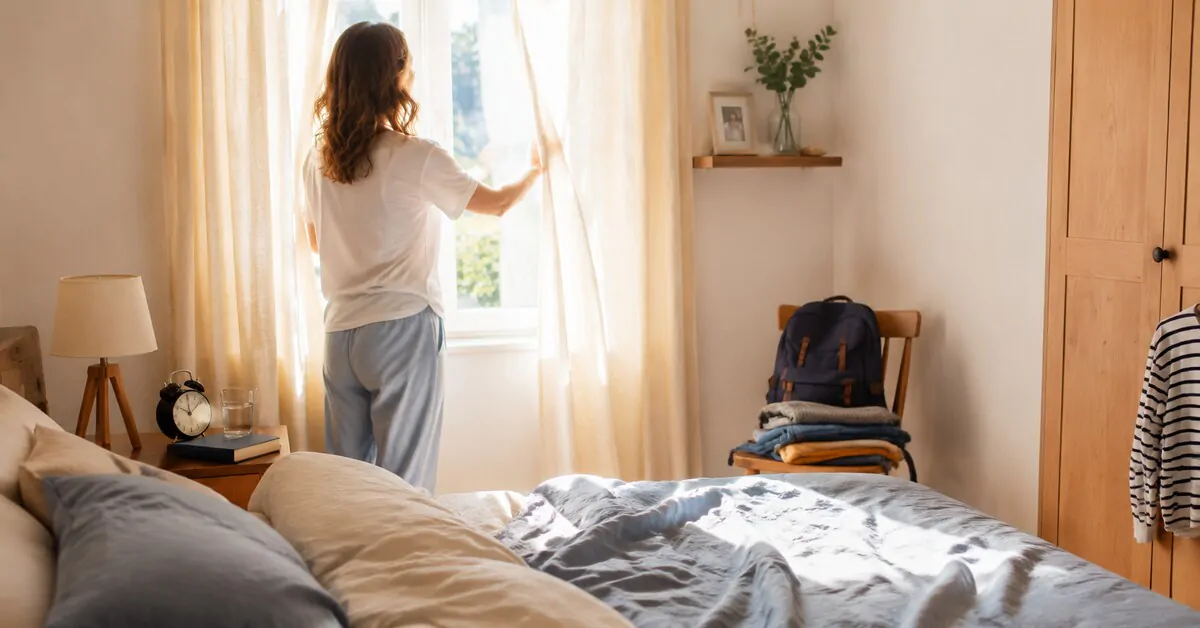
Summer is drawing to a close, and with it the parade of late nights, lazy mornings, and improvised naps. While this relaxation feels wonderfully restorative in the moment, it can also leave a toll to pay: a misalignment of the body clock that’s hard to catch up on the first day back to work or school. The good news is that a few simple, natural adjustments, started one to two weeks in advance, are enough to get you back on track.
What to keep in mind
- Gradually shift wake times and bedtimes.
- Get outside in natural light first thing in the morning.
- Limit screens and stimulating activities in the evening.
- For kids, maintain a reassuring routine and regular schedules.
Why does sleep get off track during vacations?
During the summer, days get longer and routines change. Dinners run later, evenings are enjoyed, and waking up is rarely at dawn. These small shifts gradually alter the sleep-wake rhythm. Our bodies follow an internal clock that’s nearly 24 hours long, known as the circadian rhythm. It regulates the alternation between wakefulness and sleep, influenced by light, meals, and physical activity.
Evening light delays the production of melatonin, a hormone that helps us fall asleep. Conversely, morning natural light signals the brain that a new day has begun.
Vacations can therefore establish a new tempo: later sleep onset, shifted wake times, and weekend-like mornings. When work or school schedules return abruptly, you may experience what people call “social jet lag.”
Fatigue, drowsiness, irritability, and difficulty concentrating are common for the first few days. The phenomenon is usually temporary, but it can be softened by planning the shift back.
How to reset sleep before back to school?
Trying to revert to your usual schedule in a single night is pointless. The body responds better to gradual, steady changes.
Ideally start seven to ten days before you resume. Shift your wake time earlier by 15 to 20 minutes each morning. Also adjust bedtimes, but don’t force sleep if signs of fatigue aren’t there yet.
The waking time is often the best starting point. By waking a bit earlier each day, you naturally build up a stronger sleep pressure by evening.
However, avoid compensating with a long nap. If you feel the need, opt for a short nap in early afternoon. A late or extended nap can push back the time you fall asleep at night.
Morning light, the best natural wake-up
As soon as you wake, open the blinds and expose yourself to outdoor light. Have breakfast near a window or take a short morning walk.
Even when the sky is gray, outdoor light is typically brighter than indoor lighting. It helps advance your body clock.
In the evening, do the opposite. Dim the lights gradually and avoid overly bright white lighting. This creates a smoother transition from daytime activities to rest.

Screens and sleep: blue light isn’t the only culprit
Smartphone, tablet, and computer screens can delay falling asleep. But what you view on them matters as well.
A fast-paced video, a lively discussion, or endless scrolling through social feeds keeps the brain awake. Notifications also fuel the impulse to check your phone.
Try cutting screens at least one hour before bed. If that feels hard, start by moving the phone away from the bed and turning off notifications.
Gradually replace that final hour with a calmer activity: reading, soft music, light stretching, or prepping for the next day.
Evening habits to adopt
A regular routine signals to the brain that rest is approaching. It doesn’t have to be complicated or perfectly identical every night.
- Dine at roughly consistent times, avoiding very heavy meals.
- Limit caffeine, tea, energy drinks, and alcohol late in the day.
- Avoid intense workouts right before bed.
- Open the window to air out the room before going to sleep.
- Keep the bedroom at a comfortable temperature, typically around 64–68 °F (18–20 °C).
- Reduce noise and keep the lights low in the room.
- Reserve the bed for sleep as much as possible.
It’s also wise to heed your body’s signals: yawning, heavy eyelids, a drop in focus, or a chill. When these signs appear, don’t delay bedtime unnecessarily.

Children and adolescents’ sleep: preparing for back-to-school without conflict
For kids, returning to a school schedule must remain gradual and reassuring. Move wake and bed times up by 15 minutes every two days, starting about a week before school starts.
Needs vary by age and by child. Three- to five-year-olds typically need 10 to 13 hours of sleep. Those aged 6 to 13 need about 9 to 11 hours. Teens often require 8 to 10 hours, sometimes more.
Their internal clock tends to drift toward a later bedtime. Screens, messages, and video games easily magnify this trend.
Set up a “charging station” outside the bedroom for family phones. Adults’ example helps make this rule more acceptable.
Family tip: post a seven-day countdown. Each evening, move the ritual forward a bit and let the child check off the step completed.
What to eat in the evening for better sleep?
No single food guarantees a perfect night’s sleep. However, a digestible, balanced dinner helps prevent digestion from disturbing sleep onset.
Prefer a meal with vegetables, a moderate portion of starch, and a source of protein. Eggs, dairy, legumes, nuts, or seeds contain tryptophan, an amino acid involved in the production of serotonin and melatonin.
That said, it’s not a natural sleeping aid. Its value lies in a varied diet, as explained in our article about this mood- and sleep-related amino acid.
Alcohol may create drowsiness, but it fragments sleep and can increase nighttime awakenings. Coffee, tea, and certain cola drinks can also act for several hours after consumption.
Herbs and essential oils: natural tips for better sleep
A non-caffeinating infusion can become a pleasant ritual. Chamomile, lemon balm, passionflower, or valerian have traditionally been used to promote relaxation.
These herbs can, however, carry contraindications or interact with certain medications. Ask a pharmacist if you’re on any treatments, pregnant, breastfeeding, or dealing with health issues.
A few drops of lavender essential oil on the pillow, a homemade herbal tea rather than an industrial supplement, or a gentle essential-oil diffuser: these are natural alternatives to consider before turning to sleep aids or supplements.

The back-to-school sleep plan in 7 days
- Day 1: set the wake time you’ll need on the first day back.
- Day 2: move wake and bedtimes up by 15 to 20 minutes.
- Day 3: expose yourself to outdoor light first thing in the morning.
- Day 4: remove screens an hour before bed.
- Day 5: resume regular meal times.
- Day 6: limit weekend lies‑ins and late naps.
- Day 7: plan a calm evening and keep the same wake time.
Three mistakes that complicate the return
- Trying to fix everything in one night: the body needs gradual changes, not a brutal shock to your schedule
- Leaving screens on until bedtime: blue light delays natural sleep onset
- Skipping morning light: without it, the internal clock struggles to re-synchronize
When to see a doctor? If sleep-onset issues persist, recur several nights per week, or cause significant daytime sleepiness, talk to your doctor.
Getting back to a healthy rhythm before school or work mainly hinges on three anchors: a regular wake time, morning light, and calmer evenings. Starting a week in advance, these adjustments help you approach the return without a jarring wake-up call.
Back from vacation: our recipe for conquering the back-to-school blues