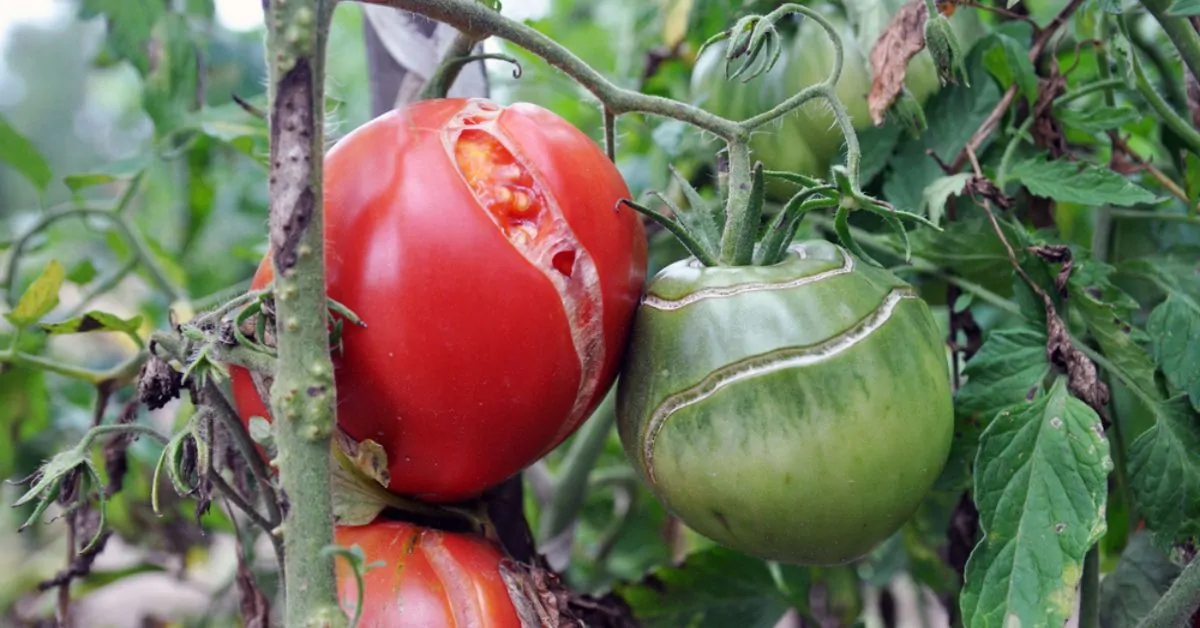
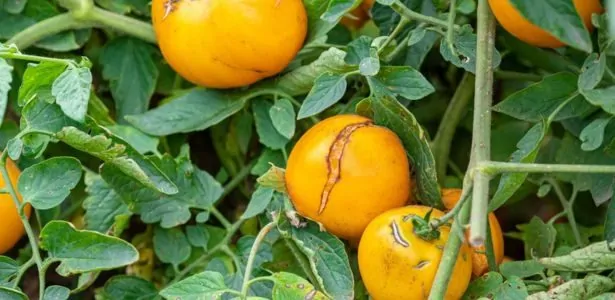
Are your tomato harvests often compromised by cracks ranging from faint to pronounced on the fruit? Tomato cracking can be caused by a variety of factors, including environmental conditions, your gardening practices, and the varieties you grow. Explanations and tips.
Why are my tomatoes cracking?
Tomatoes can crack for several reasons, generally related to growing conditions:
Inconsistent watering
This is the most common cause. When a tomato receives a watering after a dry spell, it absorbs water too quickly, causing the fruit to swell faster than the skin can stretch. This rapid growth can then cause the skin to crack. That’s why it’s essential to water the base of the tomato plants regularly and evenly.
Heavy rainfall
A period of dry weather followed by heavy rain can, in the same way, cause the tomatoes to crack, as they absorb the excess water faster than their growth can accommodate.
Too-rapid growth
Sometimes, when conditions are optimal (good temperatures, fertile soil, ample water), tomatoes can grow too quickly, leading to cracking.
Tomato varieties
Certain tomato varieties are more prone to cracking than others. If you consistently encounter this problem, consider choosing crack-resistant varieties for your next planting, such as:
- Celebrity, a versatile variety that resists cracking well. It is also resistant to many diseases.
- Early Girl, which, as its name suggests, ripens early and is crack-resistant.
- New Girl, a variety similar to Early Girl, but with better disease and crack resistance.
- Juliet, a small elongated tomato crack-resistant, often used in salads.
- Cherry tomatoes like Sungold, Super Sweet 100: many cherry tomatoes have better resistance to cracking than their larger-fruited counterparts.
- Mountain Pride, a variety resistant to many diseases and to cracking.
- Big Beef, a large tomato that resists cracking well.
- Porter, a variety known for its crack resistance, often used for making sauces.
Significant temperature differences
Temperature fluctuations can also contribute to fruit cracking, especially when it is very hot during the day and cool at night.
Fruit maturity
Tomatoes that are almost ripe or fully ripe are more likely to crack than those that are still green.
How can I prevent tomato cracking?
To prevent your tomatoes from cracking, here are some tips:
Water regularly
Irrigating irregularly can cause rapid changes in tomato size and lead to cracking, so make sure to water your plants regularly. When you water, ensure the water penetrates deeply into the soil. This encourages deep rooting, which makes the plant more drought-tolerant. Note that deep, less frequent but steady watering is generally better than light, frequent watering. This also helps prevent fruit cracking.
Prefer watering early in the morning or in the evening, to allow the plant to absorb moisture before the heat of the day starts. Avoid watering leaves and fruit: use a watering can with a long spout or a hose to direct water to the base of the plant, reducing the risk of fungal diseases such as late blight.
Another solution for watering your tomatoes: drip irrigation, which provides a more uniform distribution of water.
Use mulch
Mulching helps retain soil moisture, which can reduce the risk of cracking due to irregular watering.
Use a balanced fertilizer, without excess
Too much nitrogen can lead to rapid tomato growth, which can also cause cracking.
Avoid leaving tomatoes on the vine for too long
Once they are ripe, tomatoes are more likely to crack.
Maintain good air circulation around the plants
By pruning and training your tomato plants to maintain good air circulation around them, you help reduce humidity and temperature fluctuations that can contribute to cracking.
Fight diseases and pests
Tomatoes that are unhealthy are more prone to cracking, so take good care of your plants throughout the season. Read about this: tomato diseases: how to recognize them and ways to combat them.