
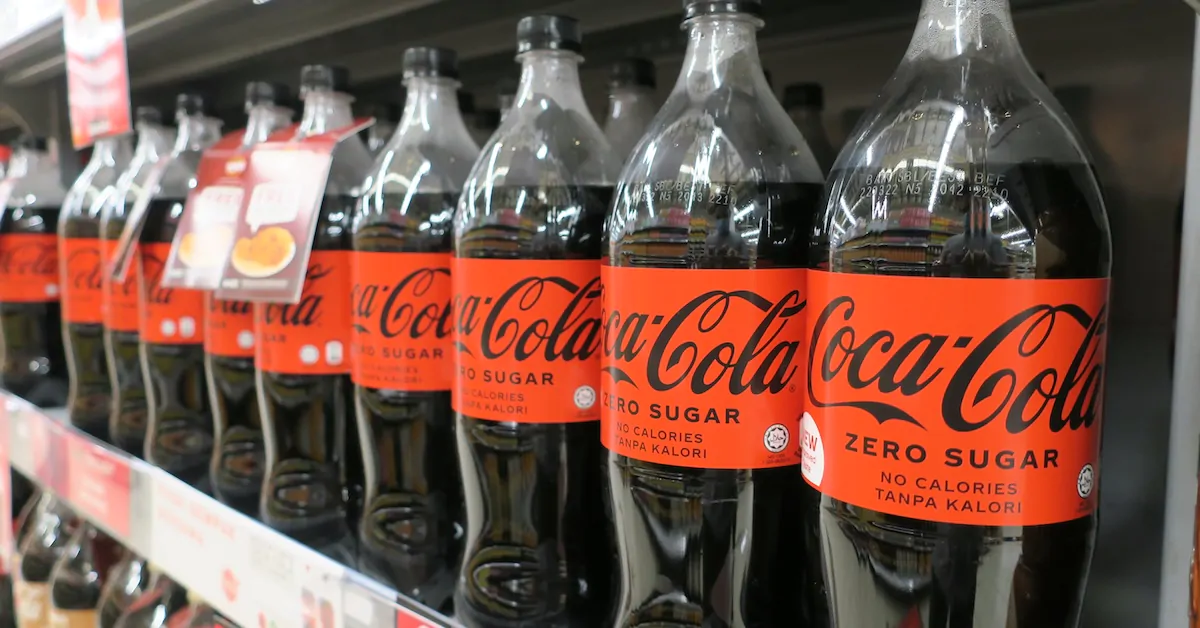
On September 10, 2026, the European Food Safety Authority (EFSA) confirmed the safety of aspartame-acesulfame salt (E 962) at current exposure levels. This announcement reassures European food manufacturers but complicates the international regulatory landscape due to divergences with the WHO.
Aspartame: A Key Decision for the Sweeteners Industry
The EFSA opinion, adopted in July 2026 during a meeting of the Panel on Food Additives and Flavorings (FAF), marks a turning point for Europe’s sweeteners industry. The global market for artificial sweeteners, valued in the billions of dollars, relies heavily on aspartame, found in many products such as diet sodas and low-calorie desserts. European validation stabilizes supply chains and spares manufacturers costly reformulations.
The EFSA confirmed that the acceptable daily intake (ADI) for aspartame remains 40 mg per kilogram of body weight per day. Thus, a 70-kg adult can consume up to 2,800 mg of aspartame daily without risk, according to the agency. For acesulfame K, the ADI is set at 15 mg/kg. According to EFSA’s press release, these thresholds offer a comfortable safety margin for European consumers. Laurent Oger of the International Sweeteners Association notes that an ADI is “an estimate of the amount that can be consumed daily without any appreciable health risk.”
The EFSA’s confirmation comes three years after the World Health Organization (WHO) classified aspartame as “potentially carcinogenic to humans” in 2023. This misalignment complicates the strategy of multinational food companies active in Europe, North America, and Asia. Manufacturers must navigate divergent regulatory approaches: Europe and the United States maintain their approvals while other markets are weighing restrictions. For producers, this creates logistical and production cost overruns estimated at tens of millions of euros annually.
Aspartame-Acesulfame (E 962): 350 Times Sweeter Than Sugar
The aspartame-acesulfame salt (E 962), composed of 64% aspartame and 36% acesulfame K, breaks down into its metabolized components separately after ingestion. Its sweetness power is equivalent to 350 times that of sugar, reducing the quantities needed for manufacturers. One gram of E 962 substitutes 350 grams of sucrose, generating savings on material and logistics costs. For example, diet sodas use only a few milligrams of aspartame per can, versus 35–40 grams of sugar in regular versions.
Facing controversy over aspartame, industry players are actively seeking alternatives. Sucralose (E 955), 600 times sweeter than sugar, is more thermally stable but costs about 20% more. Stevia (E 960), a natural sweetener, appeals for its “clean label” but its bitter aftertaste can be an issue. Erythritol (E 968), a natural polyol, contributes almost no calories, but its sweetness is limited to about 70% of sugar, requiring larger amounts.
Divergence: WHO Classification vs EFSA Approach
In 2023, the World Health Organization’s International Agency for Research on Cancer (IARC) classified aspartame as “possibly carcinogenic to humans” in Group 2B, based on a review of the scientific literature. The FAO/WHO Joint Expert Committee on Food Additives (JECFA) nevertheless maintained the ADI at 40 mg/kg. The EFSA concluded in 2026 that “no safety concerns” were identified at current exposure levels, according to TF1 Info.
In Europe, aspartame remains permitted with an ADI of 40 mg/kg. In the United States, the FDA also maintains its approval. But some Asian or Latin American countries are considering restrictions or warning labeling.