
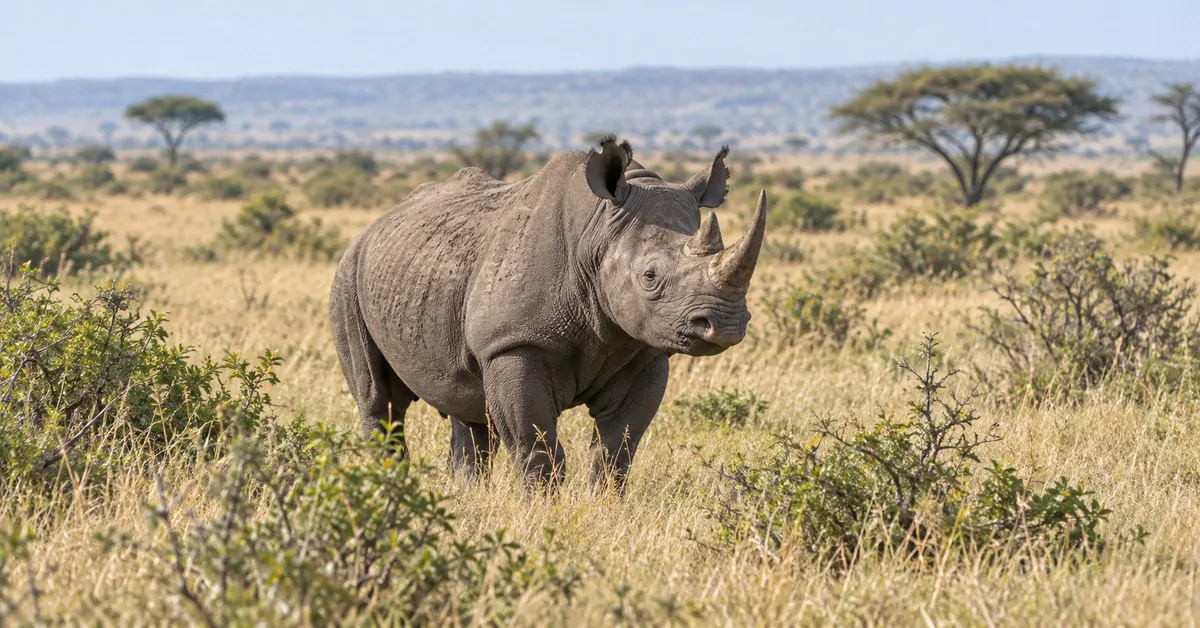
The rhinoceros impresses by its size. Yet its survival remains fragile. According to the 2026 assessment from the International Rhino Foundation (IRF), there are roughly 26,700 rhinos left worldwide. This figure encompasses five species with very different destinies.
On World Rhino Day, September 22, one question comes to mind: which ones are closest to extinction? Poaching, habitat loss and population isolation still weigh heavily. But some protections are delivering results.
Five rhino species, five different situations
Rhinos are not a single species. Two live in Africa: the white rhinoceros and the black rhinoceros. Three others live in Asia: the Javan rhino, the Sumatran rhino, and the greater one-horned rhino.
In Java and Sumatra, only a few dozen survivors
In Java, there are only about approximately 50 rhinos. All live in Ujung Kulon National Park, Indonesia. Poaching has pushed this population back. Its concentration in a single park also exposes them to natural disasters. The species is listed as “critically endangered.” (1)
The Sumatran rhinoceros is facing a similar threat. Experts estimate its wild population at between 34 and 47 individuals, with a high degree of uncertainty. Scattered in small populations, these animals struggle to meet and reproduce. The species is also listed as “critically endangered.” (2)
In Africa, a mixed record
The black rhinoceros counts about 6,788 individuals. Its population is on the rise: it was estimated at 6,195 in the previous 2022 census. But the species remains classified as “critically endangered.” A recent uptick does not erase decades of decline. (3) (4)
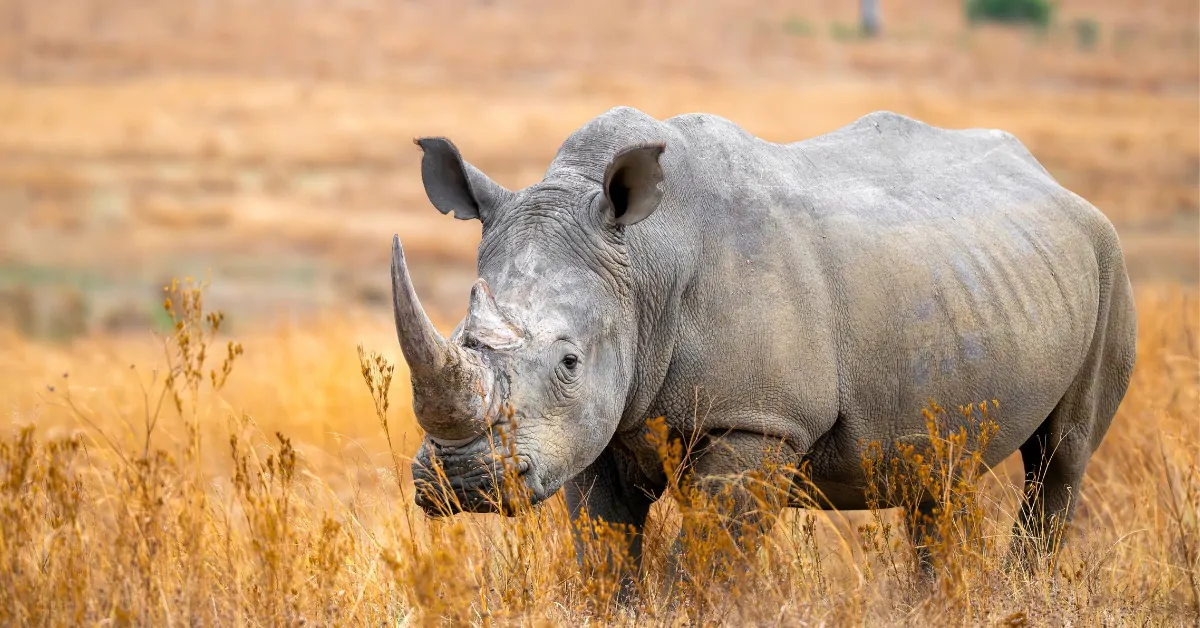
The white rhinoceros remains the most numerous. Yet its African population declined from 17,464 individuals in 2023 to 15,752 by the end of 2024. The IRF links this drop primarily to losses recorded in South Africa, largely due to poaching. In India and Nepal, a promising rebound
The greater one-horned rhinoceros stands at around 4,075 individuals. Once reduced to fewer than 100 animals, it benefited from strict protection in India and Nepal. It remains classified as “vulnerable”: this success demands sustained vigilance. (5)
Why are rhinos still threatened?
Their horns fuel illegal trade. They are made of keratin, like our nails. The so-called medicinal virtues claimed to justify the trade rest on no scientific evidence. Yet criminal networks sustain the demand.
In South Africa, 352 rhinos were poached in 2025, compared with 420 in 2024. The decline is real, but assaults are shifting: Kruger National Park logged 175, up from 88 the previous year. (6)
Loss or fragmentation of habitats worsens the threat. When animals live in small, isolated groups, they reproduce less easily. In Java, reliance on a single sanctuary poses a major risk.
Can rhinos still be saved?
Yes, the rebounds seen in the black rhino and the greater one-horned rhino show it. Protecting parks, anti-poaching monitoring, and relocating populations to suitable habitats can help these numbers rebound. In Indonesia, a breeding program is also working to bolster the Sumatra population.
These actions require time and resources. They must be accompanied by a concerted fight against horn trafficking and strong habitat protection. The fate of the rhinoceros is not written in stone, but every population matters.
What to take away: about 26,700 rhinos remain worldwide. Java and Sumatra are in especially critical shape. Other populations are progressing thanks to sustained protection.
Also read
These animal species we have already lost.
- https://rhinos.org/about-rhinos/rhino-species/javan-rhino/
- https://rhinos.org/about-rhinos/rhino-species/sumatran-rhino/
- https://rhinos.org/about-rhinos/state-of-the-rhino/
- https://rhinos.org/about-rhinos/rhino-species/black-rhino/
- https://rhinos.org/about-rhinos/rhino-species/greater-one-horned-rhino/
- https://rhinos.org/rhino-poaching/