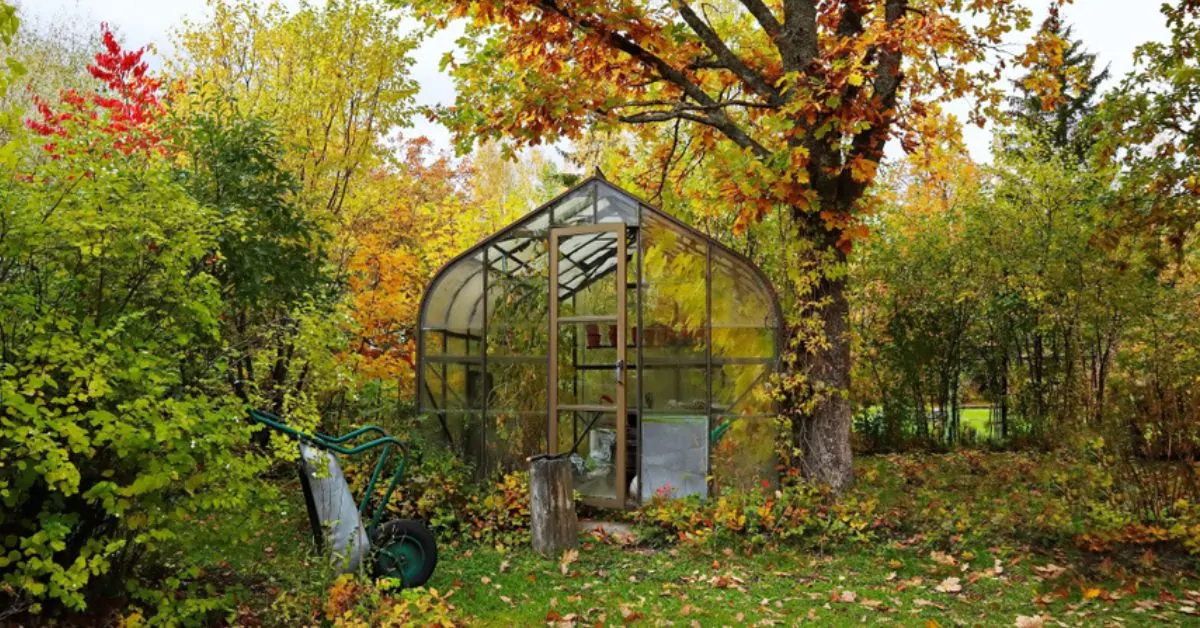
As the leaves begin to take on their autumn hues and the evening chill reminds us of the inevitability of seasonal change, the greenhouse remains an oasis of warmth and productivity. This shelter represents a world where nature, though controlled, still thrives. So, what to do in the greenhouse in autumn?
Cleaning for a Fresh Start
A well-maintained greenhouse is the key to its efficiency. It must be free of pests and diseases that could compromise your crops. Every shelf, every pot, every corner and crevice deserves your attention. Use a mild disinfectant solution to clean surfaces. For the glass, regular cleaning with water and vinegar ensures optimal light transmission, essential for photosynthesis.
The Importance of Ventilation
Humidity is both a blessing and a curse in a greenhouse. Too much humidity can encourage mold and disease. Make sure your windows and vents are functioning properly. If you own fans, now is the time to check that they are operating correctly.
Managing Temperature
In September, temperatures can be fickle. Using shade cloths or shade nets can protect plants from intense sunlight. At the same time, it’s essential to check heating systems for the coming months. A well-regulated greenhouse is the guarantee of healthy crops.
Sowing, Planting and Taking Cuttings in the Autumn Greenhouse
The advantage of a greenhouse is that it lets you start sowing winter vegetables earlier. Vegetables such as spinach, lamb’s lettuce (corn salad), and winter radishes can be sown now under glass for a winter harvest. It’s also the perfect time to take cuttings. Many plants, like geraniums, benefit from this period to produce new plants for the following spring.
Here is a more detailed and non-exhaustive list of sowing and cuttings to carry out under a greenhouse in autumn:
Sowing:
Vegetables:
- Spinach: these leafy greens enjoy cool weather and can be sown as early as September.
- Lamb’s lettuce: an excellent winter salad green that can be sown through October.
- Winter radishes: varieties such as the ‘Noir Gros Rond d’Hiver’ do well in autumn.
- Arugula: ideal for a winter harvest.
- Peas: some varieties, such as winter peas, can be sown late autumn for a spring harvest.
- Turnips: winter varieties such as ‘Nancy’ or the ‘Milan’.
- Winter lettuce: robust varieties such as ‘Winter Gem’ or ‘Winter Brown’.
Flowers:
- Pansies: for colorful blooms in spring.
- Forget-me-nots (Myosotis): delicate blue flowers for spring.
- Marigolds (Tagetes): perfect for repelling certain garden pests.
Herbs:
- Chives: can be sown in autumn for a spring harvest.
- Cilantro (Coriander): an aromatic herb that likes cool seasons and can be sown late summer into early autumn.
- Dill: sown in autumn, it germinates early in spring.
Taking Cuttings:
Shrubs:
- Forsythia: new-year wood is ideal for cuttings.
- Hydrangea: semi-ripe cuttings taken in autumn can root before winter.
- Roses: cuttings of about 8–12 inches (20 cm) can be taken in autumn.
Perennial Plants:
- Lavender: cuttings from non-flowering stems can be taken.
- Rosemary: semi-ripe stem cuttings are perfect for rooting.
- Sage: cut from new growth to ensure new growth the following year.
Houseplants:
- Pelargoniums (geraniums): take cuttings from healthy stems to have new plants for the next year.
- Fuchsia: current-year stems can be cut to produce new plants.
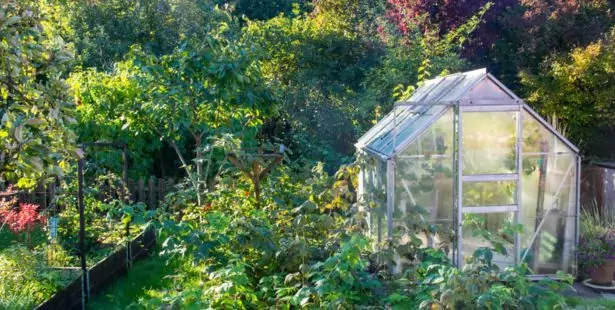
The Soil in the Greenhouse
Healthy soil is the foundation of any good crop. Enrich your soil with homemade or store-bought compost. Crop rotation is essential to prevent nutrient depletion and the buildup of specific diseases.
Tools Not to Neglect
Just like your greenhouse, keep your tools in top condition. They must be cleaned, sharpened, and disinfected. Well-maintained tools make work easier and reduce the risk of spreading diseases.
Prefer Natural Methods for Disease Control
Natural remedies such as compost teas and beneficial insects can help manage pests and diseases. These eco-friendly approaches help maintain balance in your greenhouse.
Companion Planting
The pairing of certain plants can repel pests or enhance growth. For example, basil planted near tomatoes can repel certain garden pests.
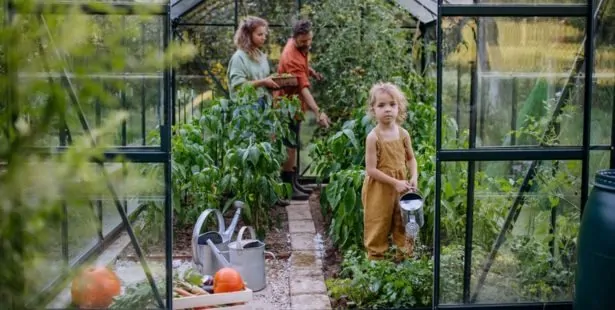
Water Management in the Greenhouse
Watering should match the plants’ needs. Consider drip irrigation systems, and if possible, install rain barrels to collect non-chlorinated, fresh water.
Planning Greenhouse Crops
Finally, planning is crucial. With a greenhouse, you can extend the growing season, but it requires some organization. Establish a planting calendar, taking into account space and the life span of each plant.
September in the greenhouse, then, is a gentle blend of endings and beginnings. With the right techniques, a greenhouse can truly transform your gardening experience, making it even more rewarding and productive. As the outdoors prepare for winter, your greenhouse remains a place full of life and promise…