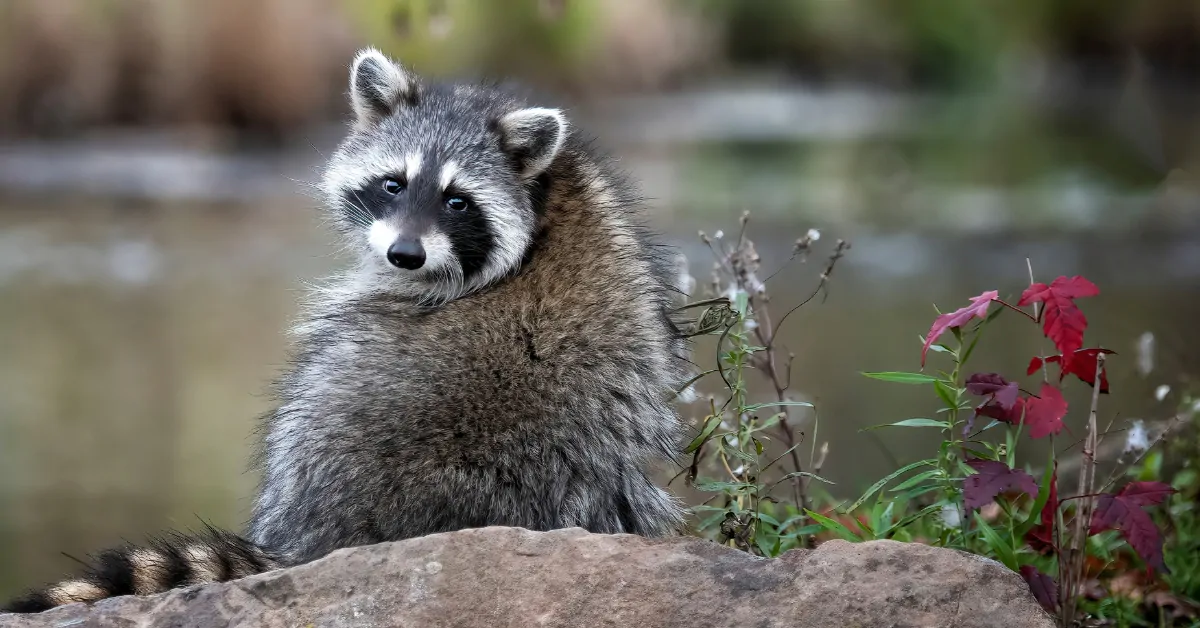
With its black mask and nimble paws, the raccoon easily earns sympathy. Yet its presence in Europe raises a fundamental question: how can we protect local biodiversity from a species introduced by humans? On the occasion of its international day, October 1st, let’s explore the ecological stakes and practical steps to safeguard nature.
The 1st of October is associated with the International Raccoon Appreciation Day, often called “the raccoon world day.” This day invites us to better know the animal and its habitat. In Europe, it also offers a chance to reflect on our responsibility in moving species around the globe.
Why Europe and France?
- Why is the raccoon settling in Europe and in France?
- What place does it occupy in biodiversity?
- What natural balances must be preserved?
- Preserving nature starts with avoiding new introductions
- Practical steps to protect biodiversity near you
Why is the raccoon settling in Europe and in France?
The raccoon, Procyon lotor, arrived in Europe following intentional introductions and escapes from captivity. Fur farming and releases notably contributed to its establishment.
Germany represents a major focus. Animals were released near Lake Edersee in 1934. Others escaped from a breeding facility in 1945, in Brandenburg.
A 2025 study shows dynamics that differ by region in Germany. Some historic foci stabilize at high levels, while elsewhere the expansion continues.
In Belgium, authorities note that the species now occupies almost the entire Walloon region.
Where is the raccoon found in France?
In metropolitan France, the French Office for Biodiversity describes three major historic foci:
- the Northeast, around the Aisne, with expansion into several neighboring departments.
- Auvergne, notably the Allier, the Puy-de-Dôme, and Haute-Loire.
- Gironde, where regular sightings have been reported since the 2000s.
Observations also exist elsewhere. However, a single animal observed does not by itself prove a local breeding population.
A 2023 genetic study confirms at least three independent introductions in France. It also reveals genetic exchanges between populations in Northeast France and Belgium.
The sources consulted do not provide an updated national census for 2026. Presence maps help track distribution but do not give a precise animal count.
What place does the raccoon occupy in biodiversity?
The raccoon is an opportunistic omnivore. It eats fruits, seeds, invertebrates, and small vertebrates. It also consumes eggs, carrion, and human food waste.
In its native range, it participates in food webs. Its fruit consumption may also aid in dispersing certain seeds.
An North American study demonstrated this with Virginia creeper (paradise grape). Seeds eaten by raccoons survived digestion and retained their germination capacity. This result concerns a particular plant in an American context.
The ecological role of a species depends on the habitat it occupies. After introduction, its interactions with other animals can change.
In France, a GPS tracking study of 14 individuals illustrated this adaptability. The animals mostly used wooded areas, with differences between Marne and Gironde sites. These results remain limited to the territories studied.
What natural balances must be preserved?
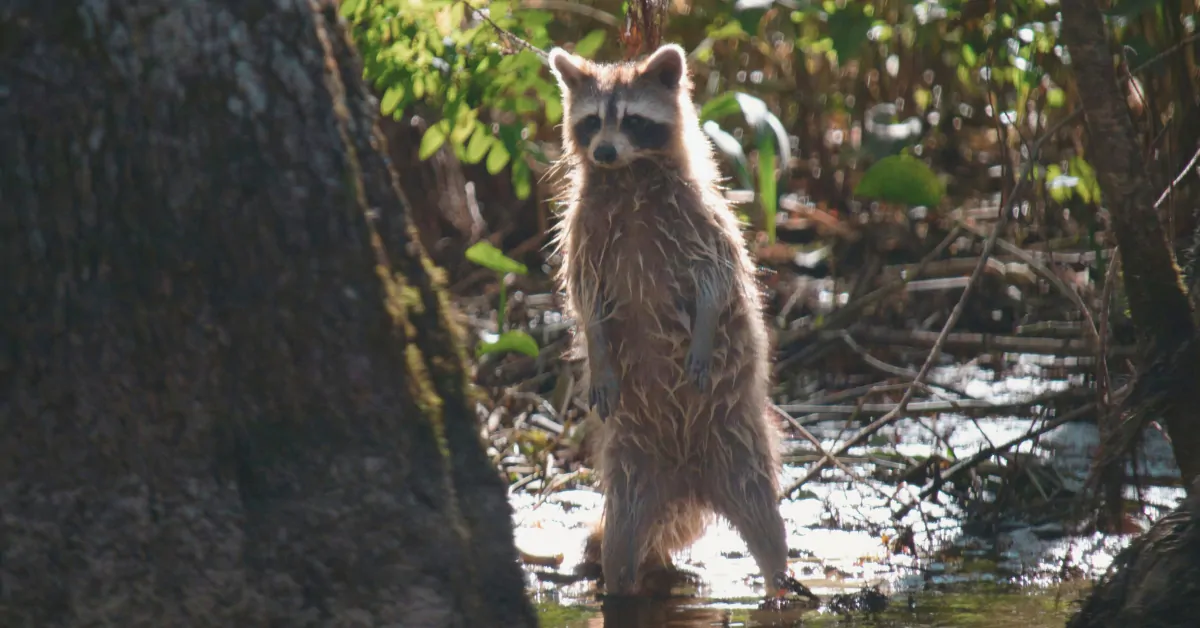
The raccoon feeds on the ground and in trees. It can eat amphibians, eggs, and young birds. Competition with other small carnivores, notably the martens, is also suspected in Europe.
These interactions warrant monitoring. Their intensity and consequences must be evaluated locally. Observed predation does not, by itself, prove a population decline.
A 2024 Walloon university study recalls a nuanced point. A previous study had judged the impact on cavity-nesting birds to be weak, though it did note a marked attraction of raccoons to nest boxes.
To protect nature, it is essential to identify the species at risk and monitor their evolution. Observations, camera traps, and ecological studies help guide interventions.
A Consideration, Alongside Other Threats
Biodiversity faces multiple pressures: habitat destruction, pollution, climate change, and the introduction of species. The raccoon should be managed within a broader effort to protect natural habitats.
Preserving a pond, a hedge, or a woodland still makes sense. Monitoring introduced species and restoring habitats are complementary actions.
Preserving nature begins with avoiding new introductions
The raccoon has been on the European Union’s list of concerning invasive exotic species since 2016.
An invasive exotic species is one that is introduced by human action outside its natural range. It establishes itself and spreads, threatening ecosystems. This classification points to ecological challenges whose importance varies by territory.
European policy combines prevention, early detection, and management of widely spread populations. For the raccoon, this means specifically avoiding new escapes and releases.
In metropolitan France, owning, trading, and releasing into the wild are typically prohibited. Exemptions and transitional provisions exist in regulated situations. Collecting a young raccoon to keep as a pet can undermine this preventive effort.
The good steps to protect biodiversity near you
Observe without attracting raccoons
Seen a raccoon in your yard? Keep your distance and avoid habituating them to your presence.
A few steps can limit accessible resources around homes:
- Do not feed them, even to get a photograph.
- Bring in pets’ food after meals.
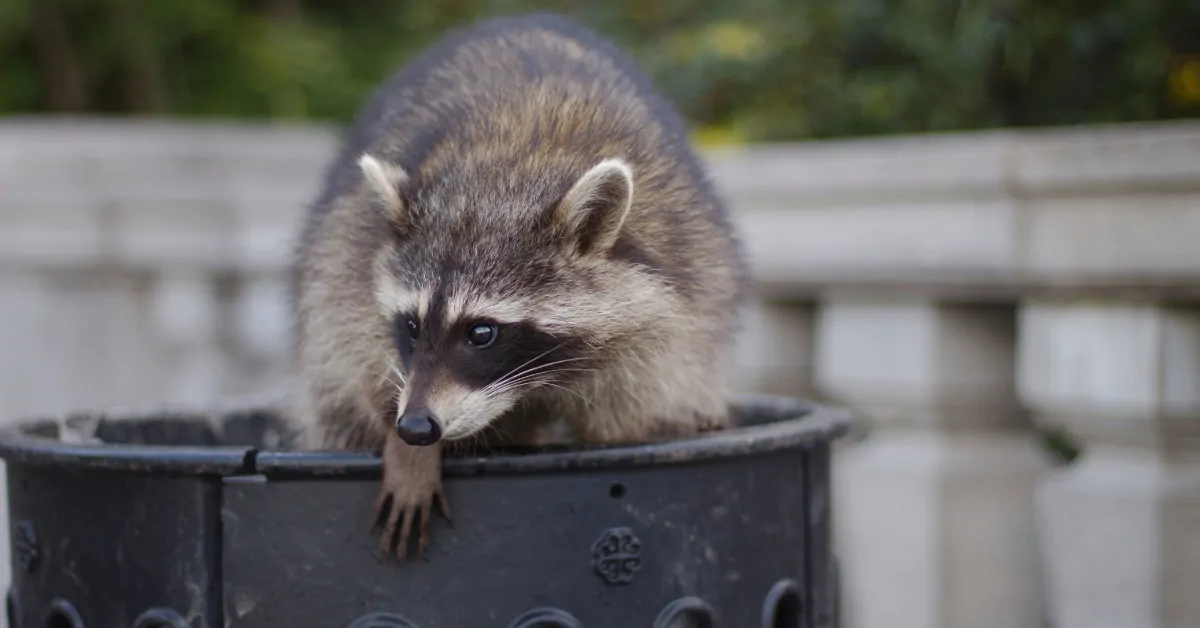
- Close the trash cans and secure composters that contain kitchen scraps.
- Protect chicken coops and access to buildings.
- Do not attempt to touch or tame them.
These precautions reduce contact and nuisance.
Preserve habitats of local wildlife
A biodiversity-friendly garden offers natural resources for local species. Keep hedges and favor native trees and shrubs that suit your region.
A diversified hedge provides shelter, food, and nesting support. It also eases wildlife movement.
These habitats may be frequented by raccoons. That does not justify removing them. Preserving habitats and preventing introductions must go hand in hand.
Report presence, without moving the animal
A distant photograph, along with a date and location, can contribute to monitoring. Send these details to a local naturalist association or the departmental OFB (Office Français de la Biodiversité) service.
Do not capture a raccoon to relocate it elsewhere. This move could create a new hotspot. Before any intervention, contact the relevant authorities to learn the proper steps and rules.
The raccoon appreciation day reminds us how our choices impact nature. Better understanding of the animal, preventing its spread, and protecting local habitats are responsibility-driven ecological actions.