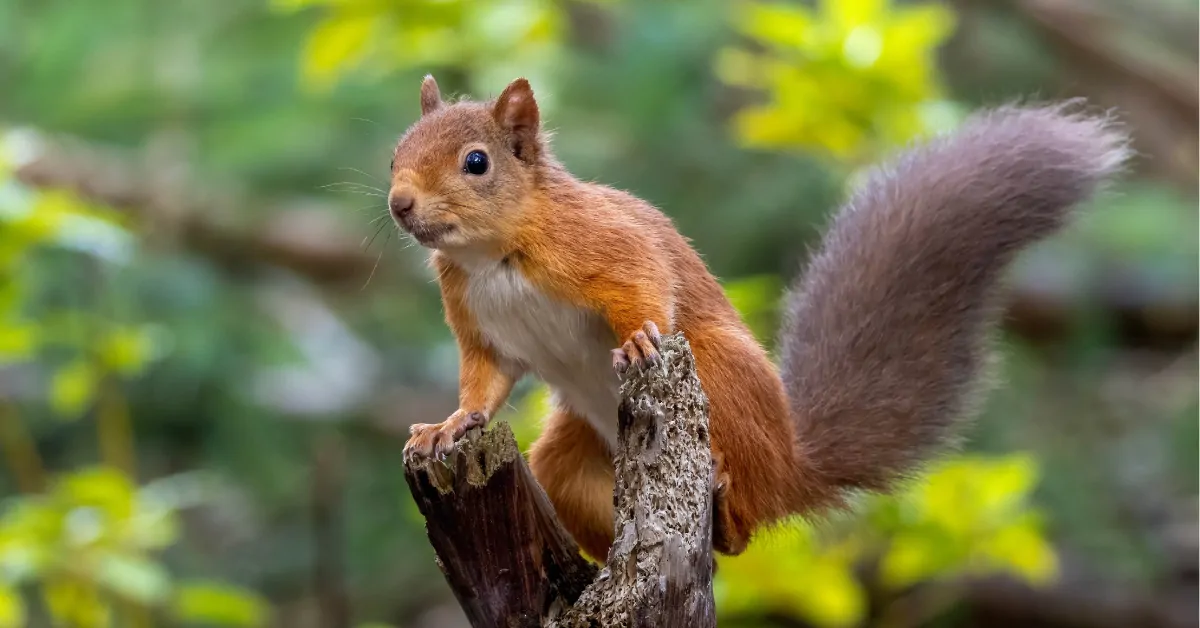
In autumn, the red squirrel is busy among the branches and the fallen leaves, preparing its caches. A few adjustments can turn your garden into a welcoming stopover before winter. Nut-bearing trees, preserved passages, clean water, and quiet surroundings: here’s how to help while respecting its wild life.
Table of contents
- Why does the red squirrel stash for autumn?
- Which plants to plant to welcome it?
- Preserve its dens and its passages
- Should you feed squirrels in the garden?
- Provide water and limit dangers
- Frequently asked questions
Why does the red squirrel stash for autumn?
Unlike the marmot, a red squirrel does not hibernate. When cold weather settles in, it may reduce its outings and stay more sheltered, but it continues to seek food.
Autumn offers a valuable opportunity to build up reserves. Hazelnuts, nuts, and other seeds are hidden in various caches, particularly underground. These provisions supplement resources available during the harsh season.
Its menu varies by location and season. It includes conifer seeds, fruits, buds, and mushrooms. So, there’s no need to reduce its needs to a uniform daily ration for every individual.
This little forager also helps trees. Some seeds buried underground are never recovered and can germinate. The squirrel thus contributes to seed dispersal and the renewal of woodlands.
Also read: a squirrel shows up in your yard? Learn how to coexist with a squirrel in your garden, balancing biodiversity with protecting your plantings.
Which plants to plant to welcome squirrels?
The best assistance begins with planting. A garden offering a variety of resources lets the animal seek its own food. It also benefits birds and many other visitors.
The hazelnut, a good starting point
The common hazelnut (filbert) has a place in a diverse hedge or in a garden with enough space. Its hazelnuts are a valued resource for squirrels. However, keep in mind its growth: this is not a small shrub meant to stay miniature.
To manage yours without excessive intervention, check our tips for pruning a hazelnut. Before any cut, check for the possible presence of a nest.
In a large yard, beech, oak, or a walnut can complement the resources. Always choose tree species according to your soil, climate, and mature size. A large tree planted too close to a house may later require significant pruning.
Also keep existing conifers if they suit the site and are in good condition. Their cones contain seeds that squirrels seek. Leave some fruits and seeds available rather than collecting everything.
A diverse hedge rather than a uniform garden
Combine several trees and shrubs suited to your region. A field-edge hedge that supports biodiversity offers resources and shelter to a variety of species.
This planting requires patience. A young hazelnut tree won’t immediately feed every visitor in the neighborhood. The goal is to make your garden welcoming across the seasons, without promising the arrival of a squirrel.
Preserve dens and passages between trees
The red squirrel spends a large part of its life in the trees. Branches linking trees together let it move around without coming down to the ground. Preserve these connections when safety for people and buildings allows.
A garden near a woodland or park can thus extend a favorable habitat. Conversely, a feeder on an isolated tree risks inviting the animal to cross a lawn or a road that’s exposed.
Its nest resembles a ball of twigs, lined with plant material, usually placed high up. Before pruning, carefully inspect the branches and note any nest for the professional. Winter does not guarantee that a tree is unoccupied.
At the base of hedges, keep some fallen leaves and limit routine cleanups. This ground cover protects the soil and shelters small organisms. It also fits a zero-waste gardening approach by reusing plant material on site.
Should you feed squirrels in the garden?
A feeder is not essential in an environment rich in resources. An occasional addition can supplement natural food when it’s scarce, but it should not replace it. Start by observing your garden and the animal’s movement patterns.
If you choose to offer food, favor small quantities of unsalted, raw nuts and hazelnuts. You can occasionally add a small piece of apple. Avoid a diet that relies solely on sunflower seeds.
Avoid bread, cookies, salty or sugary foods, and leftovers. Do not offer milk. Moldy foods should also be removed, even if they’re nuts or seeds.
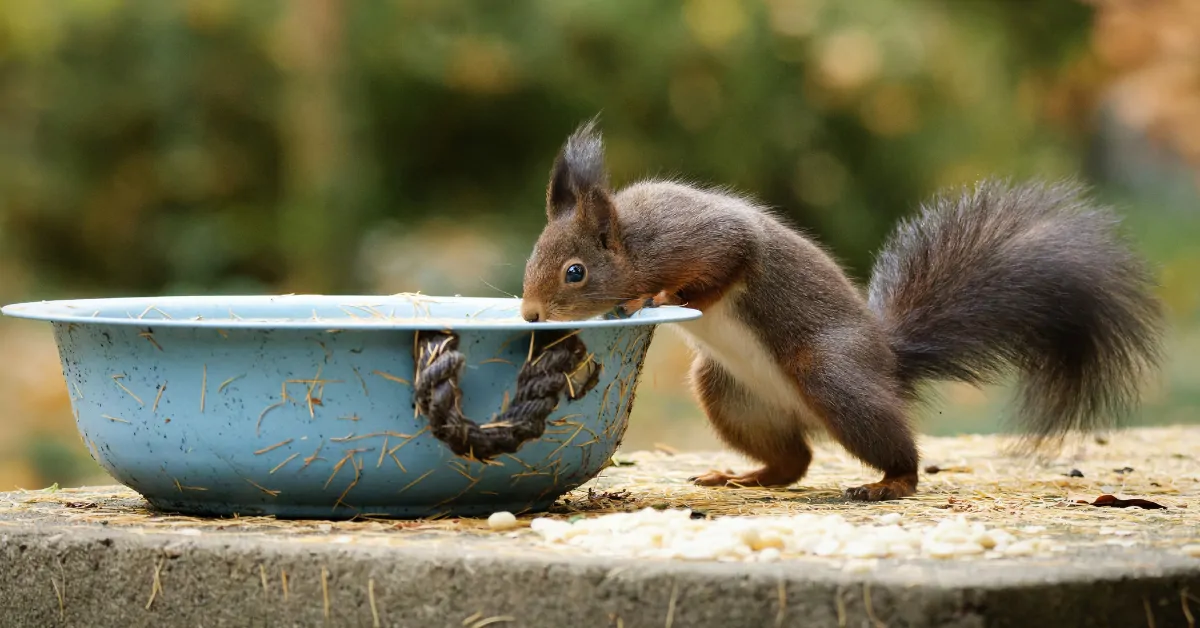
Setting up a feeder without creating a trap
Choose a model designed for squirrels, easy to clean, with a lightweight lid if the device has one. Mount it securely high up, on a tree accessible from other branches, away from roads.
A position about two meters off the ground can limit some ground encounters, but it doesn’t render the setup inaccessible to cats. Cats climb. If cats frequently frequent the site, skip drawing in squirrels with food.
Remove leftovers, check moisture, and regularly clean the device. A dirty feeder or one filled with spoiled food can become a contamination hotspot. A small amount of fresh food is better than a stock left unattended.
Also read: hazelnuts buried everywhere… but how do you recover these provisions? Learn how squirrels locate their hazelnuts.
Provide water and limit garden dangers
If natural water sources are lacking, a shallow dish can offer supplementary help. Set it on a stable, elevated stand with safe access from the trees. Refresh the water daily and clean the container.
During freezing conditions, replace frozen water with liquid water, without adding salt or anti-freeze products. Avoid deep, open containers.
A pool or tank can trap an animal that tumbles in. Plan an exit, such as a rough, securely fixed ramp for a pool. Close off water collectors and turn over unused containers.
Common mistakes to avoid
- Attracting a squirrel near a road or in an area frequented by cats.
- Feeding from a feeder without checking its condition or removing leftovers.
- Pruning a tree without looking for nests and the passages used.
- Providing mineral supplements without advice from a wildlife specialist.
- Trying to feed the animal by hand or tame it.
Red Squirrel in the Garden: Frequently Asked Questions
Should you install a nesting box?
A dedicated roost can supplement the available shelter, but it does not replace trees. Choose a model suited for squirrels, then follow the installation recommendations from a naturalist association. Never disturb an occupied roost to check for its presence.
Why doesn’t it come despite my improvements?
Your garden may be too far from a wooded area or difficult to access. Food availability alone isn’t enough to make a site favorable. Your plantings will still benefit other species.
What to do if I find a wounded squirrel or a youngster on the ground?
Keep domestic animals away and contact a wildlife rescue center promptly. Do not force-feed or give water. A lone youngster isn’t necessarily abandoned—seek advice before moving it.
The red squirrel is a protected species in the United States and elsewhere in Europe. Welcoming it means providing a favorable environment and its freedom. To enjoy its visits, observe it quietly from a distance.
What to remember
- The red squirrel does not hibernate: it searches for food and uses its caches during winter.
- Preserving trees and planting nut-bearing vegetation are the most durable measures.
- A feeder remains a supplement, installed only in a safe spot and maintained regularly.
- Watch this protected mammal from a distance, without trying to tame it.