
The sunny days are settling in and the sun is shining on cue. A wonderfully bright light that makes any traces on our windows stand out more clearly than usual. It’s not always easy to achieve panes that are absolutely transparent… Well, that was before. With our tips, you’ll become real pros at washing windows, without chemical cleaners and without waste. Follow the guide!
How to clean windows without streaks?
Cleaning windows isn’t inherently a difficult household chore. Nevertheless, a little bit of “know-how” is needed for a perfect, streak-free finish.
Choosing the right time to wash your windows
You should definitely not clean your windows when they’re in the sun. The heat will dry the product very quickly before you’ve had a chance to wipe with a cloth. And, in almost 100% of cases, it will leave streaks on your panes.
The time of year also matters. In the middle of summer, even if your windows are shaded, the outside temperature can still cause the product to dry rapidly. It’s better to wash your windows at the beginning or end of the day when the heat is lower. A slightly overcast sky is actually the best weather for this task.
What natural products can you use to clean your windows?
Natural, inexpensive products sold in any store are a good alternative to chemical window cleaners (which can cause irritation). It’s also an excellent way to reduce the number of plastic bottles that pile up under the sink.
White vinegar
The star of natural products! Used in 1001 ways, white vinegar can clean, descale, and shine. Mix one part white vinegar with three parts warm water. Fill a spray bottle and spray the liquid onto your windows. Then wipe with a microfiber cloth to distribute the product and remove stains. Finish with a second pass using a clean, dry cloth.
Lemon juice
It’s another multi-use natural product. Like before, add a few drops of lemon juice—freshly squeezed or store-bought—into warm water and repeat the same process. Bonus: its fresh scent naturally neutralizes odors around windows.
Meudon white and Marseille soap
A combo that works wonders. Meudon white (also known as calcium carbonate) is ideal for cleaning and shining. In a glass of hot water, add half a glass of liquid Marseille soap and 250 grams of Meudon white. Make sure the mixture is fully dissolved before applying to your window. No need to rinse or wipe afterward.
Sparkling water, the anti-waste trick
A bottle of sparkling water that’s already started going flat in the fridge? Don’t throw it away! The dissolved carbon dioxide helps lift dirt without leaving mineral deposits. Simply pour it into your spray bottle, either alone or mixed with a bit of white vinegar.
Good to know before cleaning windows
- Use a cloth on the end of a broom handle to remove cobwebs.
- Dust the window sills.
- Avoid cleaning in strong wind: the dust kicked up will immediately settle back onto the window while it’s still damp.
What equipment do you need to clean windows?
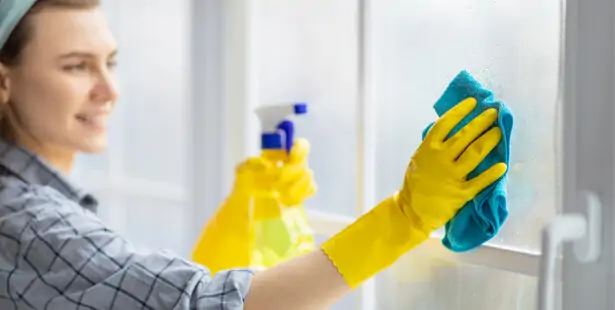
Microfiber cloths are perfectly suited for cleaning windows without leaving streaks. It’s best to have two: one damp but wrung out for the first pass to remove any stains, and a second clean, dry one for drying.
The ecological caveat: microfiber is a synthetic textile that releases microplastics with every wash. For a more responsible choice, whenever possible, opt for an old cotton or linen cloth (a pillowcase or an old sheet cut into squares works perfectly), or choose washable microfiber cloths made from recycled fibers, washed in a special mesh bag that traps the fibers before they make their way into wastewater.
Pair it, if you like, with a squeegee. Used by professionals, it proves quite effective, especially if you have the knack. The technique is to run the wet cloth from left to right (or right to left) across the pane, immediately followed by the squeegee, in the same direction. This requires, we’ll admit, good hand coordination and smooth movements.
If you don’t master the squeegee technique, turn to newspaper. Spray your cleaner on the windows and rub with a rolled ball of newspaper in a zigzag S. Surprising at first glance, but the result is immaculate: the ink acts as a light natural abrasive that makes the glass shine. It’s also an excellent way to give your newspapers a second life before recycling.
Use a scraper (if needed): For stubborn stains or stickers on glass, use a plastic or metal scraper. Be careful not to scratch the pane by keeping the scraper at an angle.
Finally, steam machines – such as steam cleaners – also work very well for cleaning windows and will guarantee a streak-free result without any chemical products.
To keep windows clean, clean them regularly, preferably twice a year, in fall and spring.
Bonus: fighting condensation and frost naturally
White vinegar has another trick: applied in a thin layer on the inside of the windows before winter, it limits condensation and delays frost, without resorting to commercial anti-fog sprays. A simple gesture that extends the clarity of your windows from one season to the next.
FAQ: cleaning windows, your common questions
How often should you wash your windows?
Two times a year is usually enough (spring and fall). In city centers or along busy roads, an extra cleaning as winter approaches helps prevent pollution buildup on the glass.
Does white vinegar damage window seals or wood?
Used diluted and occasionally, no. Just avoid letting the product linger on silicone seals or old frames: rinse and wipe promptly.
How to clean very dirty or greasy windows (kitchen)?
Add a teaspoon of liquid Marseille soap to your vinegar-water mix: it dissolves grease better. Then rinse with a damp cloth before drying.