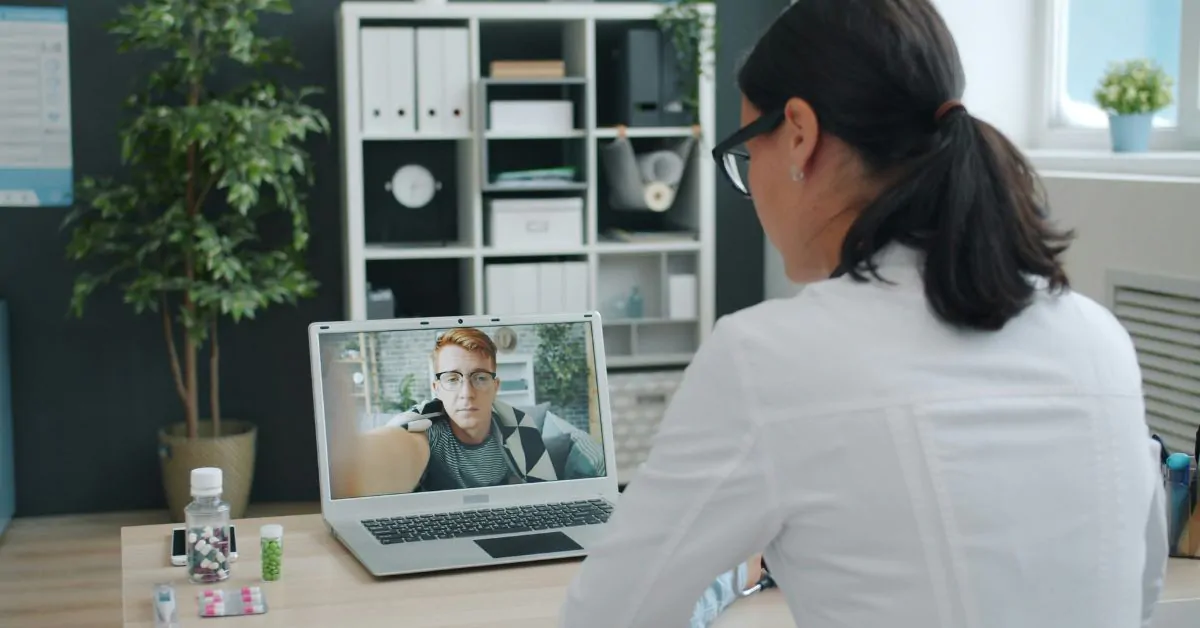
For a few years now, telemedicine has established itself as a practical solution for many everyday health needs. But how does it work, and in what situations is it truly useful in the United States?
The concept and functioning of telemedicine
Telemedicine is a medical consultation conducted remotely via video between a patient and a healthcare professional. It can be performed on a computer, tablet, or smartphone, through a dedicated platform or the physician’s software.
The process mirrors a traditional consultation, but from a distance. The patient starts by creating an account and entering the information needed for care: personal details, health insurance information, symptoms, allergies, medical history, as well as certain health metrics. These elements provide the clinician with an initial information baseline before the encounter. The patient then joins a virtual waiting room before being connected with a physician via videoconference. During the telemedicine visit, they discuss their symptoms and situation with the clinician. At the end of the encounter, the physician may establish a diagnosis, issue an electronic prescription if needed, or refer the patient for a further test.
In the United States, telemedicine visits are reimbursed by Medicare, Medicaid, and many private insurers under conditions similar to in-person visits, subject to plan rules and care coordination where applicable. The patient may owe a copay or deductible, and any remaining out-of-pocket costs may be addressed by the insurance plan. If you’d like to learn more about how telemedicine works in the U.S., talk to your provider or insurer about coverage and how to get started.
Reasons to opt for a telemedicine visit
For ongoing medical follow-up
Telemedicine is especially well suited for routine follow-ups, when the condition is already known to the clinician. The doctor has access to the patient’s chart, history, and current treatment, allowing a safe remote assessment.
They can review symptom progression, discuss test results, adjust a dosage, or renew a prescription. The patient avoids a trip for a routine appointment while maintaining regular contact with their physician.
To improve access to care
In areas with physician shortages, getting an appointment can take weeks. Telemedicine provides faster access to medical advice without requiring travel.
It is also valuable for people with mobility limitations, parents of young children, or working adults with constrained schedules, who can consult from home or their workplace during extended hours, including early mornings, evenings, weekends, or holidays.
For mental health needs
Telemedicine makes it easier to connect with a physician, psychiatrist, or psychologist. Meeting from a familiar environment can help some patients open up more easily, and it supports regular follow-up even with a busy schedule.
Limitations of telemedicine
Telemedicine cannot fully replace an in-person visit. The lack of a complete clinical examination (palpation, auscultation, blood pressure measurement) can limit diagnostic accuracy for certain symptoms.
It is not suitable for life-threatening emergencies: any serious situation or worrisome symptom requires calling emergency services (9-1-1).
Likewise, telemedicine requires appropriate equipment (a device with a camera) and a stable internet connection. Without these conditions, communicating with the physician can be difficult or impossible, which limits access for some patients.