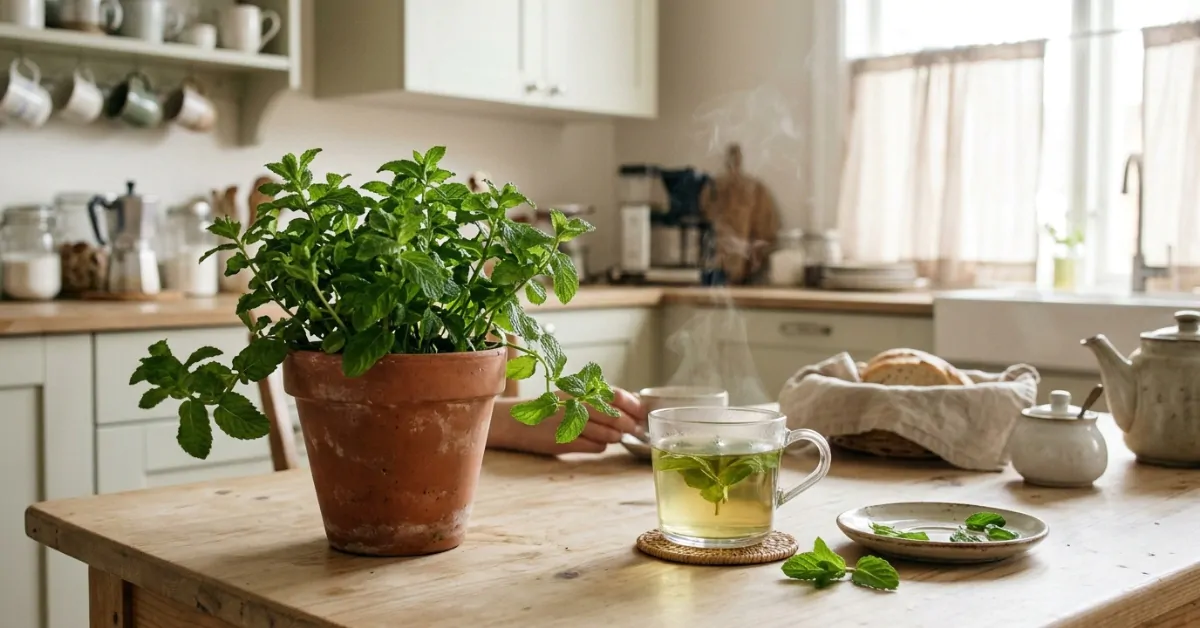
Fresh, fragrant, and easy to grow, peppermint isn’t just for the kitchen. It can soothe the stomach, ease certain headaches, and leave a immediate feeling of coolness. Here are its benefits, how to use it daily, and precautions to keep in mind.
Peppermint: What Is It?
Peppermint (Mentha x piperita) is a natural hybrid of watermint and spearmint. It contains a lot of menthol, the compound that gives that iconic cool sensation. Its leaves are sharper than those of spearmint. They’re used fresh, dried, or in essential oil form.
Peppermint and Digestion: A Friend to the Gut
That’s its most well-known use. Peppermint relaxes the smooth muscles of the digestive tract, which can help to calm:
- bloating and gas;
- stomach cramps;
- a feeling of heaviness after a heavy meal;
- mild nausea;
- intestinal spasms related to winter viruses, with essential oil often recommended among natural remedies for gastroenteritis.
For more pronounced digestive issues, such as irritable bowel syndrome (IBS), some studies look at the essential oil in gastro-resistant capsules. This type of treatment should only be taken on the advice of a doctor or pharmacist.
How to Use It After Meals
The simplest method remains an infusion. It’s inexpensive and produces little waste if you use garden- or balcony-grown leaves.
Extra tip: to enhance its soothing effects, don’t hesitate to combine it with other herbs. Paired with lemon balm, known for its benefits on digestion and sleep, it becomes a formidable pairing.
- Use 5 to 8 fresh leaves or 1 teaspoon of dried leaves per cup.
- Pour in hot water, but not boiling.
- Cover and steep for 5 to 10 minutes.
- Drink warm, after the meal.
Peppermint and Headaches: A Cooling, Soothing Burst of Relief
The menthol creates a cooling sensation that helps relax. This is why peppermint is often used against tension headaches. You’ll also commonly find this herb in centuries-old soothing balms like the famous Tiger Balm (or Chinese balm).
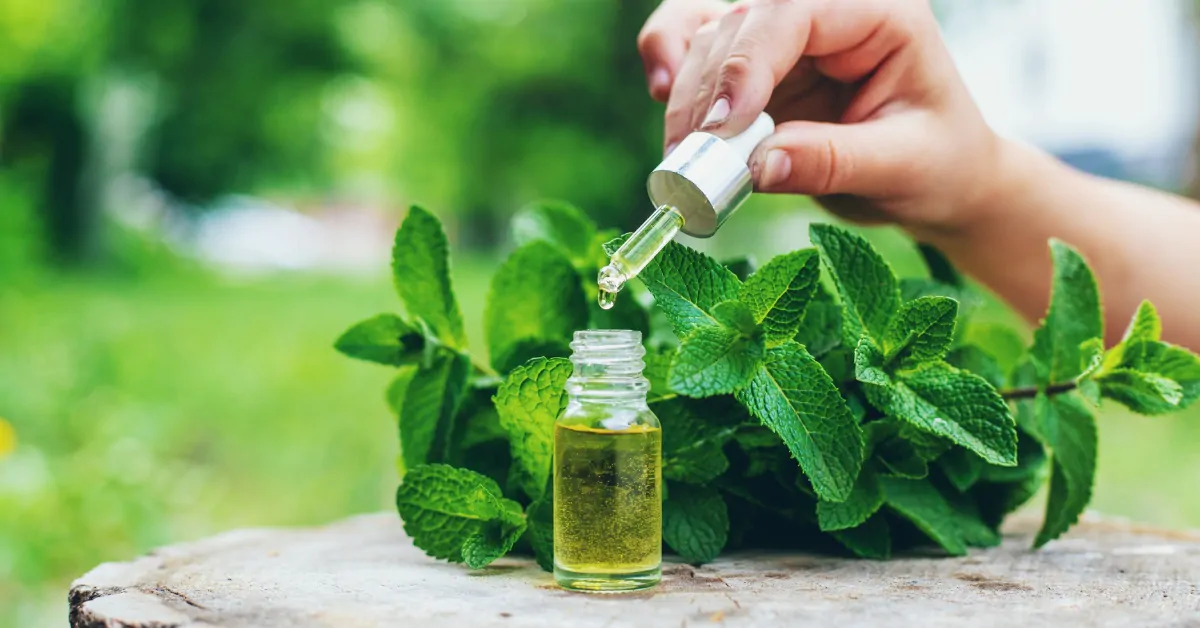
The essential oil, diluted in a carrier oil, can be applied with a light massage to the temples and the neck. Avoid the eye area and never apply it neat on the skin.
A hot infusion can also help you unwind. If headaches are frequent, intense, or unusual, consult a health professional.
Peppermint and Freshness: Body, Home, and Insect Repellent
Peppermint is the everyday king of freshness, and its uses go well beyond health:
- Breath: chewing a fresh leaf temporarily masks bad odors.
- Throat: a warm infusion soothes irritated throats and clears the nose.
- Cooling and Beauty: a cooled tisane quenches thirst in summer. On the skin, it blends nicely into DIY beauty recipes to calm redness and tone the face.
- Home: thanks to its bright scent, peppermint essential oil is an excellent option for banishing unpleasant smells from the home (garbage, drains, tobacco).
- Anti-Insectes: its strong scent makes it a natural repellent to ward off mosquitoes and spare you bites during outdoor adventures.
Tips for an Eco-Friendly Peppermint
No need to buy commercial sachets to enjoy the plant.
- Grow it in a pot. It practically grows by itself on a balcony or window. While it’s one of the hardiest culinary herbs, keep it in a pot or install a rhizome barrier: it can be very invasive in open ground!
- Prefer loose-leaf tea or bags without plastic packaging, preferably organic.
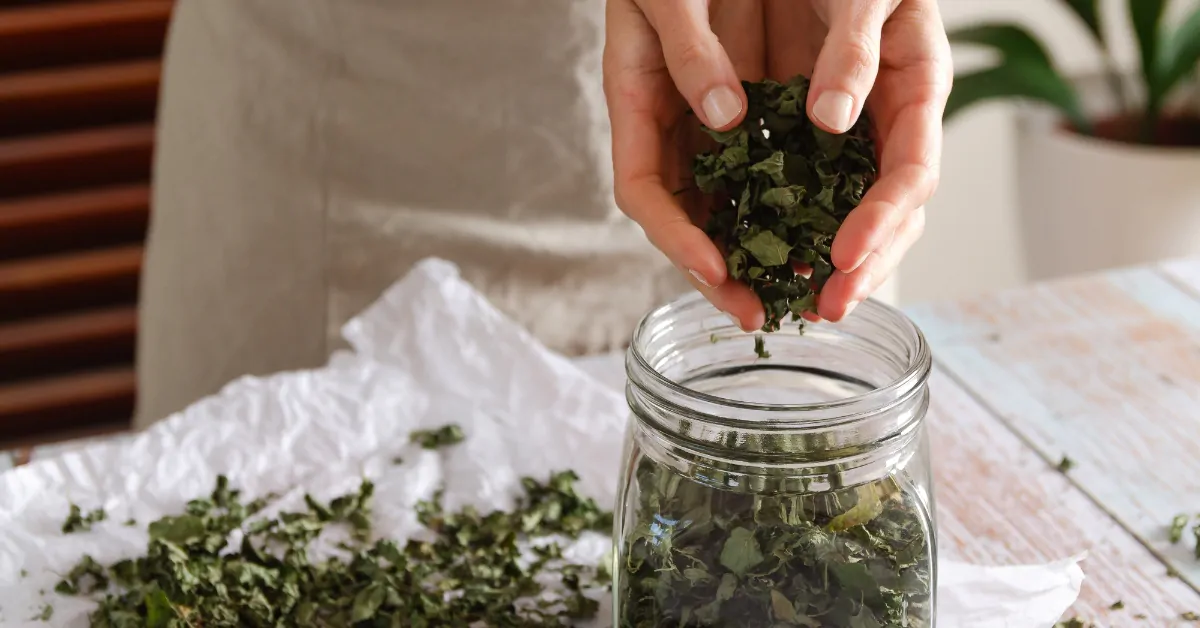
- Don’t discard wilted mint. Dry it in air, or freeze leaves in an ice tray with a little water.
- Use the stems too. They scent infusions and homemade syrups very nicely.
Precautions: Who Should Avoid Peppermint?
Natural doesn’t mean risk-free. A few precautions apply:
- The essential oil is not recommended for pregnant or breastfeeding women, people with epilepsy, and children under 6.
- It should never be applied to the face or near the airway of a young child.
- Peppermint can worsen gastroesophageal reflux or heartburn. Avoid it if you’re affected.
- Avoid very concentrated or prolonged infusions. A few cups per day are enough.
If you’re unsure, or you’re taking medication, ask your pharmacist for guidance. This article does not replace medical advice.
In Brief
Peppermint is a simple, affordable, and versatile plant. It relieves minor digestive discomfort, provides a refreshing feeling for the body or surroundings, and can ease certain headaches. Growing it at home is undoubtedly one of the most useful culinary herbs for everyday anti-waste and natural habits!
Also read
Mint: 20 clever uses in cooking, health, and home