
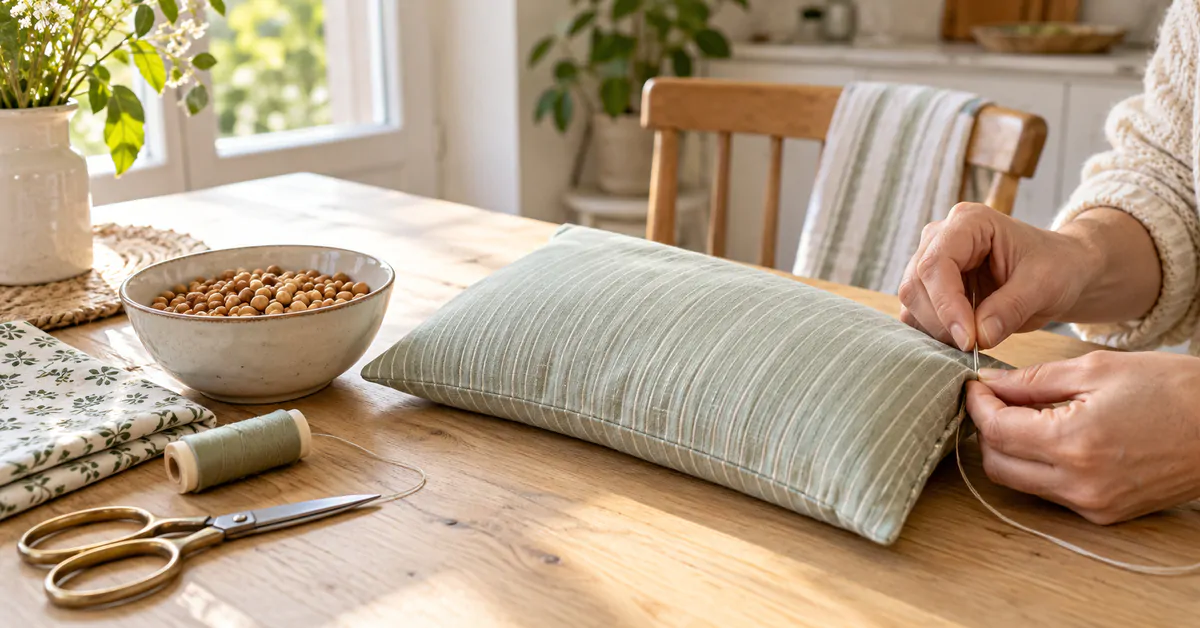
As the temperatures drop, we crave gentle, comforting warmth. Good news: the homemade dry heat pack is one of the simplest sewing projects around. You’ll need a scrap of fabric, a few cherry pits or seeds, and about half an hour in front of you. Result: a 100% zero-waste, economical and eco-friendly accessory that helps you heat your home more efficiently while taking care of your well-being naturally.
Why make a homemade dry heat pack?
A traditional hot water bottle requires boiling water and carries the risk of leaks or burns. A dry heat pack, a true grandma’s remedy, heats up in just a few minutes in the microwave or oven. It offers several major advantages:
- Zero waste: the seeds and kernels, typically tossed in the bin, find a second useful life.
- Upcycling: practice textile upcycling by using an old shirt, a pillowcase, or a clean cotton towel.
- Energy savings: warming closest to the body allows you to lower the thermostat a notch. According to ADEME, one degree lower represents about 7% less heating consumption on your bill.
- Comfort and health: dry heat relieves muscle tension, stiff neck, sore muscles, and naturally eases menstrual cramps in the lower abdomen.
- Durable: with good care, your creation will last through many winters.
Cherry pits or seeds: which natural filling to choose?
All of these fillings store heat well. Simply choose based on your needs and what you have on hand in your kitchen cabinets:
- Cherry pits: they retain heat particularly long and mold nicely to the contours of the body. Instead of discarding them after your clafoutis this summer, recycle your pits and freeze them while waiting for winter.
- Wheat or spelt: these grains provide a gentle warmth and produce a soft crackling sound that’s very soothing when handled.
- Flax seeds: renowned for their thermal properties, flax seeds make the pack soft and ideal for shaping around the neck.
- Rice: the quick, budget-friendly backup option, though it keeps the heat a bit shorter.
You can absolutely mix several seeds. For an extra relaxing effect, add a tablespoon of dried lavender flowers to your blend, perfect for reducing stress before sleep.
The equipment you’ll need for your sewing DIY
- Two rectangles of natural, reusable fabric (100% cotton or linen), about 9 in x 13 in (roughly 22 x 32 cm).
- Approximately 14–18 oz (400–500 g) of cherry pits or dry seeds.
- Strong thread, sewing pins, and a pair of scissors.
- A sewing machine or a simple hand needle (backstitching by hand works just fine).
- An funnel (or a rolled paper cone) for filling.
Safety warning: absolutely avoid synthetic fabrics (polyester, acrylic), zippers, and metal buttons. These materials don’t hold up to microwave heat and can melt or start a fire.
Sewing your homemade dry heat pack, step by step
1. Prepare and clean the cherry pits
Rinse them thoroughly in hot water to remove all pulp traces. Rub them vigorously. Then let them dry completely, air-drying for a few days or in a gentle oven (about 100 °C / 212 °F) for two hours. Slightly damp pits risk molding inside the fabric.
2. Cut and assemble the fabric
- Cut two identical rectangles from your scrap fabric.
- Place them right sides together and secure with pins.
- Sew along three sides, about 1 cm from the edge. Stitch firmly to prevent any leakage of tiny seeds.
- Turn the piece inside out to reveal the right side.
3. Fill and close the pouch
Fill the pouch to two-thirds of its capacity. The heating pad should stay pliable to adapt to your body. Fold the edges of the last side toward the inside (the opening) and close with a securely sewn outer seam, possibly double-stitched for extra safety.
4. The smart trick: plan for a washable cover
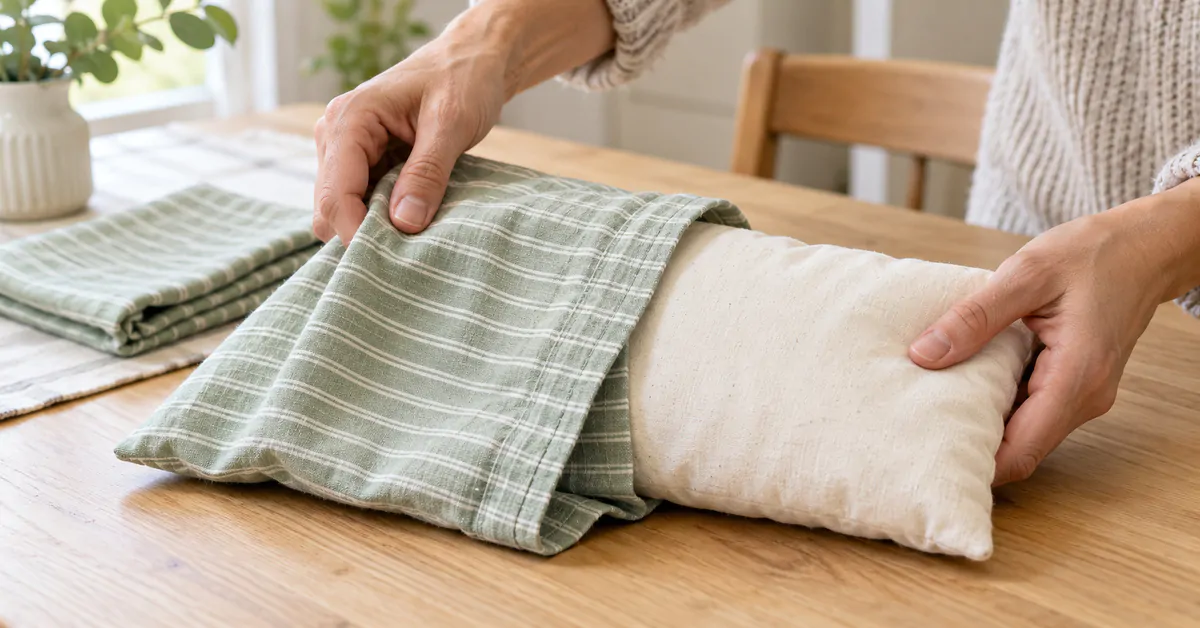
This is the indispensable step for optimal hygiene: sew a second pouch, slightly larger, like a pillowcase, that slips over the first. This way you can remove and machine-wash the cover without ever soaking the plant-based seeds.
Heating your heat pack safely, in a safe manner
To enjoy its comforting heat without risking accidents:
- In the microwave: heat in 30-second bursts at a moderate setting (600–800 W), not exceeding a total of 1 minute 30 seconds to 2 minutes. Turn it over between passes to spread the heat evenly.
- The anti-drying trick: place a small glass of water next to the heat pack in the microwave to maintain a slight humidity and prevent the seeds from burning.
- In a conventional oven: place it on a clean tray for a few minutes at a maximum of 100 °C, under supervision.
- Stay nearby during heating and always test the temperature on the inside of your wrist before use.
If the heat pack emits a burnt smell, stop heating immediately and do not reuse. Avoid falling asleep with it on and do not leave it with a young child unsupervised.
Care and end of life
- Store your heat pack in a dry place, away from humidity swings.
- Regularly wash the removable cover, but never soak the inner filled cushion in water.
- Let it cool completely before tucking it away in a cabinet.
- At the end of its life, open the seam: you can compost the seeds and drop the fabric at a textile recycling collection point.
Variants to spice things up
- Cervical format: create an elongated, divided shape to perfectly hug the neck and shoulders.
- Mini pocket heat pack: a small square you can slip into gloves or coat pockets to warm hands outdoors.
- Cold compress version: placed in a sealed bag in the freezer for two hours, it soothes bruises, migraines and summertime heat.
- Handmade gift: a pretty patterned fabric, a raffia ribbon, and a few lavender sprigs make a wonderful eco-friendly gift idea.
A homemade dry heat pack costs almost nothing, reduces waste, and accompanies you through long winter evenings. With cherry pits set aside and a few fabric scraps, you’ll get a durable, healthy accessory tailored to your needs.
Also read
The heat pack isn’t just for grandmothers