
Rising seas, heat waves, wildfires, floods and droughts are already transforming these places and forcing their managers to make choices sometimes irreversible.
Heritage and Climate Change: Coasts on the Front Line
On October 15, 2026, the Climate Action Network published a report focusing on twenty heritage ensembles facing climate upheaval. It isn’t a ranking of the most threatened sites in France, but a representative panorama of the risks observed across all regions of the Hexagon, in Guadeloupe and in French Polynesia. Heritage appears in every form: buildings, landscapes, archives, relics, crafts and cultural events.
At Saint-Malo, the danger primarily comes from the sea. The corsair city grew in part on land reclaimed from the water. About 25,000 residents now live below the level of the sea. Tidal surges, heavy seas, and rainfall expose streets and historic buildings to inundations. The Pierrick storm, in April 2024, already damaged the Sillon seawall. Sea level rise will make such events more likely, while rising groundwater complicates the protection of the city’s ramparts and old quarters.
The case of the Coubre lighthouse, in Charente-Maritime, is more radical. When it was built in 1905, it stood 1.8 kilometers from the shore; at high tide, only about 130 to 150 meters separate it from the ocean, the Climate Action Network notes. Public authorities have announced the principle of its deconstruction, with no timetable yet set. The decision illustrates a shift in perspective: in some areas, saving heritage no longer simply means keeping the monument in its original location.
The lighthouse case illustrates the difficult choices posed by the coastline’s retreat and the relocation of threatened assets.
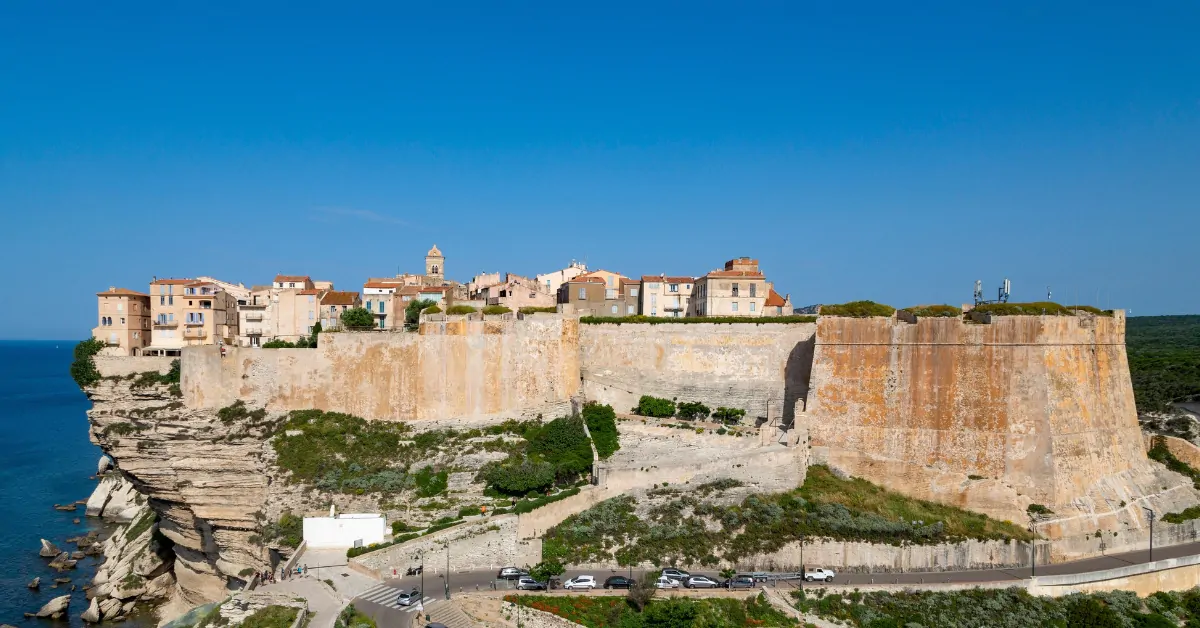
In Corsica, the Bonifacio citadel dominates limestone cliffs whose erosion jeopardizes certain sectors. Authorities monitor landslides; public improvements have been moved back and heavily exposed homes barred from occupancy. The upper town is simultaneously tackling extreme heat and water scarcity, restoring traditional rainwater collection techniques and vegetation-covered spaces. Here, preserving the city means acting both on the cliff and on its urban functioning.
The Normandy D-Day beaches face a similar dilemma. Cliff retreat threatens fortifications and the traces of the 1944 battles. At Pointe du Hoc, a landslide took away part of the promontory in 2022. Further along, a casemate of the Longues-sur-Mer battery has been closed to the public after a safety assessment. The artificial harbor at Arromanches and submerged remains deteriorate under wave action. Strengthening, moving certain elements, and documenting in 3D are among the responses considered to transmit this memory without attempting to immobilize the shoreline.
In Guadeloupe, erosion both reveals and threatens at once the colonial cemetery on Raisins Clairs beach, in Saint-François. Graves tied to the history of slavery reappear in the sand, but are also washed away by swells. The coastline has receded by 20 to 30 meters at the cemetery site between 2004 and 2013, according to BRGM data. Protections have been installed to hold sediment in place, without erasing the risk. The preservation here focuses on archaeological remains and on a memory long buried.
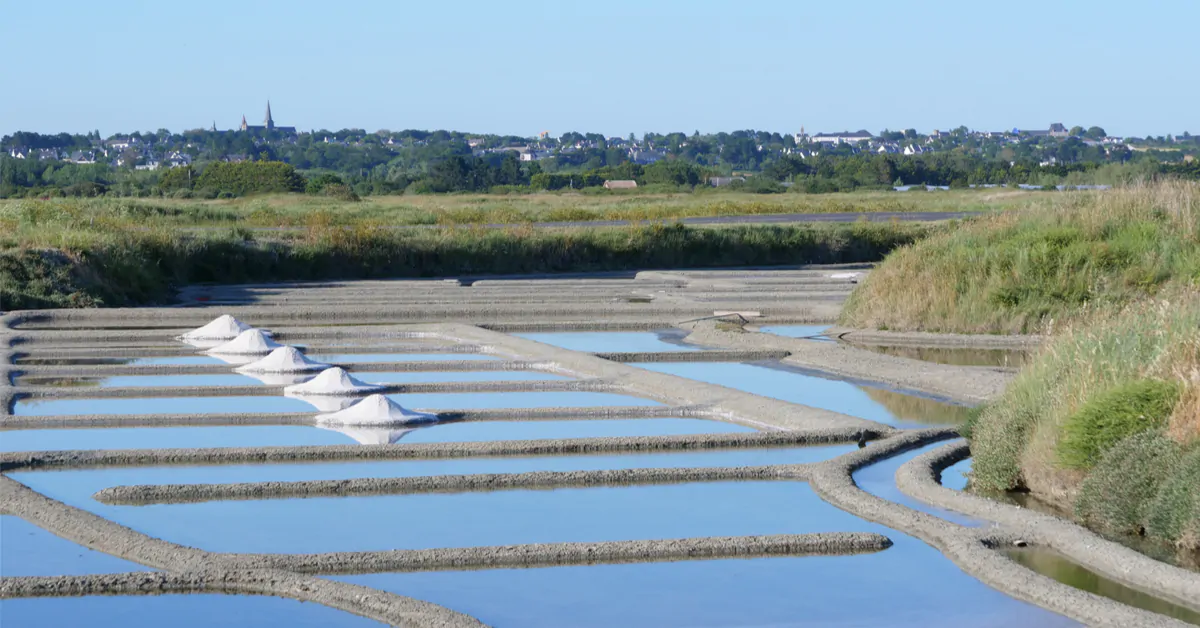
The Guérande salt marshes face another consequence of rising waters. Their operation depends on a precise balance among basins, dikes, tides and the work of paludiers. During storm Céline in 2023, eighteen breaches were observed in the dikes. The report estimates damages at about €1.4 million. Reinforcing the structures and sediment-based solutions must protect not only the facilities but also a living landscape and a traditional know-how.
At Taputapuātea, on the island of Raiatea in French Polynesia, ceremonial platforms called marae are directly exposed to heavy swells. Stones have been displaced or carried away into the lagoon during the December 2021 episode. Rising sea level compounds the fragility of nearby coral reefs, which act as natural barriers. The threat concerns a connected set of sacred sites, landscapes and oral traditions.
Climate Change: Castles, Museums and Industrial Heritage Under Pressure
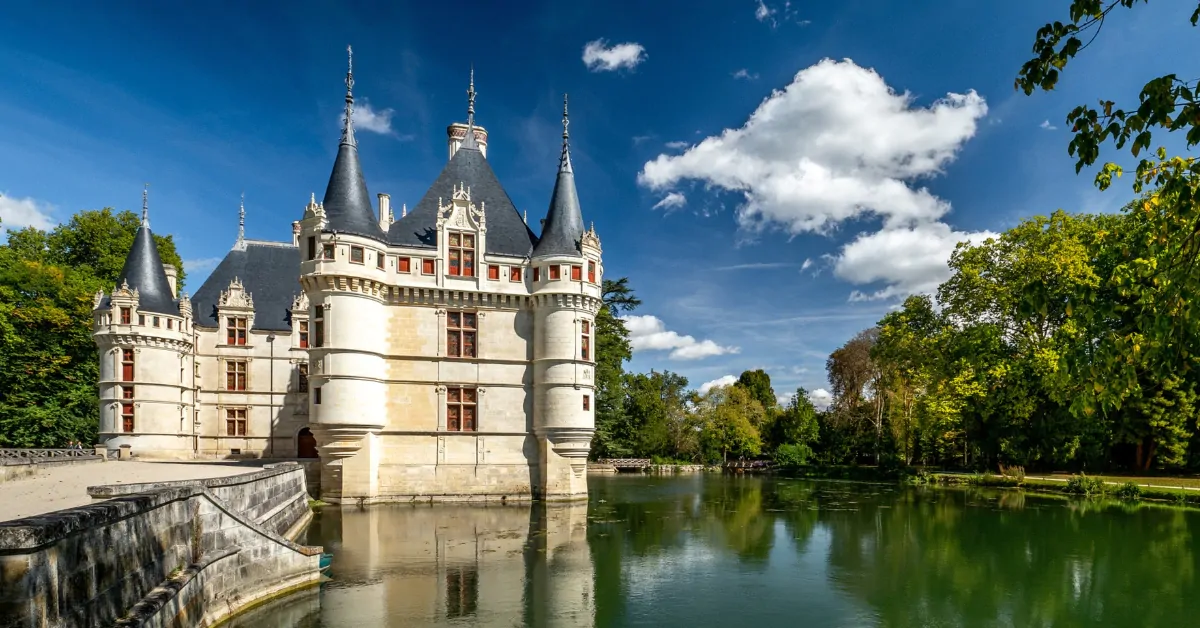
In Azay-le-Rideau, the château is vulnerable to the Indre’s floods. The February 2026 floods forced three days of closure, fortunately with no major damage to the building. But the access bridge, gardens, roof and collections demand constant vigilance. Added to these threats is heat for visitors and the drying-wetting cycles of clay soils, worsened by alternating droughts and heavy rains.
Not far away, Chambord must contend with similar contrasts. Flooding, combined with periods of drought, has caused foundation and roof instabilities, as well as cracks in the François I wing, closed to the public since 2023. The estate estimates restoration costs at €37 million. In the forest and gardens, plant species suffer from water stress. The estate is diversifying tree species, adjusting irrigation and restoring ponds to better withstand future droughts.
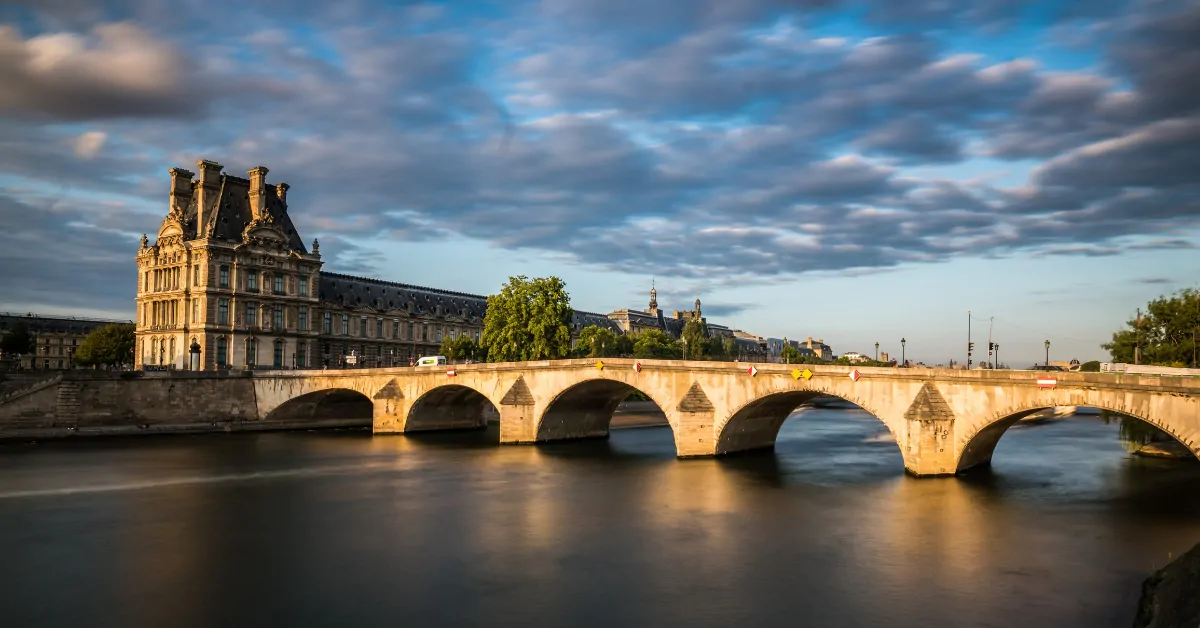
In Paris, the Louvre Museum fears a major flood of the Seine. In 2016, the museum had to protect thousands of works and close temporarily; that disruption cost €1.5 million in lost revenue. To reduce the exposure of its collections, nearly 250,000 works were moved to the conservation center in Liévin. Heat adds another challenge, with rooms that are difficult to cool and the need to stabilize paintings, sculptures and fragile objects.
At the Château de Versailles, climate is already affecting rooms and gardens. Alterations linked to weather conditions have been recorded on 66% of the 1,200 works studied under the Epico program. Heat waves have also forced the institution to shorten its opening hours. As for the park, its chief gardener, Alain Baraton, estimates that 1,500 trees perished after the extreme heat of the summer of 2026. Monitoring materials, renewing plantings, and evolving water management become essential tools.
The bassin minier du Nord-Pas-de-Calais shows that climate exposure affects not only châteaux. Subsidence tied to coal mining has altered water flow and locally increased vulnerability to floods. Mining towns can also suffer from movement of clay soils, while old industrial buildings are difficult to keep at temperatures compatible with archive conservation. At the Lewarde Historical Mining Centre, visitor facilities had to be adjusted during the 2026 heat.
Climate Change: Glaciers, Stones and Fragile Caves
At Montenvers, above Chamonix, it is the landscape that is disappearing. The Mer de Glace lost eight meters of thickness in just the year 2022. In a moderate-emissions scenario, its surface could shrink by up to 80% by 2100. The new cable car opened in 2024 makes the glacier more accessible, but it is only a temporary response to its retreat. The historic train, the station and related facilities will remain; their role, however, could change radically.
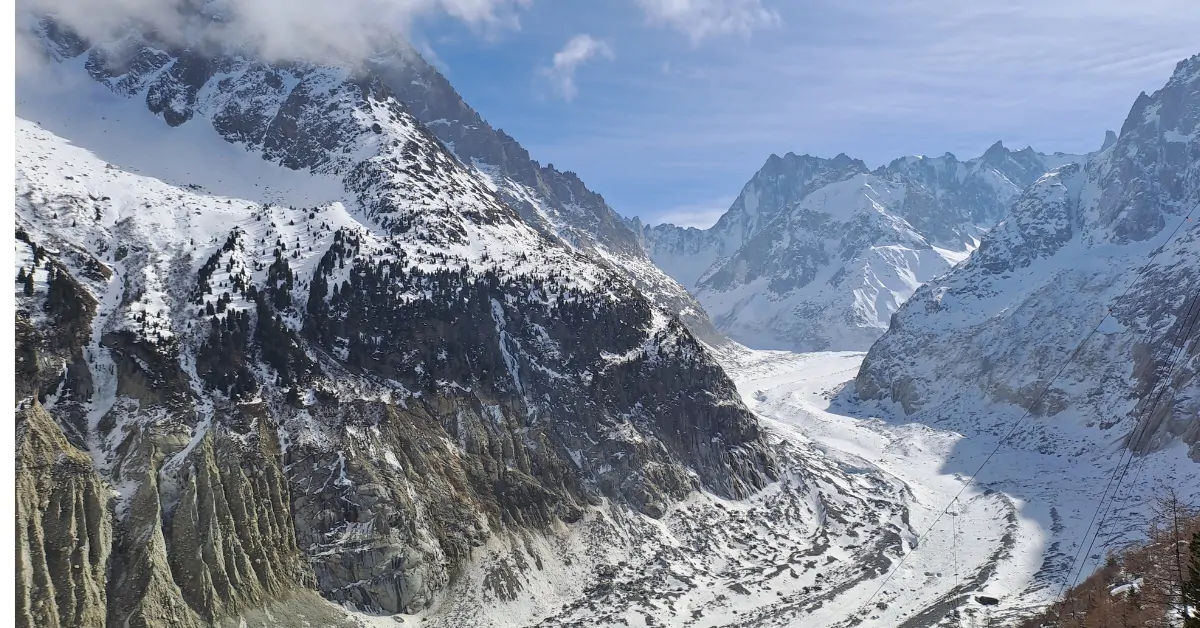
This transformation of the landscape aligns with a broader finding: glaciers, reefs and French forests are already feeling the heat of warming.
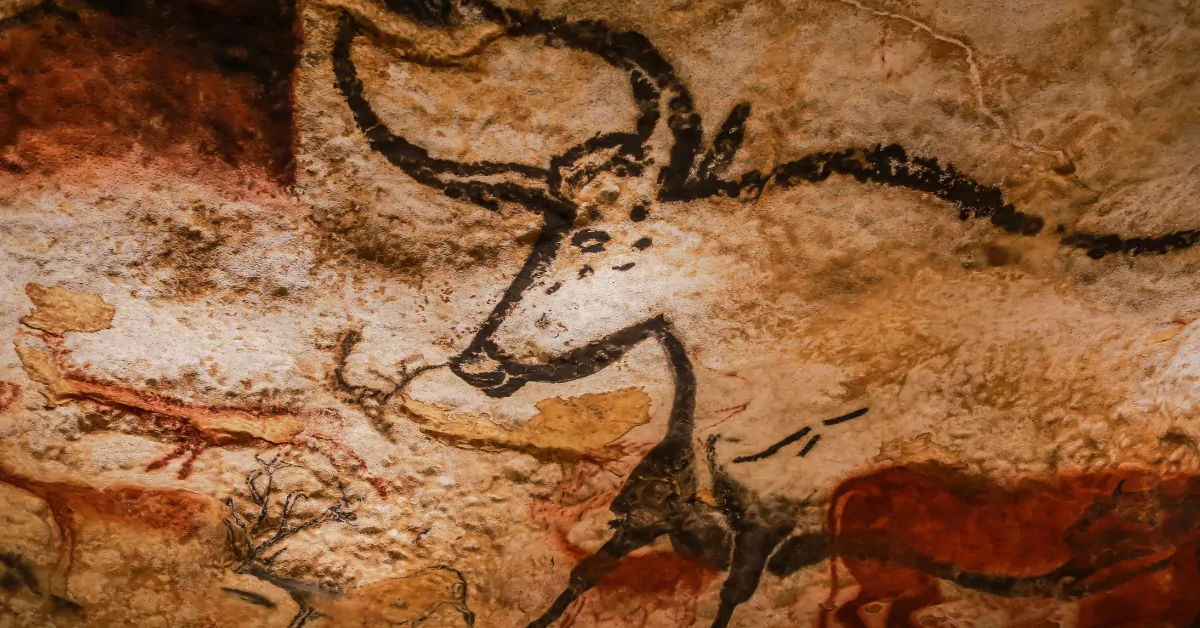
The Lascaux Cave, in the Dordogne, may seem insulated from the weather. Yet its interior balance depends on the forest above it, groundwater infiltration and external climate. Its temperature has risen by about one degree in twenty years. Heat waves, heavy rains and droughts alter water and heat exchanges in the rock. A forest fire could also disrupt this fragile environment. Conservation therefore depends on continuous monitoring of the cavity and neighboring ecosystems.
At the Strasbourg Cathedral, it is the sandstone that draws attention. Humidity, condensation, salt crystallization and temperature variations can foster cracks and alterations. Sensors installed on the spire help study the stone’s microclimate. The challenge lies in distinguishing ancient deterioration from changes that climate shift might amplify, without prematurely attributing every crack to warming.
The Ensérune oppidum, near Béziers, must cope with a more immediate risk: fire. Fires touched the archaeological site in 2021 and 2023, without destroying major remains. One fire even blocked the only access route. A vegetation management plan, drills for evacuation, and red-alert opening restrictions are now aimed at preserving the ruins as well as the visitors.
Climate Change: Vineyards, Canals and Festivals Seeking to Adapt
In the Climats of the Bourgogne wine region, heritage lies as much in the plots as in viticultural practices. Harvests have advanced by about three weeks to a month since the 1970s. The accelerated ripening of grapes reshapes wines; drought, pests and late frosts threaten yields. Agroforestry, cover crops and breeding tougher vines offer adaptation paths, but raise a delicate question: how can these practices evolve without erasing the identity of the terroirs?
The Canal du Midi, built to link Toulouse to the Mediterranean, also depends on a water resource that has become more uncertain. Drought forced an earlier boating closure in November 2025. Its manager, Voies Navigables de France, adjusts water levels, trims losses, and coordinates lock operations to conserve water. The stakes extend beyond recreation: irrigation, drinking water supply and natural habitats all share the same water reserves.
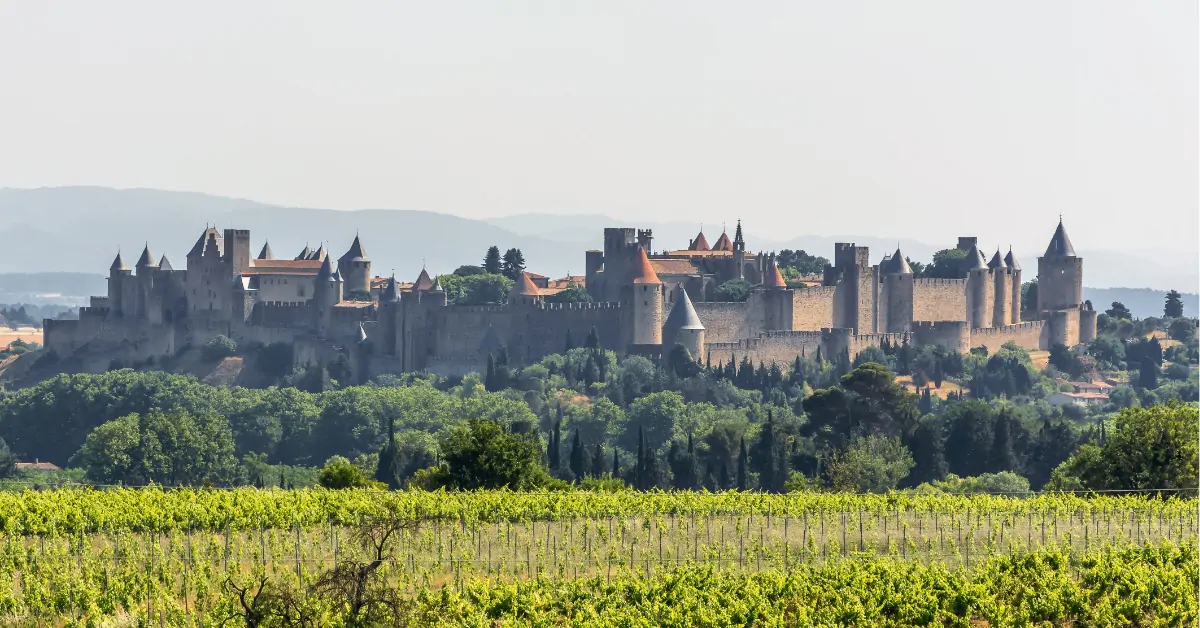
In the Carcassonne area, stone stores heat. A record of 43.2 °C was logged in August 2023. During the summer of 2026, the castle and walls adjusted their opening hours and restricted visits during the hottest times. Fires around the city can also degrade air quality and disrupt access to the monument. The risk of clay shrink-swell is monitored in the long term, without a precise threat being assignable to any single wall.
Finally, cultural heritage also includes the events that keep cities vibrant. The Avignon and Aix-en-Provence festivals, as well as the Arles Photography Meetings, face heat waves, storms and the need to preserve works. In 2026, Avignon shifted evening performances to 10 p.m. In Aix, teams work on sites where some surfaces reach extreme temperatures; in Arles, humidity fluctuations threaten exposed photographs. Changing schedules, protecting staff, cooling venues and planning cancellations become part of preservation efforts, with the extra challenge of maintaining the spirit of festivals historically tied to summer and open spaces.
Also read
Climate: France simply isn’t ready