
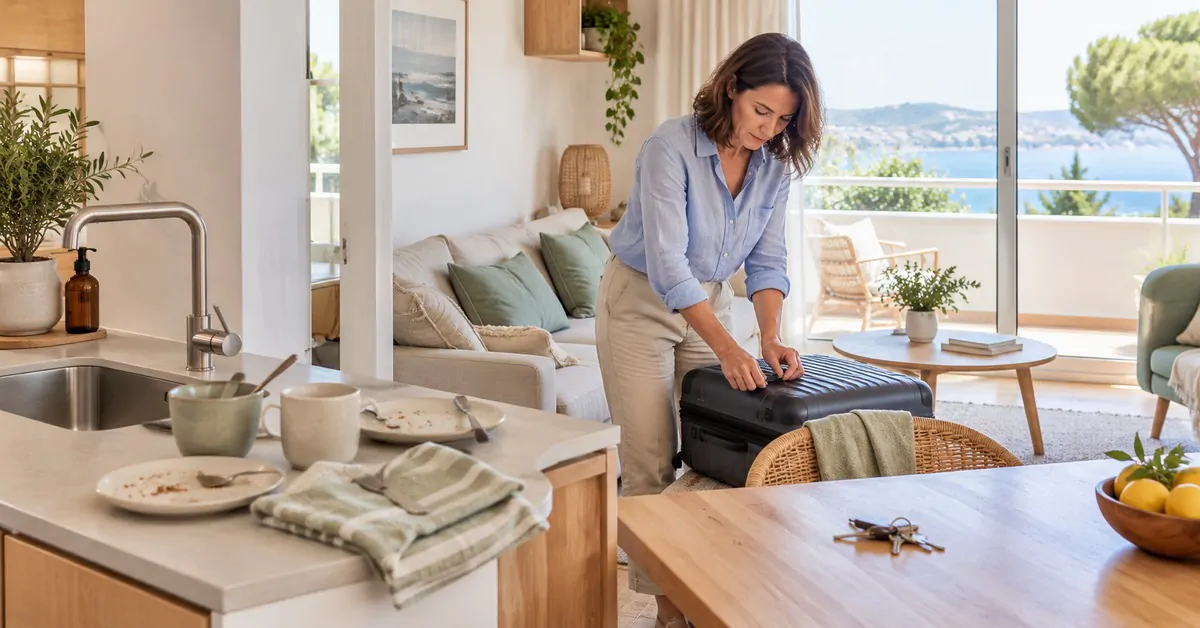
Note, however, that some obligations on guests remain.
Airbnb: chores that the host can no longer impose on guests
The last morning in a vacation rental can sometimes feel like a race against the clock. Between packing suitcases, returning keys, and the housekeeping tasks demanded by the host, check-out can quickly become constraining. Airbnb now aims to limit these situations. On October 20, 2026, the platform announced a rewrite of its community standards. The new policy will apply to bookings made from November 20, 2026 onward. A key distinction: it is the booking date that determines the applicability of the new provisions, not the stay date. For travelers, the goal is to better regulate hosts’ demands and avoid unpleasant surprises.
The most visible change concerns end-of-stay cleaning. From now on, hosts will generally no longer be able to require guests to perform lengthy or demanding tasks that are typically handled by someone responsible for maintaining the property. Concretely, a host will no longer be able to require guests to strip the beds, run a washing machine, or clean and then put away all the dishes. The same applies to trash: hauling waste off the property can no longer be demanded as a routine checkout chore.
Airbnb thus aims to draw a clearer line between courtesy gestures and actual cleaning services. “Most travelers want to avoid unexpected chores,” the platform notes. This evolution addresses a long-standing annoyance: since the rise of vacation rentals, overly aggressive cleaning requests had gradually fueled criticism of short-term rentals.
What the house rules can still require inside the unit
That said, this reform does not mean that travelers can leave their accommodations in any state. Airbnb still allows hosts to make simple requests that are compatible with respectful use of the space. Thus, it remains possible to ask occupants to place dirty dishes in the sink, to gather used towels, or to sort trash into the containers provided inside the unit. Hosts may also request turning off the air conditioning when departing or properly closing doors and windows.
Certain special circumstances may justify exceptions. Airbnb cites, in particular, rentals located in bear-populated areas where waste may require secure storage, or zones subject to water restrictions during drought periods.
Moreover, the types of rules that hosts can impose will be limited to seven categories. These include the maximum number of guests allowed, noise, pets, smoking, hosting events, commercial photography, and check-out access to the property. Guests remain required to comply with these rules.
Airbnb: penalties and fees imposed by hosts better regulated
Another important development: hosts will generally no longer be able to impose their own fines or financial penalties on travelers. A host cannot freely impose a sanction simply because guests did not complete an unauthorized cleaning chore. There is, however, a nuance. Penalties mandated by local regulations or by certain homeowner association rules are a separate case, which the host may flag.
Guests also remain responsible for damages and abnormal messes. A property left in a condition that requires exceptional cleaning can still lead to a reimbursement claim, in line with the platform’s rules. Airbnb does not, therefore, remove the obligation to take care of the rented property.
How to respond to abusive demands from a host?
The changes apply not only to checkout. Hosts must also present their rules and requests in the designated section of their listing before booking. They cannot add new obligations via message, on a sign in the unit, or verbally. For travelers, this transparency makes it easier to compare accommodations.
Guidelines are also more prominently displayed in the booking information and the travel section. The platform reserves the right to penalize hosts who do not comply with its policy: requests for changes, warnings, and, in cases of persistent noncompliance, flagging the listing or reducing its visibility in search results.
Also read
5 alternatives to Airbnb for unique stays