
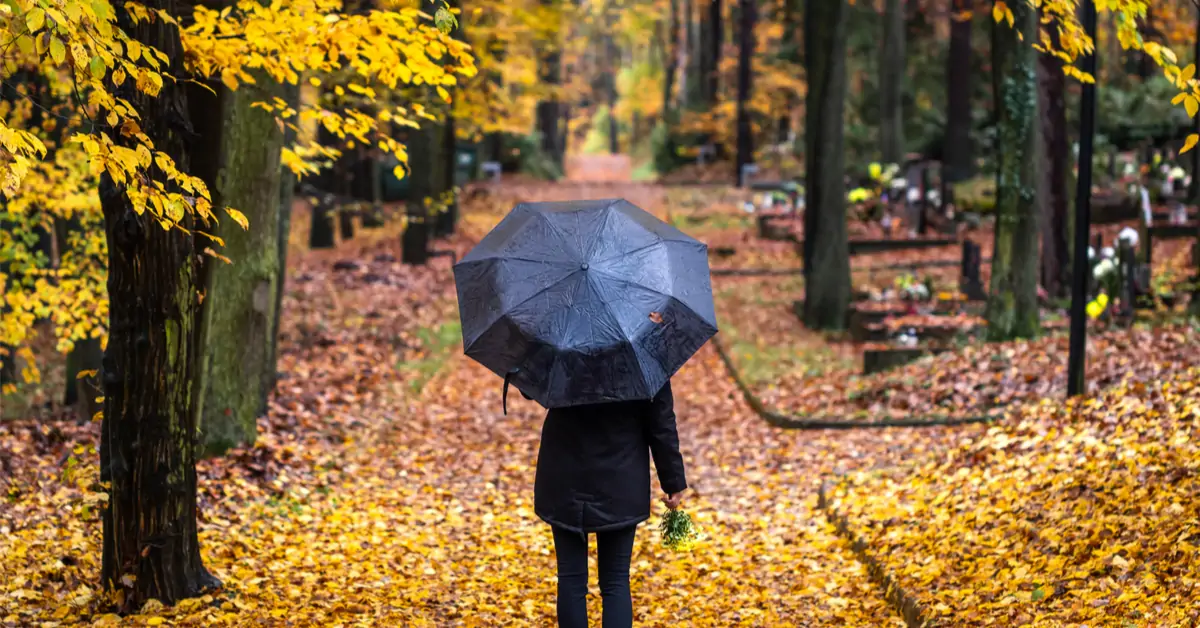
Across Europe, there are cemeteries worth a detour for anyone seeking to discover a different vision of artistic richness, the histories of nations, and biodiversity, through the tributes paid to the residents of these final resting places. ConsoGlobe invites you on a journey through some of the most remarkable cemeteries on our old continent.
Notable European Cemeteries: Père Lachaise Cemetery (Paris, France)
Here is France’s most famous necropolis, sprawling over more than 44 hectares in the heart of the capital. It houses 70,000 graves, among which lie the tombs of numerous celebrities. Opened in 1804, it is the most visited cemetery in the world.
From shaded avenues to winding lanes, the famous Paris cemetery resembles a small town where, at every turn, alongside modest graves, stand mausoleums of monumental or extravagant scale. A fascinating garden where rest Molière, Chopin, Eugène Delacroix, Edith Piaf, or even Jim Morrison.
The Central Cemetery (Vienna, Austria)
Covering 240 hectares, with 330,000 graves, 3 million deceased… Central Cemetery is one of the largest in Europe. It opened in 1874, during Vienna’s rapid expansion, and has been enlarged seven times since.
Hard to navigate and to see everything in this immense park, but shuttles carry visitors to the most remarkable sites. The crematorium of 1922 and its unconventional architecture. The tombs of composers such as Gluck, Beethoven, Schubert, Johann Strauss Sr. and Jr., Brahms. The graves of famous artists or eminent political figures. And even a funerary monument honoring Mozart, who lies elsewhere.
Notable European Cemeteries: Staglieno Monumental Cemetery (Genoa, Italy)
A true open-air museum that reveals nearly 170 years of funerary art, the Staglieno Monumental Cemetery is one of the world’s most important cemeteries. It welcomed its first burial in 1851 and today spans 33 hectares.
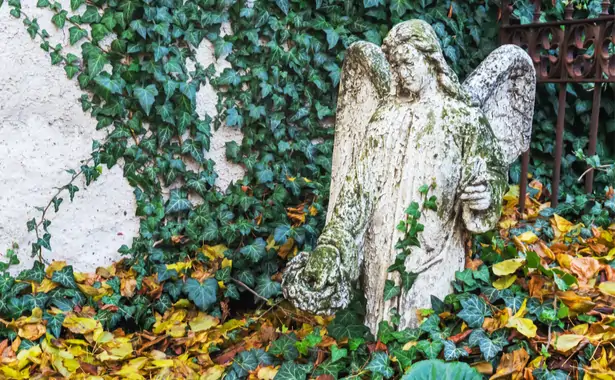
More a garden than a cemetery, testimony to the opulence of Genoa’s old bourgeoisie. Despite the dust and spider webs that cover the marbles and the decay affecting galleries and mausoleums that were once grand, the beauty of the place remains intact, and time seems to have stood still under the dark galleries, among the eclectic tombs lost in the woods… And in the Garibaldians’ cemetery, history is recalled.
The Dieweg Cemetery (Uccle, Belgium)
A cemetery that looks like Brussels: anarchic, partly abandoned, stylish, little known, and magnificent…
Built in 1866 on a site of less than three hectares, the necropolis has been decommissioned since 1958, except for a few privileged individuals who manage to obtain an exemption, such as Hergé who particularly loved the place, in 1983.
Listed since 1997 and poorly maintained, it now shines with lush vegetation and biodiversity, serving as a refuge for a large number of insects, birds, and rodents, and more than two hundred plant species have been recorded there.
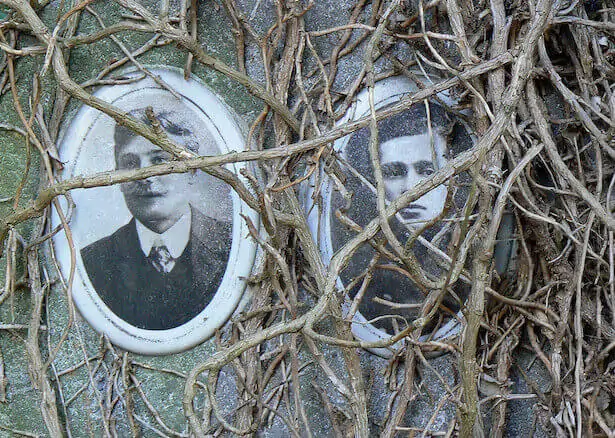
Here you’ll also discover a unique monumental funeral and sculptural heritage, with impressive monuments housing the tombs of illustrious families of bankers, brewers, ministers, Brussels and Belgian architects, all in a profusion of styles: Neo-Gothic, Neo-Classical, Art Nouveau, and more.
The Milan Monumental Cemetery (Milan, Italy)
25 hectares just steps from downtown Milan. It houses the city’s and the country’s most illustrious and deserving residents, beneath sculptural settings ranging from the sublime to the extravagant.
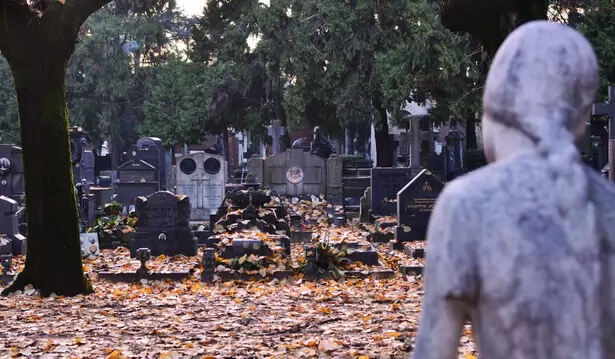
Opened in 1866, it opens onto a majestic Pantheon: the Famedio, reserved for Italy’s greatest masters. Beyond that, the city’s residents lie, arranged according to a special ranking based on their merits and the date of their death.
Along the avenues, one takes measure of the architects’ talent who created hundreds of tombs, cenotaphs, steles, chapels, all to honor the patrons of the wealthiest families or to erect monuments to the memory of victims of epidemics, battles, or concentration camps.
Notable European Cemeteries: the Schönhauser Allee Jewish Cemetery (Berlin, Germany)
This Jewish cemetery was consecrated in 1827 and among its 20,000 graves and 700 family plots stand grand family tombs that contrast with the traditionally modest shape of the grave markers common to this faith.
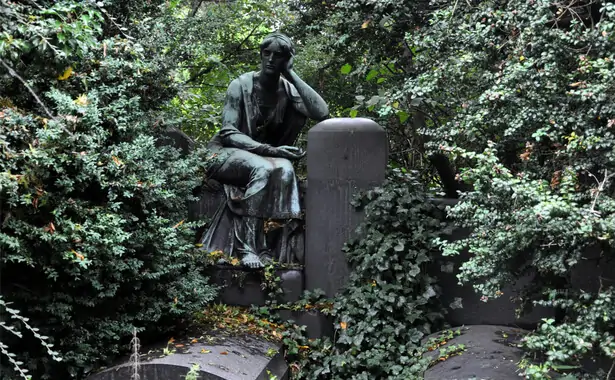
Decommissioned in 1880 at the opening of a new large Weissensee cemetery, it nonetheless hosted the burials of the deceased up until the 1970s, but only within the already existing family graves.
It was heavily damaged during World War II. Many tombstones lie abandoned amid dense vegetation. An atmosphere of endless sadness, conducive to silence and contemplation, and a deep melancholy emanates from this place of great beauty.
Abney Park Cemetery (London, United Kingdom)
Counted among London’s “seven wonders” of cemeteries, this cemetery with 196,843 graves was laid out in 1840 as a semi-public garden and arboretum. The arboretum, housing more than 2,500 trees and shrubs from around the world, was a premier hub of botanical study. Over time, nature has reclaimed the space and the cemetery was transformed into a nature reserve.
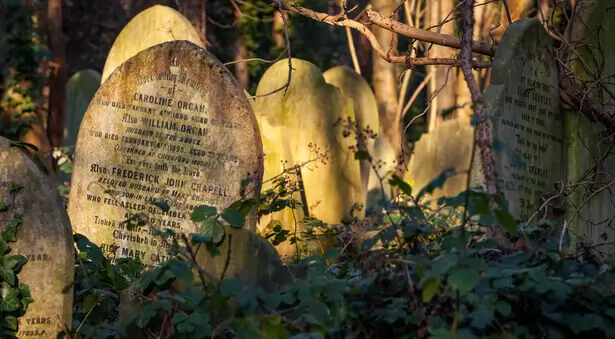
Teeming with foxes, squirrels, a multitude of birds, butterflies and all kinds of insects, it offers a charming setting for an unusual stroll among the tall grasses. Less well known than Highgate Cemetery, it is thus quieter.