
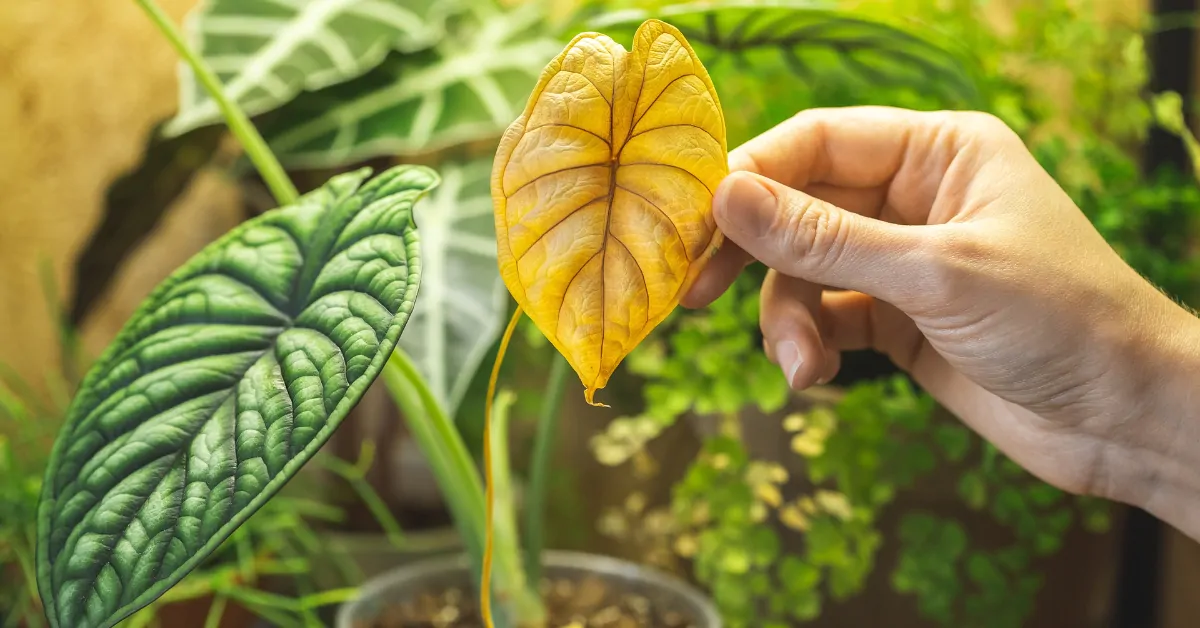
When houseplants stop looking green, there’s trouble. The question is what’s wrong, and how to restore their chlorophyll supply.
A Yellowing Known as Chlorosis
Why are plants green? They harness the sun’s energy through the process of photosynthesis to grow and develop. But even though photosynthesis uses only a tiny portion of the solar energy reaching Earth, plants also need to absorb carbon dioxide, water, and minerals from the soil to grow. It is this mix of proteins, carbohydrates, and lipids that allows them to produce the organic matter (biomass) they need for development.
However, despite all this, it can happen that the foliage of your indoor plants yellows. The task is to identify the causes to restore their vigor. In general, what are the main causes of leaf yellowing, which we call chlorosis? First and foremost, a lack of chlorophyll, which gives plants their green color and is produced to feed themselves. If it’s lacking, the entire photosynthesis process doesn’t work optimally. In such a case, the leaves dry out, or even fall, and your plants are no longer in good shape to face pests and diseases.
Poorly Lit or Overwatered
Indeed, the first cause of chlorosis can be poor exposure to the sun’s nourishing rays. Have you simply placed it too much in the shade? You’ll notice the yellowing or whitening of leaves and stems in the darkest corners. Even if you’ve chosen easy-to-care-for plants, check whether they should be placed in full sun or a bit in the shade.
Another issue that could come from you: overwatering. Thinking you’re doing the right thing, it can easily happen. If the substrate doesn’t drain well or the plant has received too much water, it will yellow. Conversely, if the soil is too dry, it may not have received enough water. Feel the soil at the base of your plant, and see whether it’s dry or sufficiently moist. If applicable, also revisit the drainage.
Supplements to Restore Health
But it may also be that, as winter approaches, your plants need a little extra vitamins and supplements. Perhaps they’re a bit iron-deficient? In this case, add a little iron-chelate powder to the potting soil, or opt for a fertilizer designed for plants that require a more acidic pH. This is especially true forAzaleas, Camellias, Hydrangeas, or Rhododendrons.
Your plant may also yellow from a lack of nitrogen, which, together with phosphorus and potassium, helps synthesize their food. Indeed, nitrogen helps strengthen the green color of the leaves and thereby supports growth. In that case, also look for a fertilizer formulated for nitrogen, or bury nitrogen tablets in the potting soil.