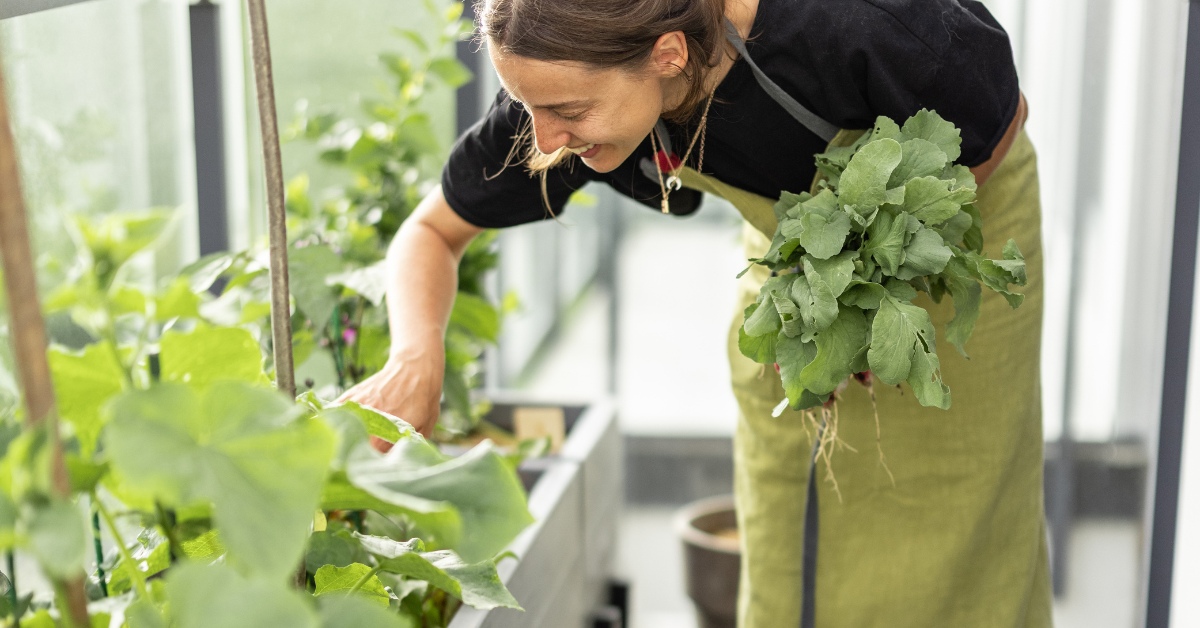
You think you need a big garden to grow your vegetables? Good news: a few pots, a little sun, and a touch of regularity are enough to harvest your own tomatoes, radishes, or lettuces. The balcony vegetable garden is winning over more and more city dwellers seeking autonomy, savings, and freshness on their plate.
Why balcony gardening is taking off in the city
The popularity of urban farming remains strong. Growing your own vegetables helps cut down on packaging, eat fresher, and reconnect with nature, even in an apartment.
A well-exposed balcony can produce more than you might imagine. Small-space vegetables grow quickly and require little maintenance. The secret is mainly to choose sturdy varieties suited to container growing.
The Secret to Container Gardening Success
In pots or planters, the substrate depletes and dries out faster than in the ground. To succeed, focus on:
- Good drainage: place 2 to 3 cm of clay pebbles at the bottom of each pot.
- Quality potting soil: choose a potting mix labeled “vegetable” or “organic.”
- Regularity: ongoing moderate watering is better than a single heavy weekly soak.
1. Radishes: the speed champions
Radishes (round varieties like the 18 days) are probably the ideal vegetable to start with. They grow quickly, require little space, and can yield harvests in under a month. They allow several successive harvests.
- Container: a standard planter (15 cm deep is enough).
- Speed: harvest in 3 to 4 weeks.
Expert tip: sow a small pinch of seeds every 15 days to never run out. Make sure the soil stays moist: if a radish dries out, it becomes spicy!
2. Cherry tomatoes: generous and easy
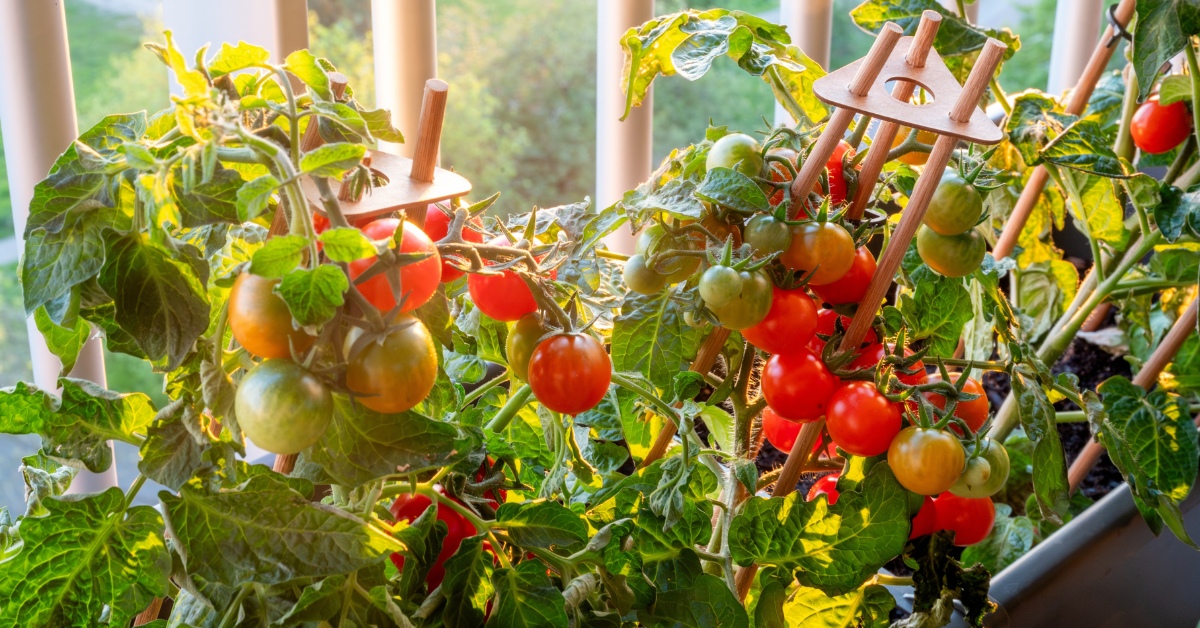
Generous and playful, cherry tomatoes are the stars of the appetizer. For the balcony, skip giant varieties and favor dwarf varieties.
- Recommended varieties: Tiny Tim or Balconi Red (they won’t exceed 30–40 cm).
- Needs: direct sun (south or southeast) and a trellis or stake.
Tip: never wet the foliage when watering to avoid mildew, the fungus that browns the leaves.
3. Cut-and-come-again lettuces: harvests for weeks
The cut-and-come-again lettuces are perfect for impatient gardeners. Unlike head lettuces, they regrow after each harvest. You simply cut a few leaves as needed and the plant keeps producing. A real space saver on a balcony.
- Advantages: they tolerate partial shade. Perfect if your balcony isn’t sunlit all day.
- Care: trim the outer leaves at the base, leaving the heart intact so the plant keeps producing.
- Varieties: oak leaf, Lollo Rossa, or Mesclun.
Note: in summer, be sure to shield them from the heat, which can cause leaves to bolt.
4. Dwarf beans: productive without taking over space
Dwarf beans (green or yellow wax) often deliver fantastic yields in simple tubs. Unlike climbing beans, they require almost no support.
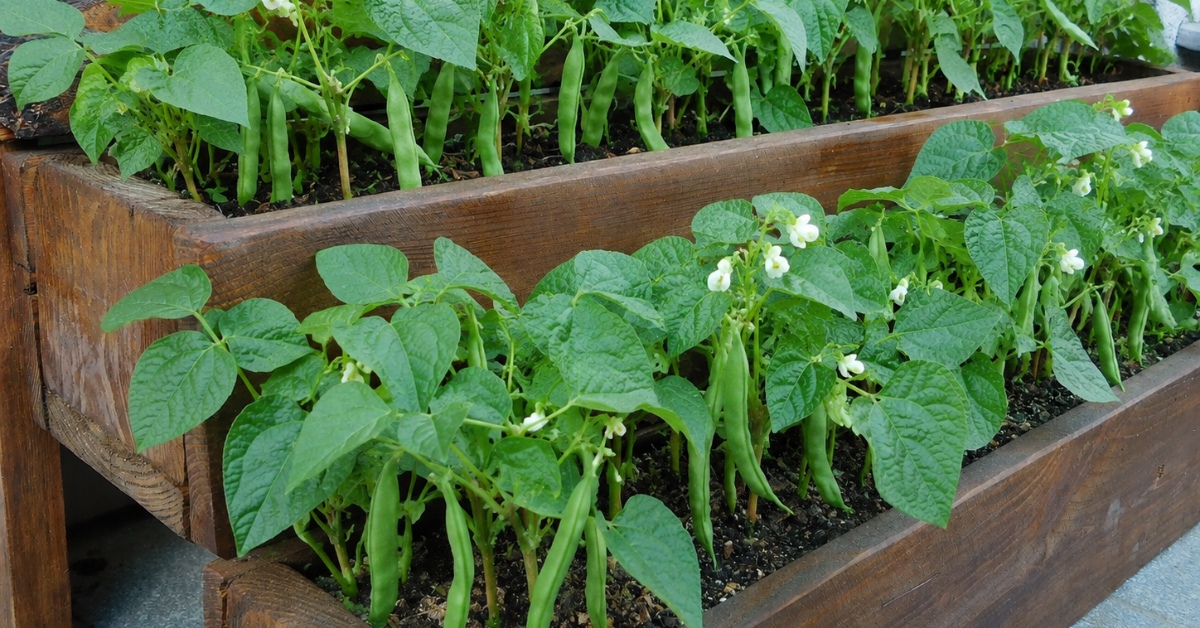
They especially enjoy warm exposures and produce quickly after flowering.
- Container: a pot 20–25 cm deep.
- Benefit: beans fix nitrogen in the soil, improving its quality.
- Simple habit: harvest as soon as they reach the desired size; the more you pick, the more the plant will flower again.
It’s fun: their cultivation is also very popular with kids due to the fast growth and generous harvests.
5. Compact zucchinis: surprising in pots
Yes, some zucchini varieties can thrive on a balcony. The compact varieties specially selected for small spaces perform very well in large pots.
One plant is often enough to supply several zucchinis each week in the heart of summer.
- Recommended variety: Patio Star or Piccolo.
- Requirement: this plant loves its food! Provide a large pot (minimum 15–20 liters) and add some compost or natural organic fertilizer mid-season.
- Bonus: its large yellow flowers are decorative and edible (fried or stuffed).
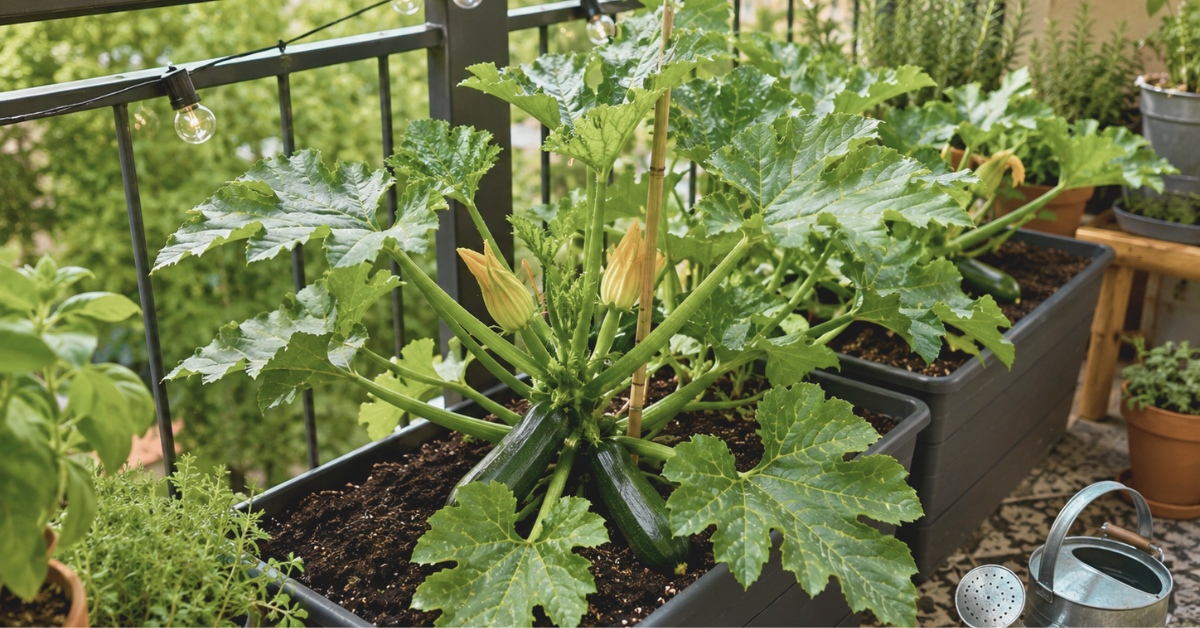
Decorative note: their broad foliage also adds a very decorative touch to the balcony.
The most common balcony mistakes
The main pitfall remains a lack of water. Balcony pots heat up quickly and the soil dries out much faster than in the ground. In summer, daily watering may become necessary. Water early in the morning or late in the evening to avoid immediate evaporation and thermal shock.
Another classic mistake: trying to plant too tightly. Even in a small space, better a few healthy plants than a balcony crowded with veggies struggling to grow. Two tomatoes planted too close together will produce less than one thriving plant.
Don’t forget to feed the soil. Since roots can’t dive deep to find nutrients, a natural fertilizer input (like nettle tea or vermicompost) is essential after two months of cultivation.
Watch the exposure. Most fruiting vegetables like tomatoes or zucchinis require several hours of direct sun each day.