
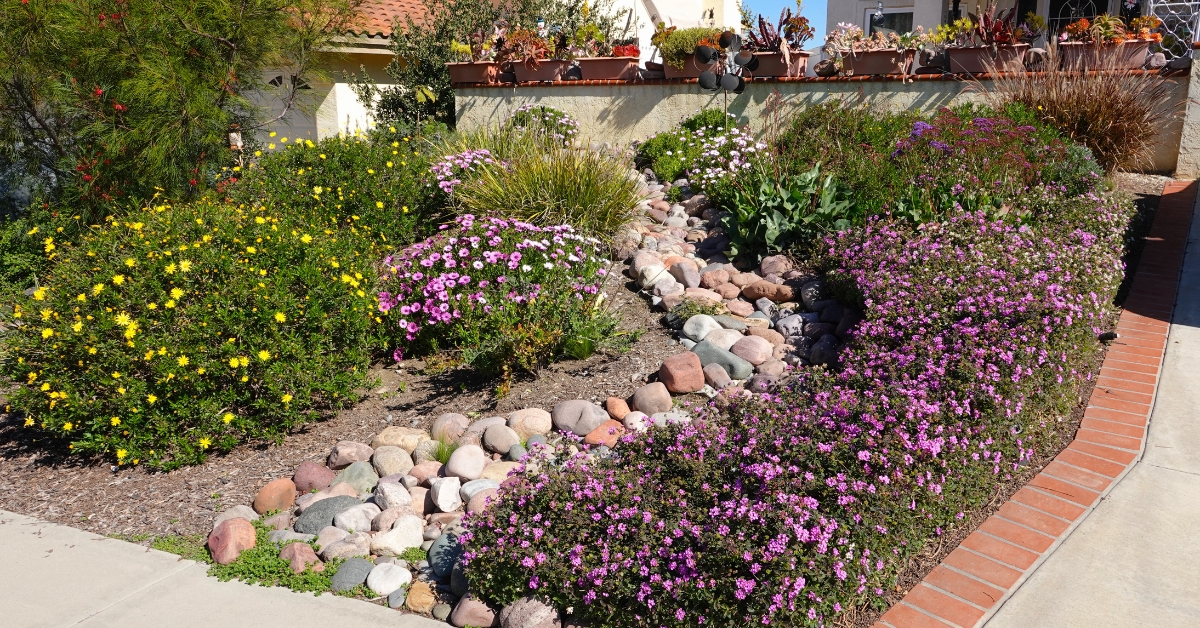
How can you adapt your garden now to a hotter future? There are plenty of plant-based solutions. In the face of more frequent heatwaves and repeated droughts, some plants already withstand the heat better than others. Focusing on waterwise plants, protecting soils, and creating more shade can make your garden more resilient without sacrificing aesthetics.
California Inspiration
At its core, this is a challenge that gardens in the hottest parts of the world have long faced: which plants, which shrubs and trees to choose to use as little water as possible and be ready to face the inexorable warming of the climate? The choices you make today will directly influence the survival of your garden tomorrow.
In essence, drawing inspiration from Californian or Mexican dry gardens isn’t difficult, provided your soil is willing to embrace plants bred to withstand tomorrow’s climate. Water-sipping, fiercely drought-tolerant plants that still bring an aesthetic, perhaps even an exotic touch, to your outdoor spaces.
Thus, in a dry garden, still add a splash of color with California poppy, with yellow-orange to orange blossoms, or with blue thistle. Shrubby sages, lavenders, or certain drought-tolerant grasses can also add volume and movement while reducing watering needs.
Xerophytic and Resprouting Plants
As recent drought episodes in Europe have shown, when heat becomes extreme, plants are on the front lines—both for their limited tolerance to intense heat and for their water needs, a resource we must conserve more carefully.
The go-to move when planting or replacing plants in your garden: opt for drought-resistant varieties—xerophytic and resprouting plants. Moreover, they won’t lose their ornamental qualities in your beds even when water is scarce.
For herbaceous perennials, you can choose heat-tolerant varieties such as Achillea crithmifolia or Zoysia. You can also adapt, in our climates, the Phyla nodiflora from South America, which should acclimate quite well to the milder regions.
Finally, alongside succulents—some of which endure both heat waves and cold—consider replacing a high-water-use lawn that tends to scorch in the sun with a tougher ground cover. This also helps cut mowing and reduces soil evaporation.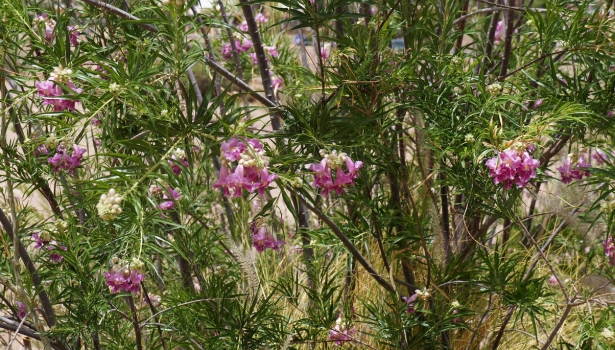
Creating Shade and Coolness
When heat becomes extreme, your instinct may be to plant shrubs rather than trees—a smart, water-saving choice that defines the mood you want.
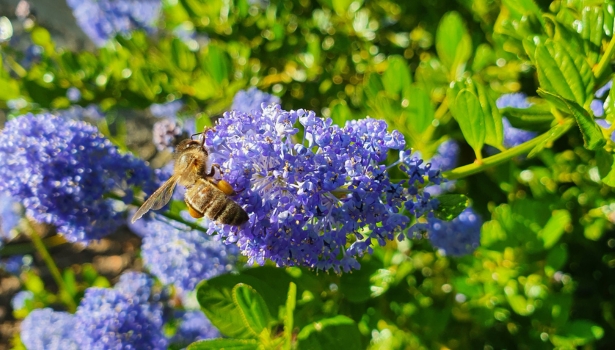
Prefer a more American vibe? Opt for California lilac (Ceanothus) or Chilopsis linearis, native to Mexico. Prefer a Mediterranean feel? You’ll be spoiled for choice to evoke a garrigue landscape with rockrose (Cistus), myrtle, or the pistachio tree (Pistacia lentiscus).
Choose shrubs planted relatively close together to create natural shade and better protect the soil from intense heat. This dense vegetation also helps retain some moisture during heatwaves.
Finally, to create shade and coolness in your garden, trees reaching about six to seven meters tall will do nicely. Alongside classic fruit trees like apples, pears, and other fig trees, consider the Judas tree, with its spectacular bloom before the leaves appear, or the Korean soapberry, recognizable by its brown, fissured bark over time.
A layer of organic mulch at the base of trees and shrubs will also help limit evaporation and keep the soil cooler during the summer. A simple habit that can make a real difference during periods of water restrictions.