
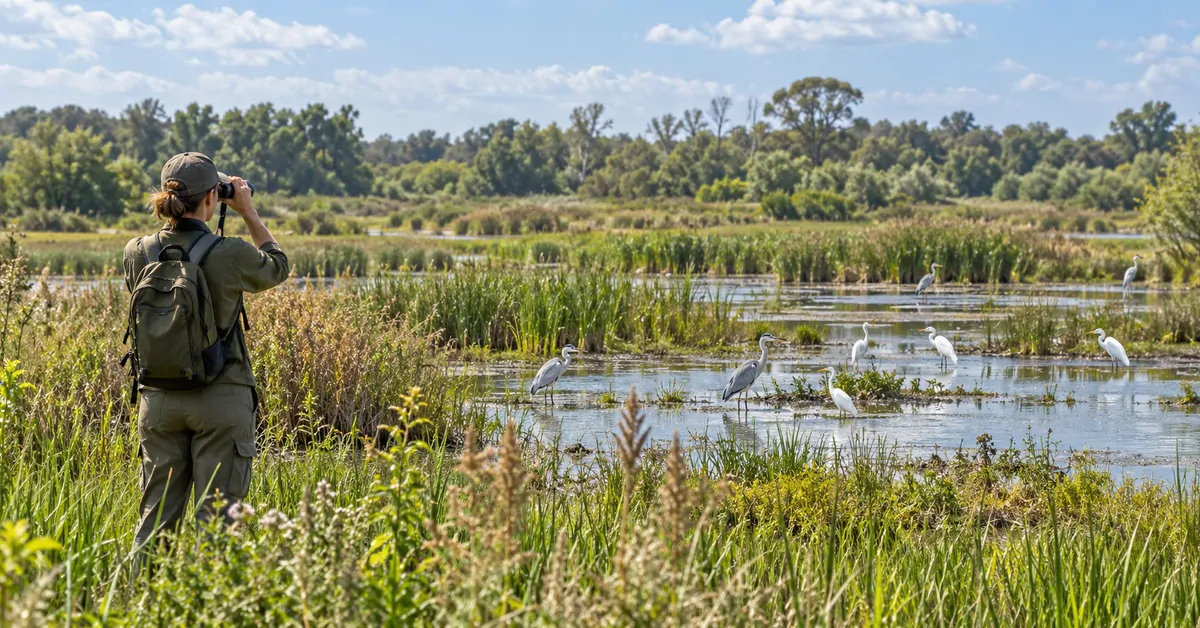
Behind international commitments, results remain insufficient: protected areas are advancing too slowly, wild species are declining, and funding for biodiversity protection remains far below what is needed. In Yerevan, COP17 must translate the goals adopted in 2022 into concrete measures, as the 2030 deadline approaches.
COP17: why governments are meeting for biodiversity
Born from the 1992 Rio Summit, the Convention on Biological Diversity aims for three objectives: conserve species and their habitats, use natural resources sustainably, and share benefits derived from genetic resources fairly. It has 196 parties, i.e., 195 states plus the European Union. The United States is not a party.
The biodiversity COP meets every two years. During COP15, in 2022, governments adopted the Kunming-Montreal framework and its 23 targets: protect 30% of lands and seas, restore 30% of degraded ecosystems, and curb extinctions by 2030. The text also aims to reduce pollution and invasive species.
The COP16, held in Cali, Colombia, advanced the sharing of benefits tied to digitized genetic information. But financial disagreements stretched some discussions to Rome. In Yerevan, states must now spell out how to implement these decisions, and with what resources.
COP biodiversity: progress indeed, but much more remains to be done
The first result is political. Nearly 90% of countries have defined national targets, about 60% have a detailed strategy, and more than 70% have submitted a report. This newfound transparency finally allows for comparing commitments. Some species also benefit from sustained efforts. Tiger populations have risen by more than 70% since 2010, while bluefin tuna is no longer considered a species of particular concern. In the Philippines, a new marine protected area bans the capture of rays and sharks.
These successes remain scattered. Currently, only 18.4% of land and inland waters are protected or conserved, versus about 10% of the oceans. Even fully implemented national promises would elevate terrestrial protection to only 27.5% by 2030. A mapped area does not guarantee surveillance or preservation.
According to the WWF Living Planet Report 2026, the average size of populations of tracked wild vertebrates declined by 73% between 1970 and 2022.
Fragile advances for biodiversity
The decline of life remains massive. The populations of tracked wild vertebrates have lost on average 73% of their numbers between 1970 and 2022. This measure concerns trends in populations studied, not the extinction of three-quarters of species. Almost one million species are threatened with extinction.
In addition to habitat destruction, overexploitation, pesticides, climate warming, and invasive species, less than half of national targets assessed are moving at the pace expected. Moreover, many data needed to gauge on-the-ground results are missing. “We are not moving fast enough,” says Astrid Schomaker, executive secretary of the convention. The UN Secretary-General, António Guterres, essentially responds: “Nature will not thrive on good intentions alone.” The challenge extends beyond national parks: agriculture, fishing, infrastructure, and trade must change course.
These tensions prolong the disagreements over biodiversity financing already seen at COP16.
Financing: governments face the cost of restoring life
The Montreal framework calls for mobilizing about €178 billion per year for biodiversity by 2030, including nearly €27 billion aimed at developing countries. Yet only €67-82 billion have been raised annually on average.
Another contradiction: governments have committed to cut by about €444 billion per year the subsidies harmful to natural ecosystems by 2030. Yet only 5% have set quantitative targets in this regard. Reforming subsidies for intensive agriculture or overfishing requires tough tradeoffs.
The Cali Fund, created after the previous biodiversity COP in 2024, intended to have companies exploiting living genetic data contribute. It has raised only €5,300 since its launch. The allocation between states and indigenous communities remains hotly contested. Moreover, budget constraints and tensions undermine cooperation.
Also read
A national plan for nature praised in substance, but with too many contradictions