
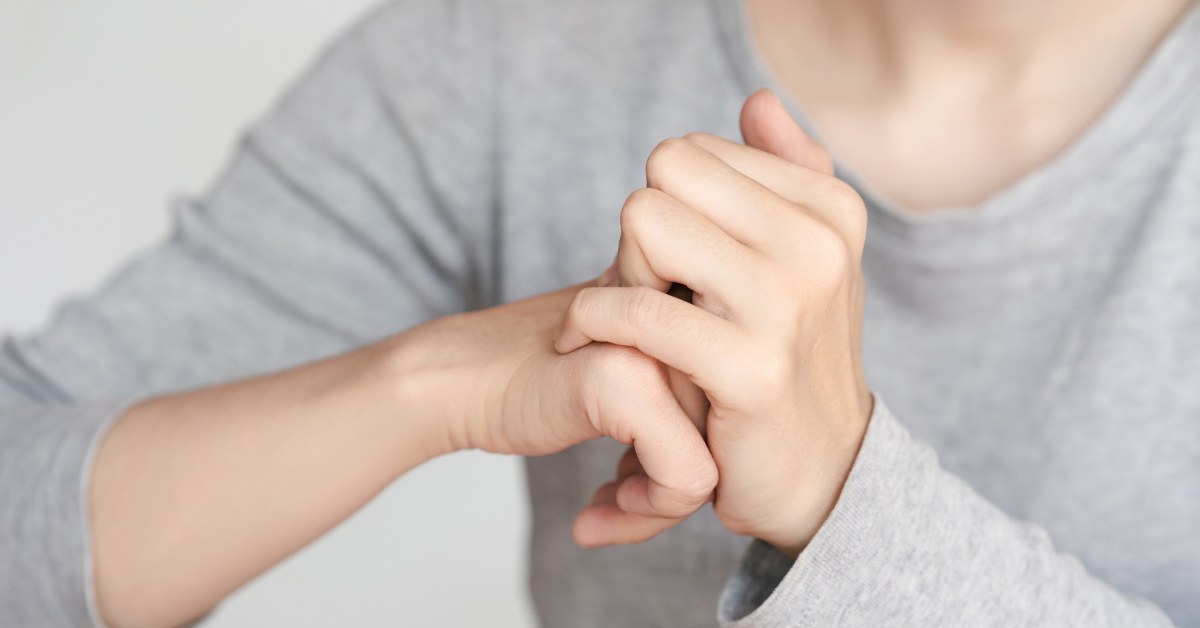
We all know at least one person who cracks their knuckles. It’s a habit that can, moreover, irritate those around them due to the clattering noise. Others crack their necks or backs. But what long-term effects can these self-manipulations have on our bodies?
Why crack your joints?
The primary aim of cracking your joints is to relieve a particular area of the body that feels tense. After the crack, the body relaxes immediately and temporarily experiences a sense of well‑being.
Some people crack their fingers but also other joints to vent stress and anxiety, especially when at work. It can become an annoying tic that is repeated endlessly day after day. It’s possible to crack your fingers by pulling them back, bending them forward, or pulling them.
But what exactly happens? When you crack your fingers, gases trapped as a bubble in the synovial fluid are released. The pressure drops in the synovial fluid. The gas bubbles burst and create the cracking sound called cavitation. This is similar to popping bubble wrap you wrap over objects and snap for fun.
No link to osteoarthritis
According to beliefs, self-manipulation could have long-term effects on the body, but arthritis is not one of them. Donald Unger, an American allergist, cracked his left hand twice a day for more than 50 years to observe the consequences. This amounted to roughly thirty thousand cracks. He reported no signs of arthritis in the left hand compared with the right hand. Through his work, he earned the Ig Nobel Prize in Medicine in 2009, an award that honors unlikely research yet prompts thoughtful reflection.
A separate study, conducted by the Uniformed Services University of the Health Sciences ((1)) in the United States, examined 215 people and confirmed Unger’s observations. Among these participants, 20% cracked their joints frequently. Moreover, among the group that cracked them, 18.1% suffered from arthritis.
The researchers concluded that the likelihood of developing arthritis was the same for people who cracked their joints as for those who did not.
What risks does cracking joints pose?
While cracking joints does not cause arthritis, it can carry other risks, including inflammation and a weakened grip in the hands.

A 1990 study, involving 300 people over 45 years old, observed higher inflammation among the 74 who cracked their joints compared with the 226 who did not.
The study concluded that cracking joints notably affected hand strength, could weaken grip, and damage soft tissues. Additionally, people who crack their hands may experience joint swelling.
To take care of your joints, it’s recommended to maintain a balanced diet, stay well hydrated, engage in gentle activity to protect the joints, and adopt good posture to preserve your cartilage.
Finally, for those who want to stop this bad habit, it’s suggested to find another action that can redirect the brain away from finger cracking. For example, you could fiddle with a stress ball.
- https://www.ncbi.nlm.nih.gov/pmc/articles/PMC1129752/pdf/westjmed00297-0049.pdf