
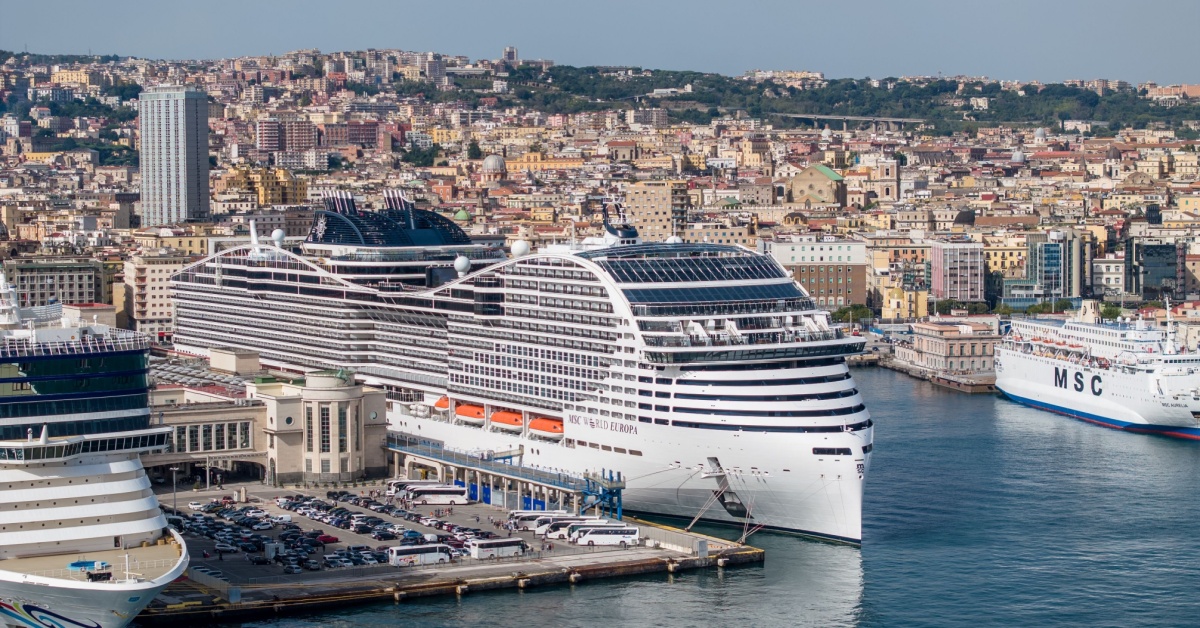
On December 1, 2025, the Senate approved an amendment to the 2026 budget bill establishing a tax on international cruises: every passenger making a port of call in a French port will now be required to pay €15 per stop, a measure pitched as a lever to fund coastal protection and internalize the environmental impacts of cruising.
Cruise Tax Details: €15 Per Passenger per Stop
The amendment provides that every passenger disembarking during a port call in a French port pays €15 per stop (about $16). This levy applies to international cruises, in keeping with the “polluter pays” principle, Public Sénat notes. According to the senators behind the bill, the tax would raise around €75 million per year (roughly $81 million). The idea is to mobilize these revenues to fund coastal protection and enhancement, as well as the management of the impacts associated with cruise ships.
The text relies on an estimate that European cruise ships emit more than 7 million tons of CO₂ each year, as well as considerable atmospheric pollutants, comparable to the emissions of about one billion cars. Through this tax, the senators aim to hold cruise industry players accountable for their environmental externalities and protect coastal and port areas.
But the sector, led by CLIA Europe among others, warns of the risk of a “cumulative taxation”: cruise lines are already subject to the CO₂ emissions trading system (EU ETS), and the addition of a uniform flat tax could tax the same emissions twice, with no clear environmental benefit, notes Tour Mag.
Additionally, the government has expressed reservations, noting the difficulty of legally distinguishing a cruise ship from a ferry: regular routes to Corsica or across the English Channel could therefore be affected undesirably.
What impact on ticket prices and the appeal of French ports?
In practical terms, for a cruise passenger making a port of call in France, the tax adds a €15 surcharge (about $16). For itineraries with multiple French port calls, the total could accumulate, potentially nudging ticket prices higher slightly—though not by a large share of the overall, typically high, trip cost.
For cruise lines and ports, the fear is that this uniform tax could make French port calls less attractive compared with rival European ports that are less taxed. Some itineraries could be altered, or even shortened, to the detriment of French ports.
Subscribe to consoGlobe on Google News to stay informed!
- https://www.publicsenat.fr/actualites/politique/budget-2026-le-senat-vote-une-taxe-sur-les-croisieres-a-hauteur-de-15-euros-par-passager